
Xiao, et al (2024) Calcium-decorated biocharBiochar is a carbon-rich material created from biomass decomposition in low-oxygen conditions. It has important applications in environmental remediation, soil improvement, agriculture, carbon sequestration, energy storage, and sustainable materials, promoting efficiency and reducing waste in various contexts while addressing climate change challenges. More modified with phosphorus from wastewater to promote U(VI) removal: Adsorption behavior and mechanism. Separation and Purification Technology. https://doi.org/10.1016/j.seppur.2024.127680
In a study published in the Separation and Purification Technology Journal, researchers have developed a novel method to efficiently remove uranium from wastewater, leveraging the capabilities of calcium-decorated biochar modified with phosphorus (Ca-BC-P). The study, led by Quanjin Xiao and his team, presents a significant advancement in environmental remediation technologies, particularly for areas affected by uranium mining.
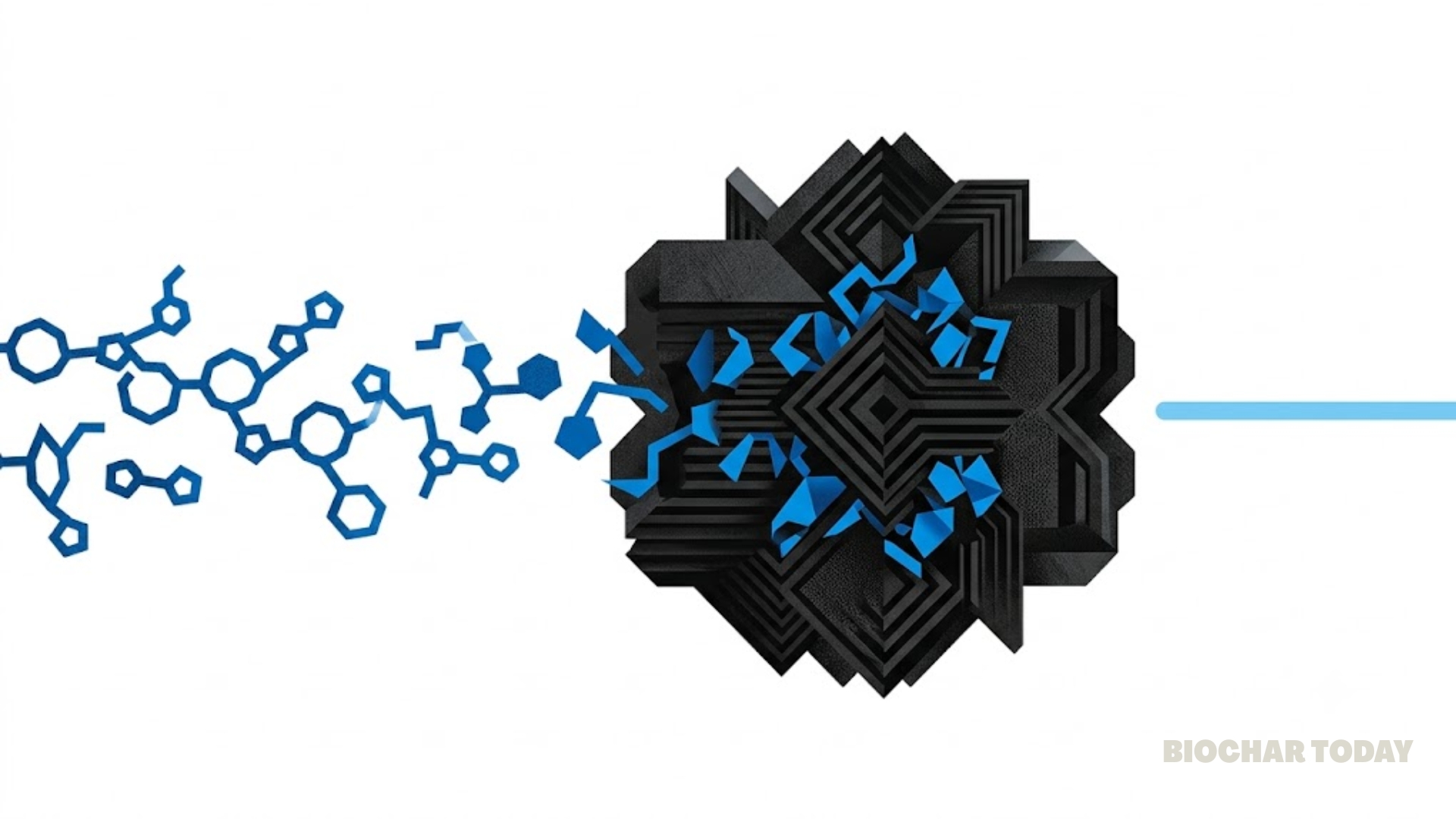
The research utilizes waste shrimp shells and phosphorous-rich wastewater to create Ca-BC-P, which has shown exceptional results in uranium removal. According to the study, this biochar variant enhances the adsorption capacity of uranium (U(VI)) by nearly 300% compared to its unmodified counterpart. This impressive capacity is primarily attributed to the formation of nanohydroxyapatite (nHAP) on the biochar’s surface, which plays a crucial role in the adsorption process through precipitation and complexation reactions.
Static adsorption experiments reveal that Ca-BC-P can achieve a maximum theoretical adsorption capacity of 1074.29 mg/g in acidic environments, fitting perfectly with Langmuir isotherm and pseudo-second-order kinetic models. These results indicate a monolayer chemical adsorption process, further confirmed by thermodynamic analysis suggesting a spontaneous and endothermic nature.
Moreover, Ca-BC-P showcases remarkable selectivity and reusability, maintaining high removal efficiency after several cycles. When applied to simulated acidic uranium mine wastewater, the material successfully removed 99.9% of uranium, demonstrating its potential as a cost-effective and sustainable solution for environmental cleanup.
This study not only highlights the feasibility of using biochar and nHAP in unison to treat radioactive pollution but also addresses critical resource recovery by transforming high-phosphorus wastewater and waste shrimp shells into a valuable adsorbent. This innovative approach not only mitigates uranium pollution but also promotes the recycling of waste materials, contributing to a circular economy in environmental management.



Leave a Reply