


Chlorinated organic pollutants, a notable category of persistent organic pollutants (POPs), pose significant environmental and health risks due to their toxicity and persistence. These pollutants are prevalent due to extensive agricultural and industrial activities which emphasize the need for effective remediation techniques. Among various methods, the use of biocharBiochar is a carbon-rich material created from biomass decomposition in low-oxygen conditions. It has important applications in environmental remediation, soil improvement, agriculture, carbon sequestration, energy storage, and sustainable materials, promoting efficiency and reducing waste in various contexts while addressing climate change challenges. More has emerged as a promising solution owing to its eco-friendly and efficient properties.
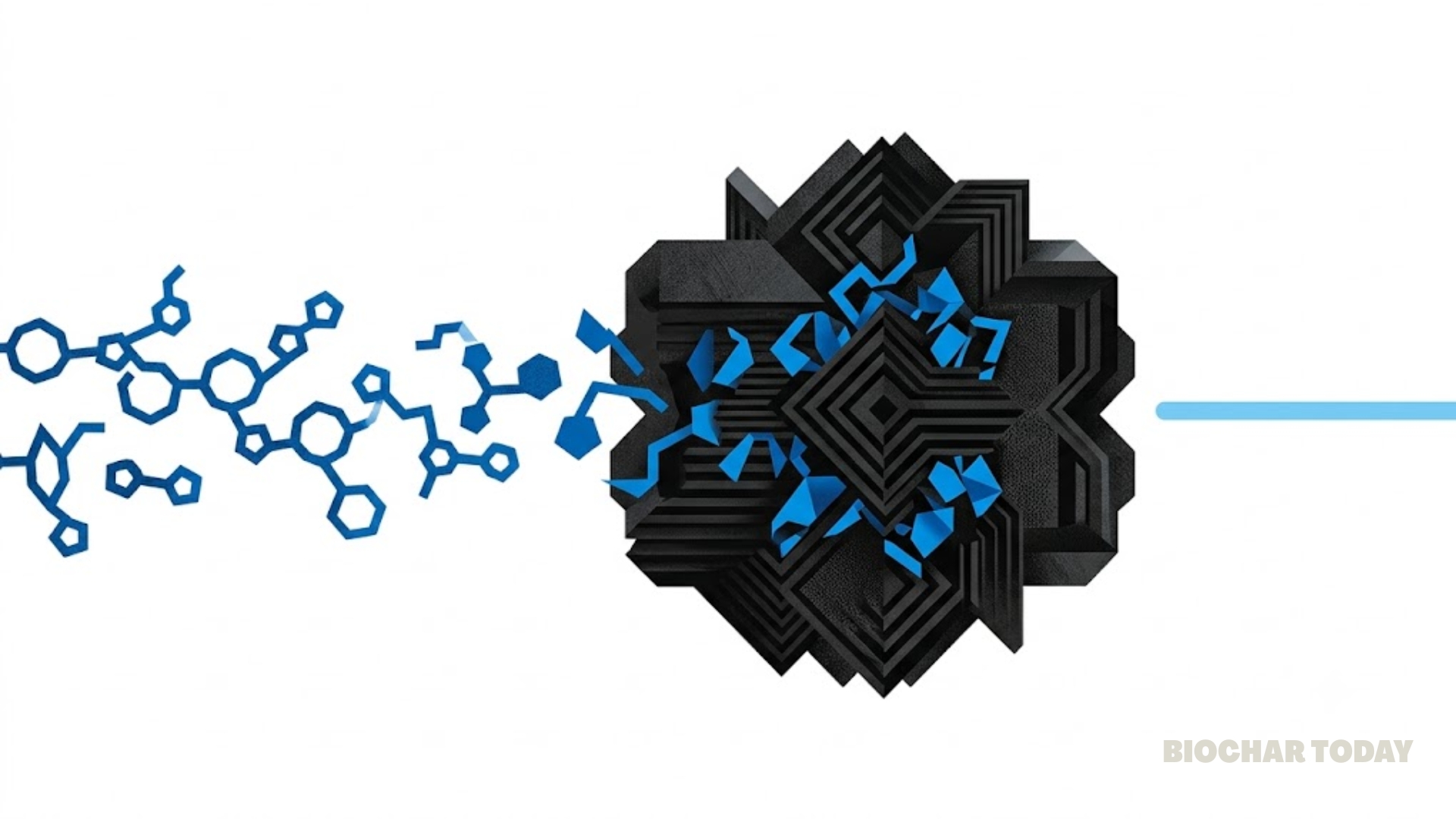
Biochar is produced from biomassBiomass is a complex biological organic or non-organic solid product derived from living or recently living organism and available naturally. Various types of wastes such as animal manure, waste paper, sludge and many industrial wastes are also treated as biomass because like natural biomass these More through pyrolysisPyrolysis is a thermochemical process that converts waste biomass into bio-char, bio-oil, and pyro-gas. It offers significant advantages in waste valorization, turning low-value materials into economically valuable resources. Its versatility allows for tailored products based on operational conditions, presenting itself as a cost-effective and efficient More under limited oxygen conditions, resulting in a carbon-rich material. It is characterized by its microporous structure, high surface area, and functional groups which enhance pollutant adsorptionBiochar has a remarkable ability to attract and hold onto pollutants, like heavy metals and organic chemicals. This makes it a valuable tool for cleaning up contaminated soil and water. More. This review discusses the application of biochar in removing chlorinated organics such as polychlorinated biphenyls (PCBs), triclosan (TCS), trichloroethene (TCE), tetrachloroethylene (PCE), organochlorine pesticides (OCPs), and chlorobenzenes (CBs).
The mechanism through which biochar removes chlorinated pollutants involves adsorption where the material properties of biochar play a crucial role. Enhanced biochar, either through physical or chemical modification, shows increased efficiency in pollutant removal. For instance, activating biochar with nano zero-valent iron or incorporating it into advanced oxidation processes can lead to the generation of free radicals, effectively breaking down chlorinated compounds.
However, the effectiveness of biochar varies based on its application; in soil remediation, it facilitates electron transfer, promoting microbial growth and reducing pollutant toxicity. Conversely, in aqueous environments, combining biochar with chemical treatments is more effective, providing superior purification outcomes.
This paper highlights the necessity for further practical research to explore the full potential of biochar in environmental applications, particularly for water and soil decontamination from chlorinated organics. By delving into the interactions between biochar properties and chlorinated pollutants, and optimizing the preparation and modification processes, biochar’s application scope can be significantly expanded, offering a cost-effective and environmentally sustainable solution to one of the modern world’s pressing issues. The review aims to foster a deeper understanding and encourage the practical use of biochar, paving the way for innovative remediation strategies in the future.



Leave a Reply