

Lui, et al (2024) Release characteristics of biochar-derived dissolved organic matter and its impact on Cr(VI) adsorption and reduction. RCS Advances. https://doi.org/10.1039/D4RA06172A
BiocharBiochar is a carbon-rich material created from biomass decomposition in low-oxygen conditions. It has important applications in environmental remediation, soil improvement, agriculture, carbon sequestration, energy storage, and sustainable materials, promoting efficiency and reducing waste in various contexts while addressing climate change challenges. More, a sustainable material created from biomassBiomass is a complex biological organic or non-organic solid product derived from living or recently living organism and available naturally. Various types of wastes such as animal manure, waste paper, sludge and many industrial wastes are also treated as biomass because like natural biomass these More, is known for its ability to stabilize heavy metals like chromium (Cr). However, its water-soluble components, termed biochar-derived dissolved organic matter (BDOM), also play a critical role in the adsorption and reduction of hexavalent chromium (Cr(VI)), a toxic environmental contaminant.
A recent study compared three types of biochar produced from garden waste—hydrochar (HC), pyrochar (PC), and hydro-pyrochar (HPC). Hydrochar, made through hydrothermal carbonization, released the highest amount of BDOM, rich in aromatic compounds. This BDOM influenced how chromium interacted with the biochar in acidic environments.
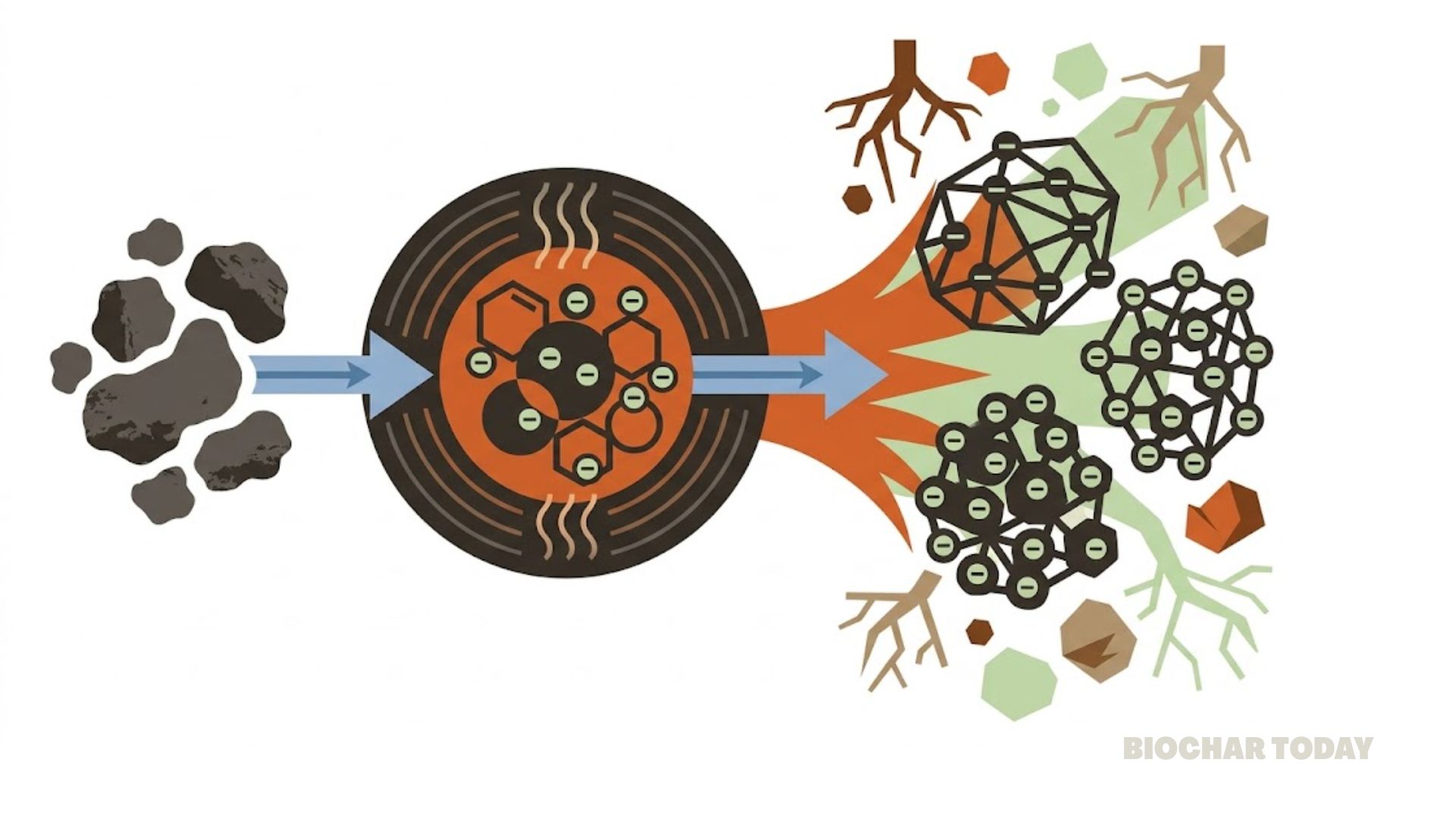
Key findings showed that BDOM accelerated the adsorption of Cr(VI) by forming pre-complexes, enhancing its interaction with the biochar surface. Additionally, BDOM from hydrochar acted as an electron donor, directly reducing Cr(VI) to the less toxic Cr(III). In contrast, BDOM from pyrochar and hydro-pyrochar competed with Cr(VI) for available iron (Fe(II)), reducing the overall Cr(VI) detoxification efficiency.
These results suggest hydrochar is particularly effective for remediating Cr(VI)-contaminated soil and water, as its BDOM boosts both metal stabilization and organic matter enrichment. However, the potential ecological risks of leached compounds from biochar must be carefully evaluated before large-scale use.
This research highlights the importance of tailoring biochar production methods to optimize its environmental benefits, particularly for heavy metal remediation in contaminated sites.

Leave a Reply