
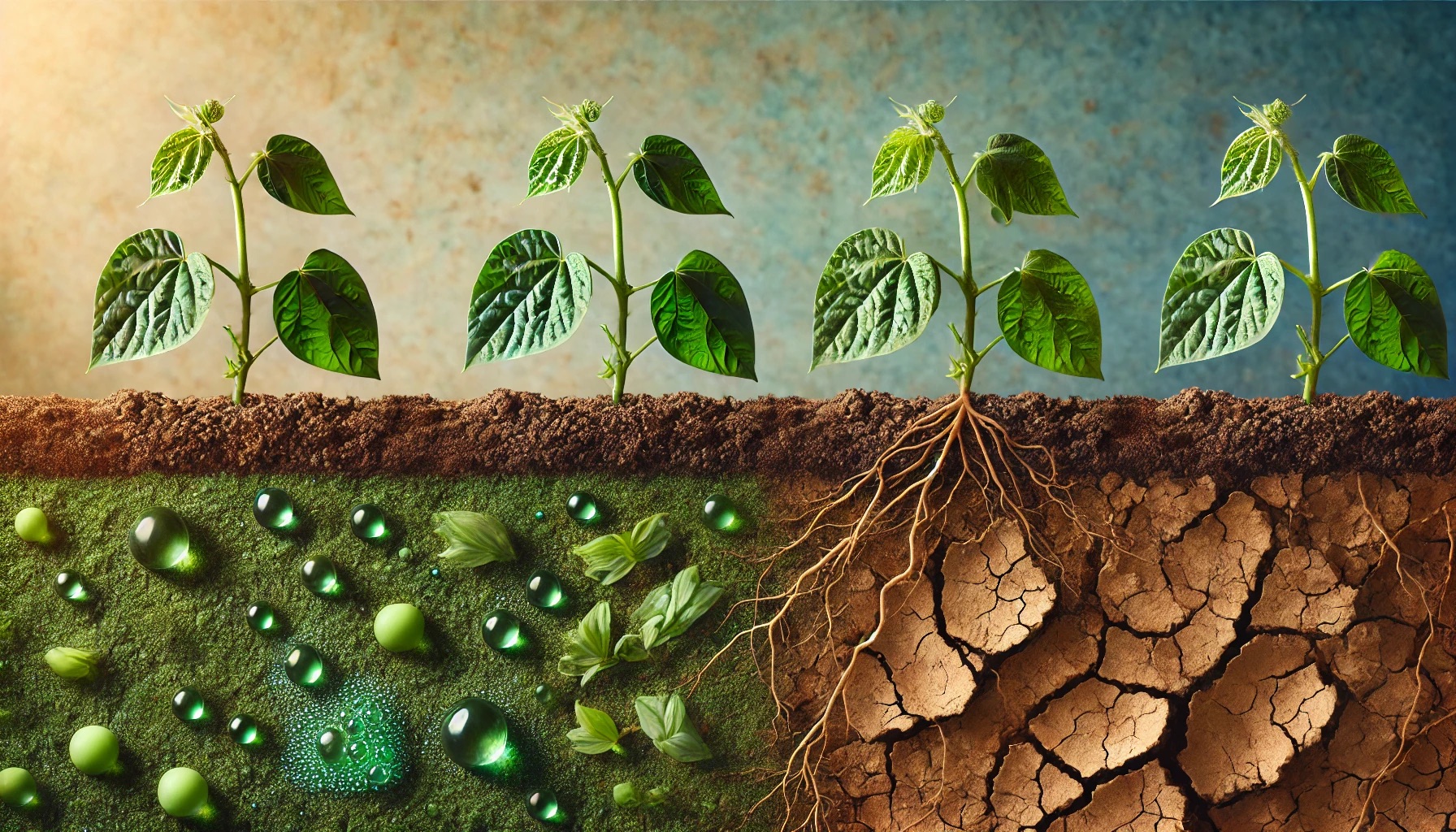
Garcia-Gómez, et al (2024) Influence of Biochar-Reinforced Hydrogel Composites on Growth and Biochemical Parameters of Bean Plants and Soil Microbial Activities under Different Moisture Conditions. Agriculture. https://doi.org/10.3390/agriculture14081405
A recent study explored the potential of biochar-reinforced hydrogel composites to enhance bean plant growth and soil microbial activity, especially under varying moisture conditions. Four hydrogel composites, made from polyvinyl alcohol, sodium alginate, and biocharBiochar is a carbon-rich material created from biomass decomposition in low-oxygen conditions. It has important applications in environmental remediation, soil improvement, agriculture, carbon sequestration, energy storage, and sustainable materials, promoting efficiency and reducing waste in various contexts while addressing climate change challenges. More (from pine and olive tree residues), were tested on bean plants grown in natural soil. The goal was to assess how these composites influenced plant development and soil microorganisms under adequate moisture (70% of water holding capacityWater holding capacity is the amount of water that soil can retain. Biochar can significantly increase the water holding capacity of soil, improving its ability to withstand drought conditions and support plant growth. More) and drought stress (40% WHC).
The study revealed mixed results. Under drought conditions, the biochar-hydrogels generally led to a reduction in plant biomassBiomass is a complex biological organic or non-organic solid product derived from living or recently living organism and available naturally. Various types of wastes such as animal manure, waste paper, sludge and many industrial wastes are also treated as biomass because like natural biomass these More, with decreases in chlorophyll and photosynthetic pigments observed. Plants treated with the hydrogels also experienced higher oxidative stress, indicated by increased antioxidant enzyme activity and malondialdehyde (a marker for lipid peroxidation). Additionally, soil microbial activity, particularly soil respiration, was reduced by 12-38% with hydrogel treatment, though phosphatase activity increased, signaling potential improvements in nutrient availability.
Interestingly, despite the hydrogels’ ability to retain water and enhance some soil properties, their overall impact on plant growth under drought conditions was negative. The findings suggest that while biochar-reinforced hydrogels show promise as soil conditioners, their effectiveness is highly context-dependent. Further research is needed to optimize their application across different plant species and soil types to ensure that they mitigate drought stress effectively without hampering plant growth.
Sources:
García-Gómez, C., Uysal, Y., et al. (2024). Influence of Biochar-Reinforced Hydrogel Composites on Growth and Biochemical Parameters of Bean Plants and Soil Microbial Activities under Different Moisture Conditions. Agriculture, 14, 1405.



Leave a Reply