
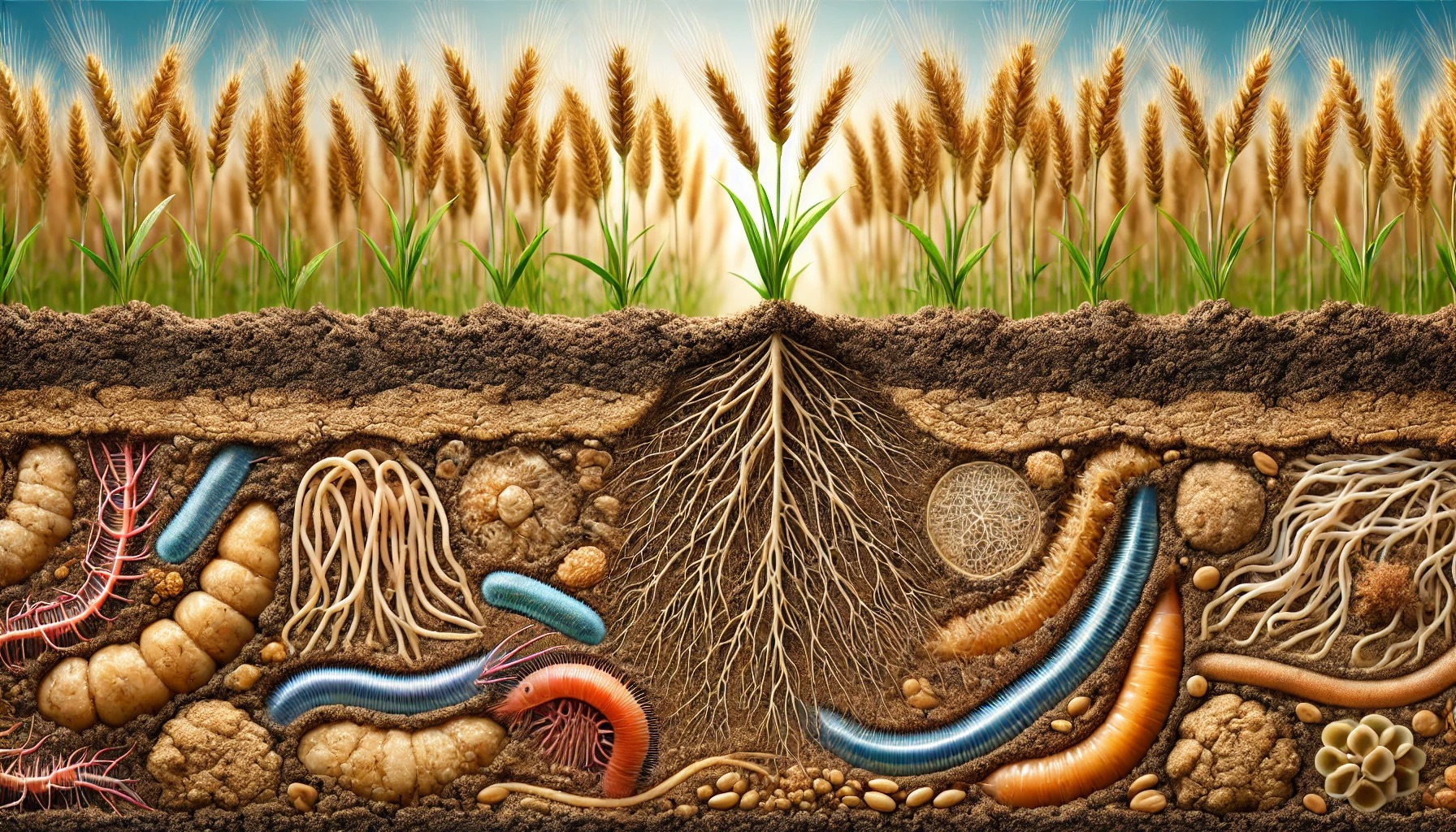

A recent study published in the European Journal of Soil Biology explored the effects of biochar on the soil micro-food web in sandy loam soils when combined with organic or inorganic fertilizers. Conducted within a wheat cropping system, the study evaluated four treatments: inorganic fertilization (IF), organic fertilization (OF), inorganic fertilization with biochar (B + IF), and organic fertilization with biochar (B + OF).
The findings revealed that biochar’s effects varied depending on the type of fertilizer used. When combined with inorganic fertilizer, biochar increased the abundance of microbes and nematodes but reduced the biomassBiomass is a complex biological organic or non-organic solid product derived from living or recently living organism and available naturally. Various types of wastes such as animal manure, waste paper, sludge and many industrial wastes are also treated as biomass because like natural biomass these More of higher-level organisms like omnivores and predators. In contrast, biochar paired with organic fertilizer significantly boosted both microbial and nematode biomass, including omnivores and predators.
The mechanisms behind these effects were also fertilizer-dependent. Under inorganic fertilization, biochar reduced nitrogen and dissolved organic carbon, indirectly impacting microbial populations. However, with organic fertilization, biochar improved soil pHpH is a measure of how acidic or alkaline a substance is. A pH of 7 is neutral, while lower pH values indicate acidity and higher values indicate alkalinity. Biochars are normally alkaline and can influence soil pH, often increasing it, which can be beneficial More and root biomass, driving positive changes in microbial abundance.
This study highlights the potential of biochar, especially when combined with organic fertilizer, to enhance soil health and the soil food web in sandy loam soils. These findings provide a basis for optimizing sustainable agricultural practices by improving the biological properties of soil through tailored biochar applications.


Leave a Reply