


Feasibility study of Aesculus turbinata fruit shell-derived biocharBiochar is a carbon-rich material created from biomass decomposition in low-oxygen conditions. It has important applications in environmental remediation, soil improvement, agriculture, carbon sequestration, energy storage, and sustainable materials, promoting efficiency and reducing waste in various contexts while addressing climate change challenges. More for ammonia removal in wastewater and its subsequent use as nitrogen fertilizer. Chemosphere. https://doi.org/10.1016/j.chemosphere.2024.142049
In a recent study, biochar derived from Aesculus turbinata fruit shells (ATFS) has been highlighted as a dual-purpose solution for sustainable nitrogen management. This innovative approach not only addresses the increasing nitrogen demand essential for crop cultivation but also mitigates the energy-intensive processes associated with nitrogen removal from wastewater and fertilizer production.
The research focused on the potential of ATFS biochar (ATFS-BC), particularly when pyrolyzed at 300°C (ATFS-BC300), to adsorb ammonium nitrogen (NH4–N) from wastewater. This specific biochar showed the highest NH4–N adsorption capacity, achieving 15.61 mg/g due to its favorable physicochemical properties, such as an abundance of oxygen functional groups and a negatively charged surface. These traits enhance the NH4–N adsorption through physical diffusion and chemisorption.
The effectiveness of NH4–N adsorption by ATFS-BC300 was influenced by various factors including pHpH is a measure of how acidic or alkaline a substance is. A pH of 7 is neutral, while lower pH values indicate acidity and higher values indicate alkalinity. Biochars are normally alkaline and can influence soil pH, often increasing it, which can be beneficial More levels and the presence of other ions, with alkaline conditions proving to be more conducive. The presence of trivalent and divalent cations, however, posed some interference in the adsorption process.
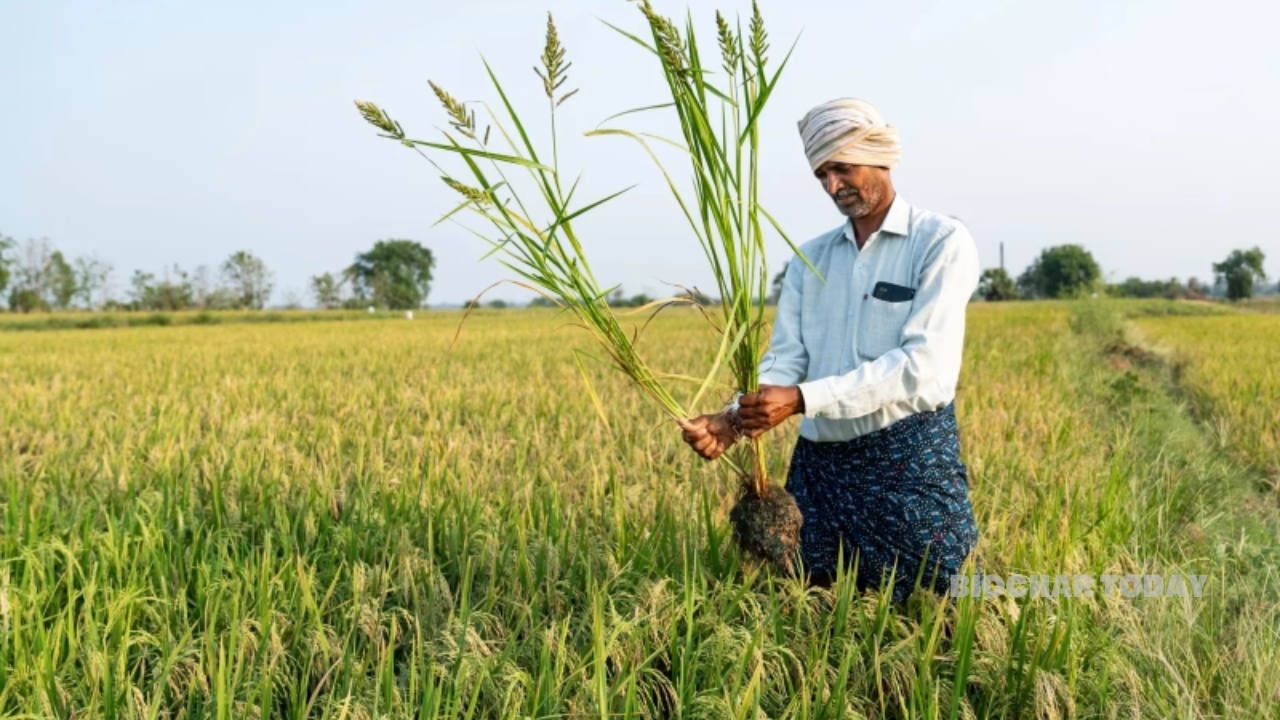
Beyond wastewater treatment, the study extended to agriculture by using the NH4–N enriched ATFS-BC300 as a nitrogen fertilizer for rice cultivation. Results were promising, with medium doses of the biochar-based fertilizer showing similar agronomic traits to commercial nitrogen fertilizers, and higher doses outperforming them in boosting rice seedling growth.
This approach not only recycles a waste product but also offers a cost-effective, low-energy alternative to conventional nitrogen management practices. By integrating wastewater treatment with agricultural fertilization, ATFS-BC300 presents a compelling case for a circular economy strategy, reducing environmental impact while enhancing food production sustainability.




Leave a Reply