
Ndinda, et al (2024) Exploring biocharBiochar is a carbon-rich material created from biomass decomposition in low-oxygen conditions. It has important applications in environmental remediation, soil improvement, agriculture, carbon sequestration, energy storage, and sustainable materials, promoting efficiency and reducing waste in various contexts while addressing climate change challenges. More and Moringa oleifera seed proteins for greywater remediation on small farms. Bioresource Technology. https://doi.org/10.1016/j.biortech.2024.130935
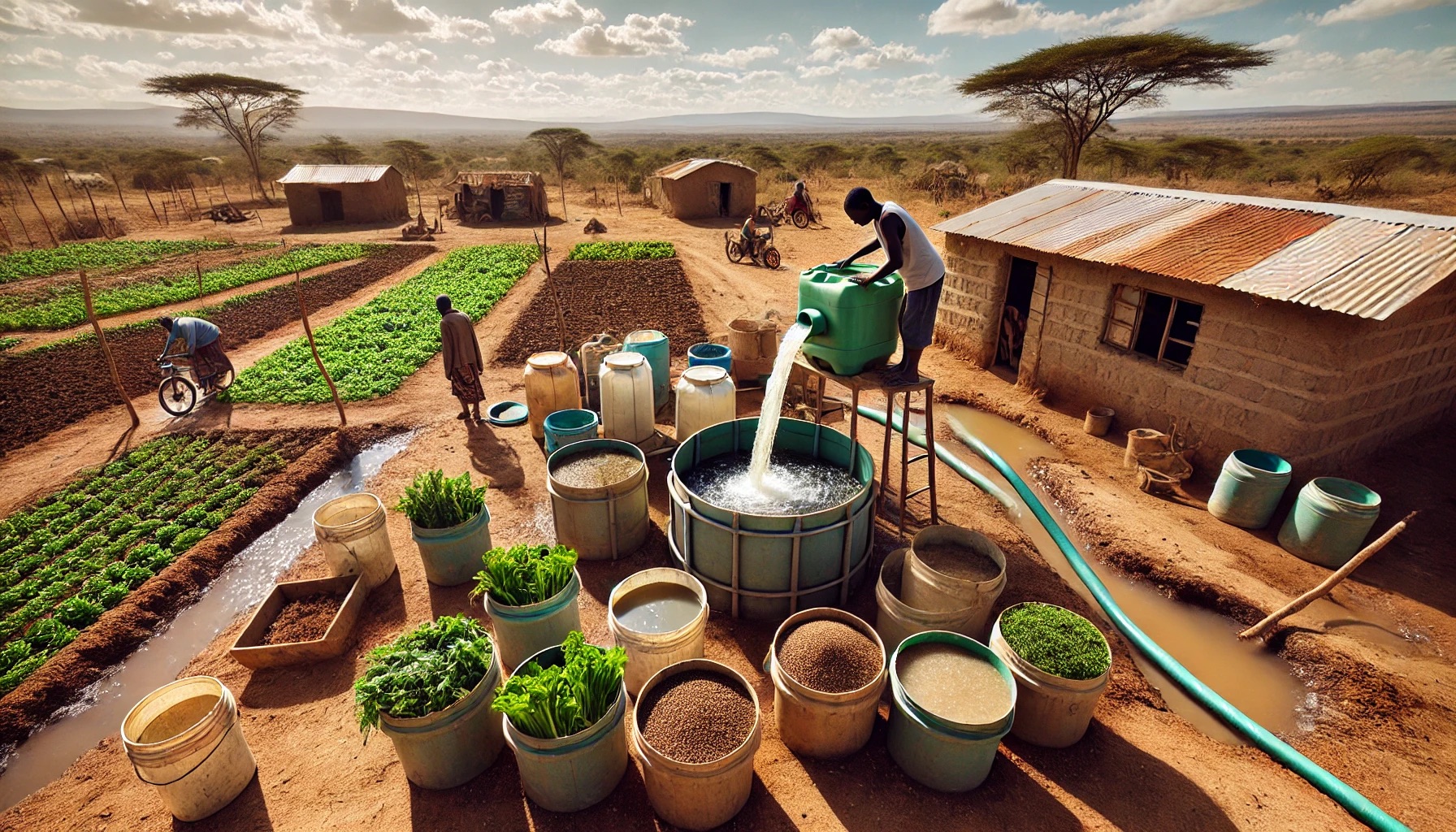
A recent study published in Bioresource Technology explores innovative methods to treat greywater using biochar and Moringa oleifera seed proteins, specifically on small farms in rural Kenya. This research aims to provide a sustainable, locally accessible solution for greywater remediation, which can help improve water access and quality for vulnerable communities.
Greywater, the wastewater from household activities like laundry and dishwashing, is less complex than other wastewater types but still contains significant contaminants. In this study, researchers collected greywater samples from households in Kwale and Siaya counties. They applied two treatment methods: batch stirring and filtration, combining biochar and Moringa seed proteins. Biochar, a carbon-rich material from biomassBiomass is a complex biological organic or non-organic solid product derived from living or recently living organism and available naturally. Various types of wastes such as animal manure, waste paper, sludge and many industrial wastes are also treated as biomass because like natural biomass these More pyrolysisPyrolysis is a thermochemical process that converts waste biomass into bio-char, bio-oil, and pyro-gas. It offers significant advantages in waste valorization, turning low-value materials into economically valuable resources. Its versatility allows for tailored products based on operational conditions, presenting itself as a cost-effective and efficient More, and Moringa seeds, known for their coagulation properties, were tested for their efficacy in removing impurities.
The results were promising. Both methods significantly reduced the greywater’s color, turbidity, and surfactant levels. Specifically, turbidity decreased by 91-98%, while surfactant levels dropped by 89-93%. However, challenges remained, such as increased levels of total organic carbon and dissolved solids post-treatment. Despite these challenges, the methods effectively reduced phosphates, nitrates, and iron, highlighting the potential for improving greywater quality.
This study underscores the potential for biochar and Moringa seeds to enhance water treatment processes, especially in resource-limited settings. The treated greywater can be reused for irrigation and other non-potable purposes, contributing to water conservation and sustainable agricultural practices.
While the research shows significant progress, further studies are needed to optimize these methods for broader application and address remaining issues like organic carbon and dissolved solids. Implementing these sustainable solutions can help alleviate water scarcity and improve the quality of life in rural communities.
Overall, this study highlights the importance of leveraging locally available materials for sustainable water management, offering a practical approach to addressing water challenges in the Global South.


Leave a Reply