
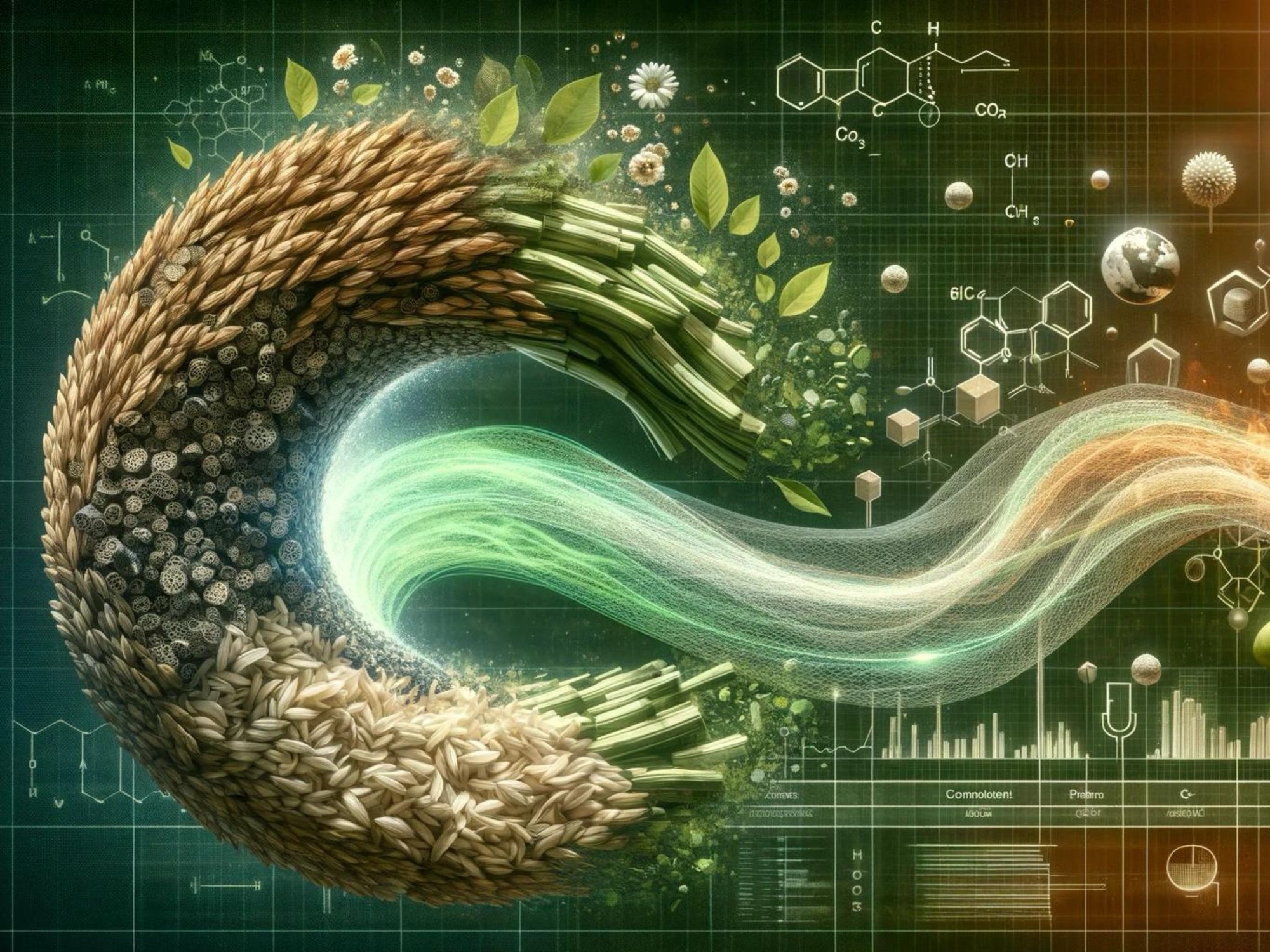

In a study published in the Chemical Engineering Journal, a team of researchers led by Jingxiang Sun have developed a super-biochar from rice husk waste, showcasing unprecedented effectiveness in carbon dioxide (CO2) capture. This new material, distinguished by its maximal surface area of 4230 m²/g and a CO2 uptake capacity of 341.5 mg/g, is setting new benchmarks in the field of biochars.
The creation of this super-biochar involves a novel two-step process. Initially, rice husk is subjected to pyrolysis-activation, followed by a hydrofluoric acid (HF) post-desilication treatment. This sequence not only strips silicon from the biocharBiochar is a carbon-rich material created from biomass decomposition in low-oxygen conditions. It has important applications in environmental remediation, soil improvement, agriculture, carbon sequestration, energy storage, and sustainable materials, promoting efficiency and reducing waste in various contexts while addressing climate change challenges. More, effectively enhancing its porosityPorosity of biochar is a key factor in its effectiveness as a soil amendment and its ability to retain water and nutrients. Biochar’s porosity is influenced by feedstock type and pyrolysis temperature, and it plays a crucial role in microbial activity and overall soil health. Biochar More and functionality but also facilitates the formation of carbon-fluorine (C-F) groups. These groups are instrumental in increasing the material’s CO2 affinity, which is crucial for its superior capture capabilities.
The scientific community has previously explored desilication before pyrolysisPyrolysis is a thermochemical process that converts waste biomass into bio-char, bio-oil, and pyro-gas. It offers significant advantages in waste valorization, turning low-value materials into economically valuable resources. Its versatility allows for tailored products based on operational conditions, presenting itself as a cost-effective and efficient More; however, this study highlights the unique benefits of post-desilication. The process leads to the expansion of the material’s structure due to the formation of silicon tetrafluoride gas during treatment, resulting in a significant increase in the density of ultra-micropores. These micropores, along with the hydrophobic and CO2-philic properties imparted by the C-F groups, enable high CO2 adsorption and selectivity over other gases like nitrogen and water vapor.
This research not only provides a new perspective on enhancing biochar performance through post-desilication but also introduces a scalable, environmentally friendly solution to tackle one of the most pressing issues of our time: climate change. By leveraging a waste product like rice husk, this approach not only addresses waste management but also contributes significantly to global efforts in achieving carbon neutrality by offering an efficient and cost-effective method for capturing atmospheric CO2.




Leave a Reply