
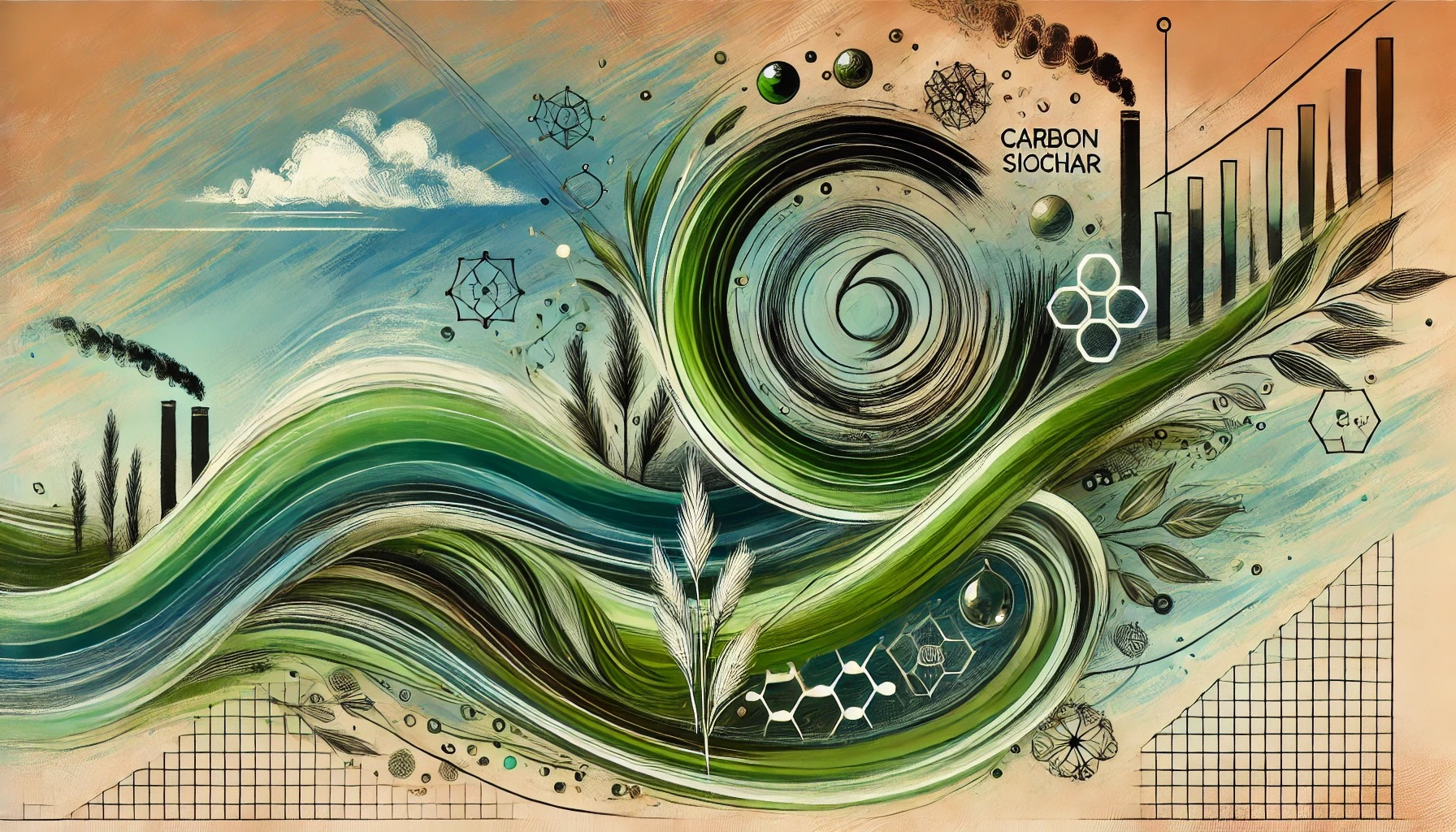

A recent study explores the potential environmental benefits of pyrolyzing switchgrass, a prairie grass, cultivated on marginal lands in China. Switchgrass, known for its ecological adaptability, can restore depleted soils and produce high biomassBiomass is a complex biological organic or non-organic solid product derived from living or recently living organism and available naturally. Various types of wastes such as animal manure, waste paper, sludge and many industrial wastes are also treated as biomass because like natural biomass these More yields. This research delves into its physicochemical properties and evaluates the energy consumption and greenhouse gas (GHG) emissions associated with its pyrolysis.
Two pyrolysis scenarios were analyzed: Scenario A with a lower temperature and shorter residence timeResidence time refers to the duration that the biomass is heated during the pyrolysis process. The residence time can influence the properties of the biochar produced. More, and Scenario B with higher temperature and longer residence timeThis refers to the amount of time that the biomass is heated during the pyrolysis process. The residence time can influence the characteristics of the biochar, such as its porosity and surface area. More. Scenario B proved more effective for long-term carbon sequestration, requiring 26.72 million tons of coal equivalent (tce) energy annually but potentially reducing GHG emissions by 147.84 million tons of CO2 equivalent per year. In contrast, Scenario A, requiring 8.25 million tce per year, could cut GHG emissions by 173.80 million tons of CO2 equivalent annually. These reductions represent 1.52% and 1.30% of China’s total carbon emissions in 2022 for Scenarios A and B, respectively.
The study also compared pyrolysis to combustion, noting that while combustion generates more energy, it results in higher carbon emissions. Therefore, pyrolysis, particularly under Scenario B, is preferred for its superior carbon sequestration capabilities and lower environmental impact. This research underscores the promise of using switchgrass on marginal lands as a sustainable practice to mitigate climate change and reduce reliance on fossil fuels. By integrating biochar into soil, the process not only sequesters carbon but also improves soil quality, offering a multifaceted approach to environmental conservation and energy production.



Leave a Reply