
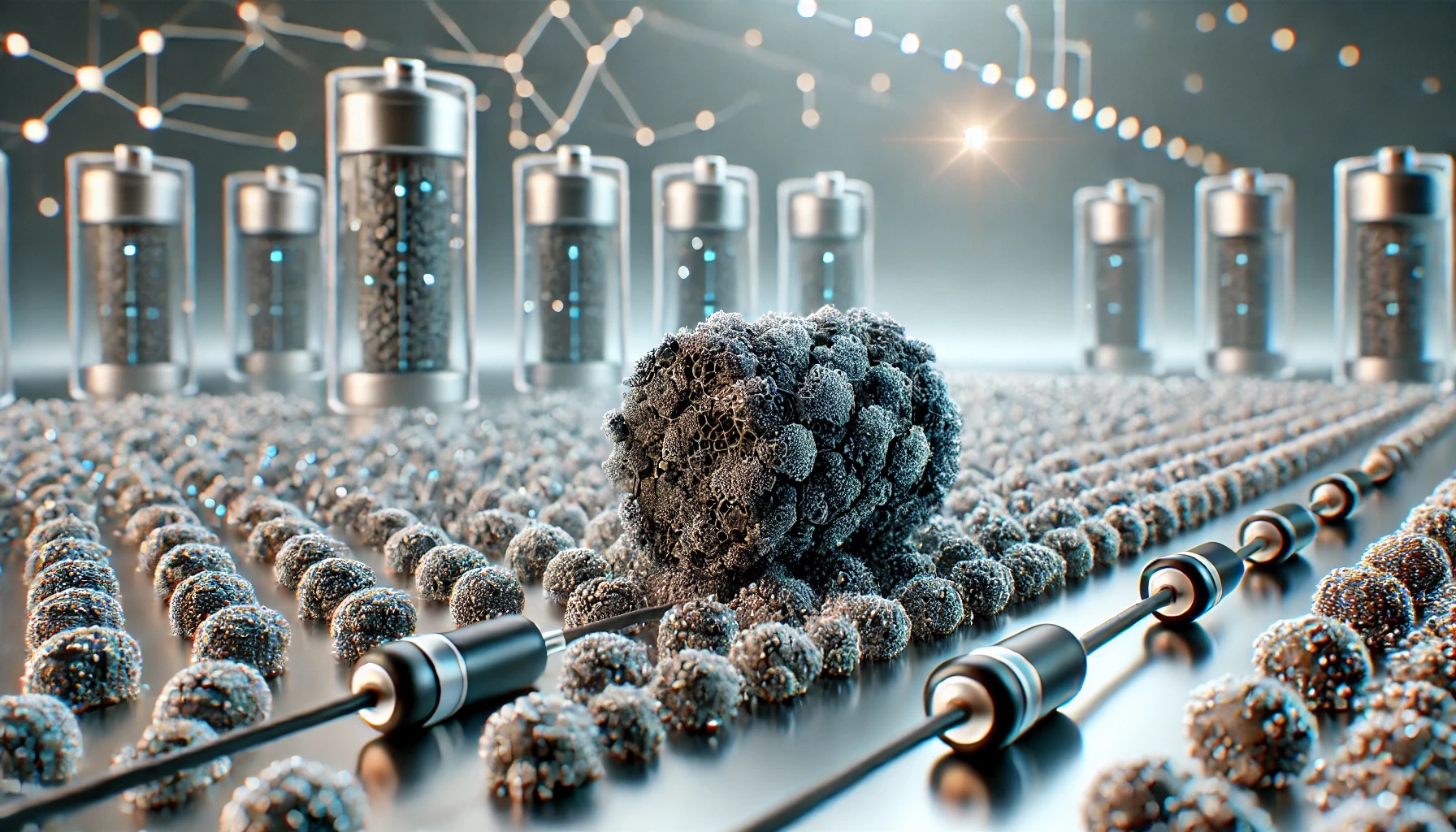
Rafsan, et al (2024) Poultry litter-derived biocharBiochar is a carbon-rich material created from biomass decomposition in low-oxygen conditions. It has important applications in environmental remediation, soil improvement, agriculture, carbon sequestration, energy storage, and sustainable materials, promoting efficiency and reducing waste in various contexts while addressing climate change challenges. More for supercapacitor applications. Next Energy. https://doi.org/10.1016/j.nxener.2024.100171
The need for sustainable waste management and efficient energy storage technologies is growing rapidly, driven by increasing waste production and rising energy demands. A new study explores the potential of biochar derived from poultry litter as an eco-friendly material for supercapacitor electrodes.
Poultry litter, a waste product from the poultry industry, is abundant and contains useful elements like carbon, nitrogen, and phosphorus. This research investigates its conversion into biochar via pyrolysisPyrolysis is a thermochemical process that converts waste biomass into bio-char, bio-oil, and pyro-gas. It offers significant advantages in waste valorization, turning low-value materials into economically valuable resources. Its versatility allows for tailored products based on operational conditions, presenting itself as a cost-effective and efficient More and subsequent activation with potassium hydroxide (KOH). The activation process significantly increases the biochar’s surface area, making it more suitable for energy storage applications.
The research showed that KOH-activated biochar achieved a specific surface area over 200 times greater than untreated biochar, reaching 814 m²/g. This enhanced surface area, combined with the introduction of heteroatoms like oxygen and phosphorus, led to improved electrochemical properties. The activated biochar displayed a specific capacitance of 152 F/g, attributed to its hierarchical porous structure and improved hydrophilicity.
By repurposing agricultural waste, this study demonstrates a sustainable method for creating high-performance supercapacitor materials. The use of poultry litter-derived biochar not only helps manage waste but also contributes to the development of greener, more efficient energy storage solutions. This research highlights the potential of integrating waste management with energy storage technology, offering a dual benefit of reducing environmental impact and advancing renewable energy applications.


Leave a Reply