
Chen, et al (2024) Accelerated carbonation curing of biochar-cement mortar: Effects of biocharBiochar is a carbon-rich material created from biomass decomposition in low-oxygen conditions. It has important applications in environmental remediation, soil improvement, agriculture, carbon sequestration, energy storage, and sustainable materials, promoting efficiency and reducing waste in various contexts while addressing climate change challenges. More pyrolysisPyrolysis is a thermochemical process that converts waste biomass into bio-char, bio-oil, and pyro-gas. It offers significant advantages in waste valorization, turning low-value materials into economically valuable resources. Its versatility allows for tailored products based on operational conditions, presenting itself as a cost-effective and efficient More temperatures on carbon sequestration, mechanical properties and microstructure. Construction and Building Materials. https://doi.org/10.1016/j.conbuildmat.2024.138446
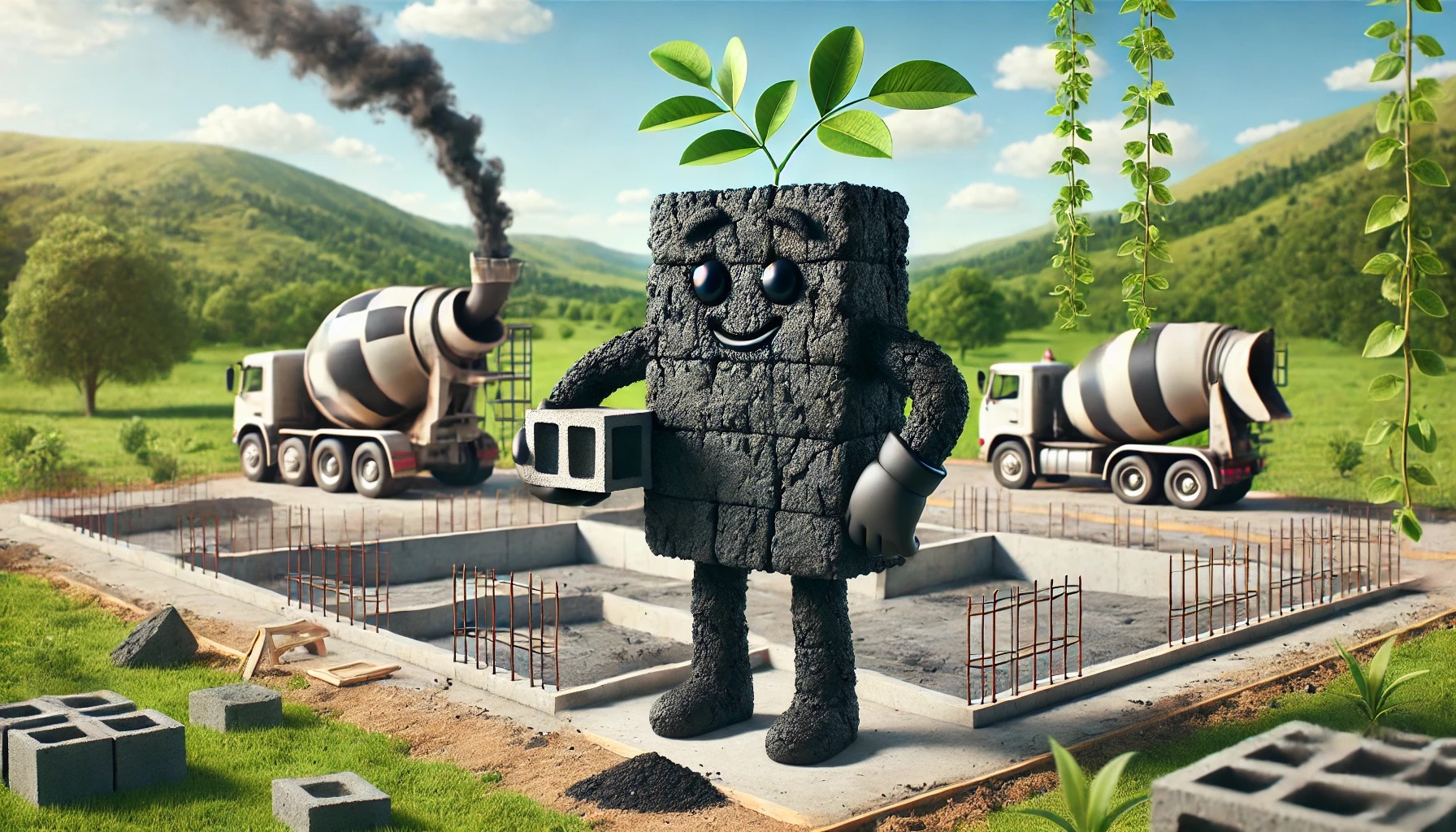
The cement industry is responsible for around 8% of global CO2 emissions. A recent study explores how biochar, derived from corn straw at different pyrolysis temperatures (300°C, 500°C, and 700°C), can reduce these emissions when used in biochar-cement mortars under accelerated carbonation curing (ACC). The aim is to understand how pyrolysis temperature affects carbon sequestration, mechanical strength, and microstructure.
The study finds that biochar produced at 500°C is optimal for improving both carbon sequestration and compressive strength. Compared to biochar processed at 300°C and 700°C, the 500°C biochar has a larger surface area and pore volume, which facilitates CO2 diffusion into the cement matrix. This biochar increased carbon sequestration by up to 31.6% and significantly improved the compressive strength over 28 days.
The 700°C biochar performed well initially due to its hydrophobicity, but at high dosages, it negatively impacted the long-term strength of the mortar. Meanwhile, 300°C biochar had less impact on CO2 absorption due to insufficient pore development.
This research highlights biochar’s potential to reduce the carbon footprint of cement materials while improving their structural properties. The results suggest that biochar at a pyrolysis temperature of 500°C is most effective for combining carbon sequestration with enhanced material performance, offering a pathway for more sustainable building materials. Future work could focus on scaling up biochar-cement technologies and optimizing production for practical use in the construction industry.





Leave a Reply