
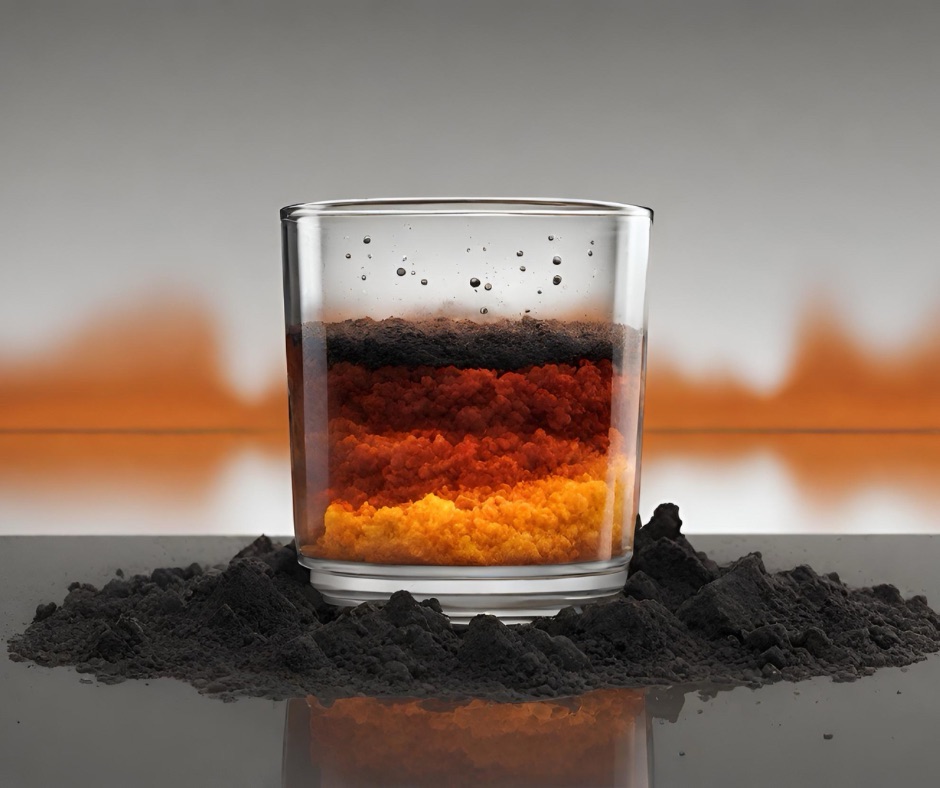

Industrial activities, particularly textiles, paint, printing, and cosmetics, contribute significantly to socioeconomic development. However, their wastewater often carries hazardous pollutants like dyes, posing a major threat to water bodies and human health. This research introduces a novel adsorbent derived from Croton bonplandianus Baill. biochar loaded with magnetic iron oxide nanoparticles (Fe3O4) to effectively remove two harmful azo dyes – Basic Brown 1 (BB1) and Basic Orange 2 (BO2) – from contaminated water.
The study highlights several key advantages of this new adsorbent:
- High adsorption capacity: Under optimal conditions, the biochar successfully removed 93% of BB1 and 95% of BO2 from aqueous solutions.
- Cost-effective and eco-friendly:Utilizing readily available biochar and magnetic nanoparticles makes this approach significantly cheaper than traditional methods like activated carbonActivated carbon is a form of carbon that has been processed to create a vast network of tiny pores, increasing its surface area significantly. This extensive surface area makes activated carbon exceptionally effective at trapping and holding impurities, like a molecular sponge. It is commonly More, while also being environmentally friendly.
- Facile regeneration: The biochar exhibits excellent regeneration efficiency, allowing for its repeated use and reducing long-term costs.
- Tailored performance: By optimizing operational parameters like pHpH is a measure of how acidic or alkaline a substance is. A pH of 7 is neutral, while lower pH values indicate acidity and higher values indicate alkalinity. Biochars are normally alkaline and can influence soil pH, often increasing it, which can be beneficial More,contact time, temperature, and dye concentration, the adsorption process can be further enhanced for maximum efficiency.
The research employed various techniques to characterize the biochar and elucidate the adsorption mechanism. Scanning electron microscopy (SEM) and Fourier transform infrared spectroscopy (FTIR) revealed the surface morphology and chemical composition of the biochar, providing insights into its interactions with the dyes. Batch experiments were conducted to determine the optimal conditions for adsorption, while isotherm and kinetic models provided mathematical descriptions of the process.
This study demonstrates the potential of Fe3O4-loaded C. bonplandianus biochar as a promising alternative for dye removal from wastewater. Its high adsorption capacity, cost-effectiveness, eco-friendliness, and reusability make it a sustainable and practical solution for environmental cleanup. By optimizing the adsorption process and exploring its applicability to other pollutants, this technology can contribute significantly to cleaner water and a healthier environment.
Further research can explore the applicability of this biochar to remove other types of dyes and contaminants from diverse wastewater sources. Scaling up the synthesis and application of the biochar for real-world wastewater treatment systems is crucial for broader implementation. Investigating the economic feasibility and life cycle assessment of this technology compared to existing methods can provide valuable insights for its large-scale adoption.



Leave a Reply