
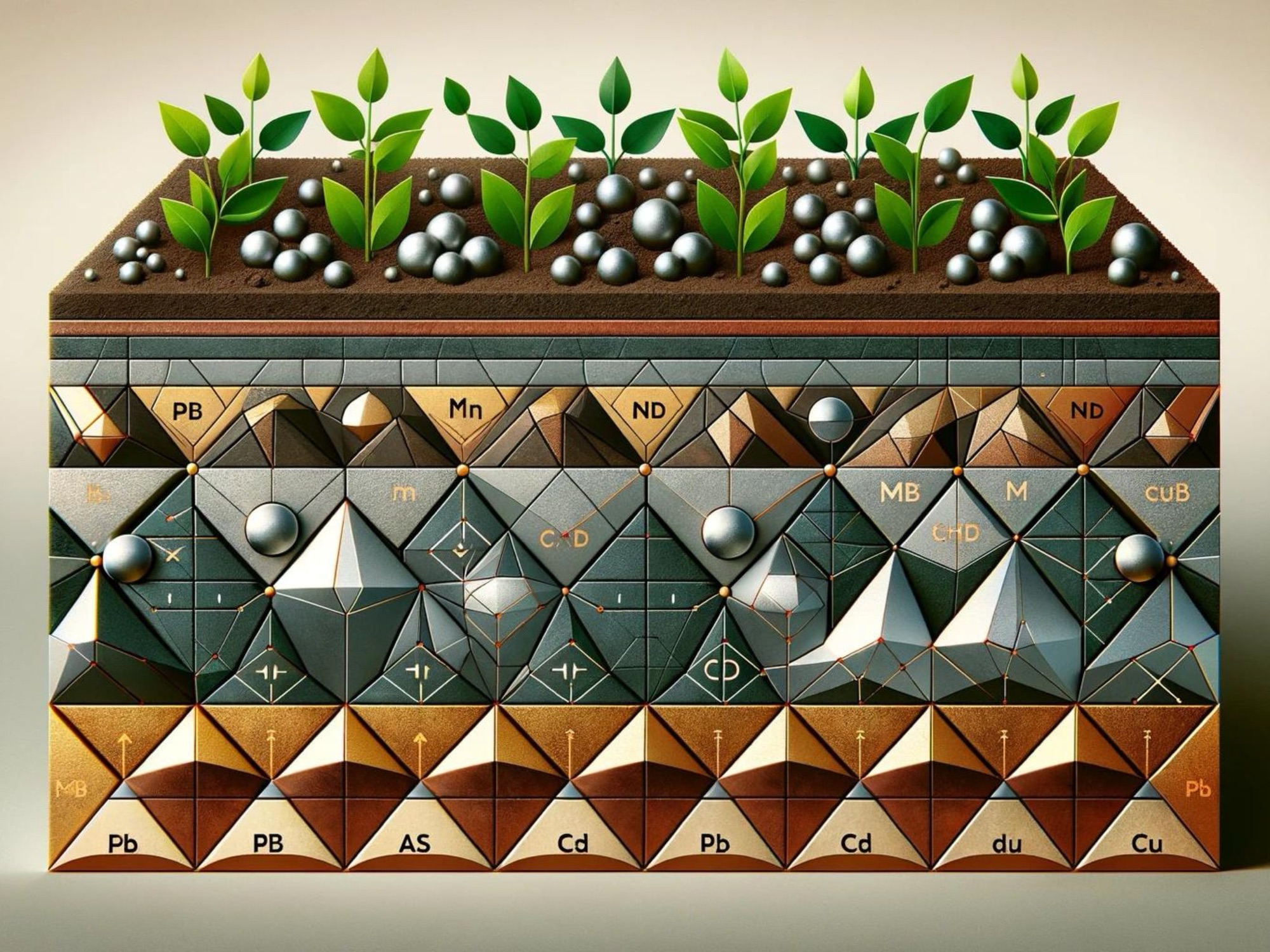

In recent studies, Mn-modified bamboo biochar has been highlighted as a promising agent for the remediation of soil contaminated with heavy metals. This innovative approach not only improves the physicochemical properties of the soil but also effectively inactivates harmful metals such as lead (Pb), arsenic (As), cadmium (Cd), and copper (Cu).
Soil contamination poses a growing threat to environmental safety and public health due to the accelerated industrial and urban development. Conventional biochar has been utilized to tackle this issue; however, its efficacy is often limited by its adsorption capacity. To enhance this, the modification of biochar with manganese (Mn) has been explored, proving to offer a greater developmental pore structure, enhanced mechanical properties, and increased adsorption sites due to enriched surface functional groups.
The process involves impregnating bamboo with Mn through a metal salt solution followed by pyrolysisPyrolysis is a thermochemical process that converts waste biomass into bio-char, bio-oil, and pyro-gas. It offers significant advantages in waste valorization, turning low-value materials into economically valuable resources. Its versatility allows for tailored products based on operational conditions, presenting itself as a cost-effective and efficient More at 500°C. This method not only stabilizes Mn within the char but also forms various Mn oxygen groups that enhance heavy metal complexation capacity. This study reveals that Mn-modified bamboo biochar reduces soil pHpH is a measure of how acidic or alkaline a substance is. A pH of 7 is neutral, while lower pH values indicate acidity and higher values indicate alkalinity. Biochars are normally alkaline and can influence soil pH, often increasing it, which can be beneficial More slightly (by 0.08 to 0.70) which can affect microbial and plant life adversely, yet it significantly increases the soil’s organic matter by 8.00 to 45.13% and alkaline hydrolysis nitrogen by 1.84 to 5.78%, improving soil fertility and structure.
Furthermore, the biochar substantially decreases diethylene triamine penta-acetic acid (DTPA)-extractable heavy metals—Pb, As, Cd, and Cu—by up to 58.65%, indicating a strong passivation effect. This reduction not only prevents the metals from leachingLeaching is the process where nutrients are dissolved and carried away from the soil by water. This can lead to nutrient depletion and environmental pollution. Biochar can help reduce leaching by improving nutrient retention in the soil. More into water sources but also reduces their bioavailability, thus mitigating potential toxicity to plants and animals.
The study underscores Mn-modified bamboo biochar as a versatile and environmentally beneficial material that offers a dual function of soil amendmentA soil amendment is any material added to the soil to enhance its physical or chemical properties, improving its suitability for plant growth. Biochar is considered a soil amendment as it can improve soil structure, water retention, nutrient availability, and microbial activity. More and remediation agent, thus presenting a sustainable solution to manage multi-heavy metal contaminated soils efficiently. This innovative application not only harnesses waste material but also contributes to a greener and safer environment.




Leave a Reply