
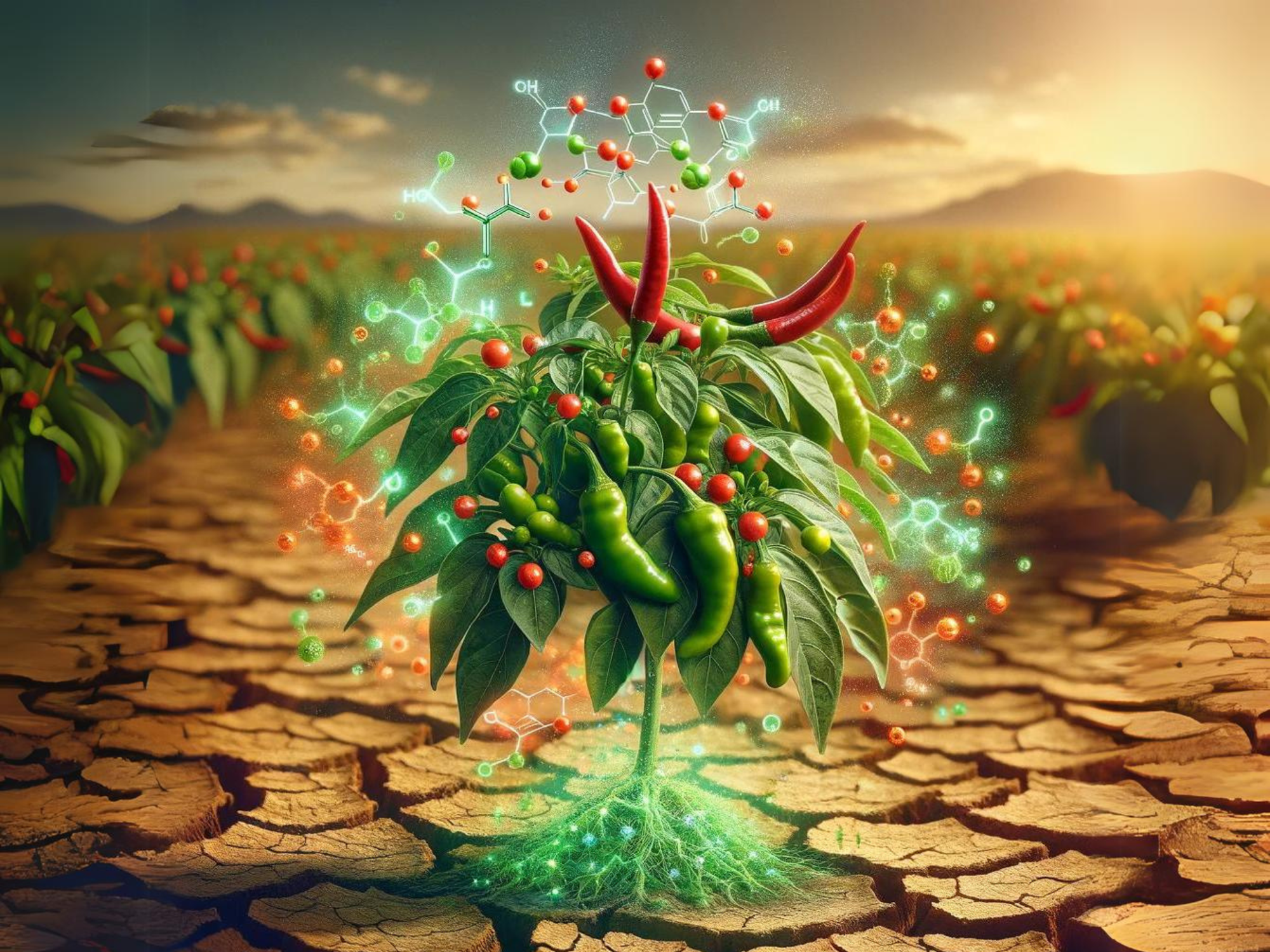
Hareem, et al (2024) Optimizing chili production in drought stress: combining Zn-quantum dot biocharBiochar is a carbon-rich material created from biomass decomposition in low-oxygen conditions. It has important applications in environmental remediation, soil improvement, agriculture, carbon sequestration, energy storage, and sustainable materials, promoting efficiency and reducing waste in various contexts while addressing climate change challenges. More and proline for improved growth and yield. Scientific Reports. https://doi.org/10.1038/s41598-024-57204-w
Drought stress is a formidable challenge in agriculture, impeding plant growth and productivity by inducing oxidative stress and generating reactive oxygen species (ROS). However, innovative approaches, such as the application of zinc-quantum dot biochar (ZQDB) and proline (Pro), offer viable solutions to this pervasive issue. Biochar’s potential to improve water use efficiency, combined with proline’s role in minimizing the adverse impacts of ROS, presents a synergistic strategy to combat drought stress.
A recent study exploring the impact of ZQDB and proline on chili growth under drought conditions revealed significant improvements. Treatments involving 0.4% ZQDB, 0.1 mM Pro, and their combination, compared to control, resulted in notable enhancements in chili plant dry weight, height, fruit length, girth, and yield. This was further supported by increases in chlorophyll content and leaf concentrations of nitrogen (N), phosphorus (P), and potassium (K), validating the efficacy of the combined treatment against drought stress.
The study’s findings underscore the potential of ZQDB and proline as effective amendments for mitigating drought stress in chili crops. Given the global prevalence of drought and its impact on agriculture, such innovative approaches are crucial for enhancing crop resilience and productivity. Further research is encouraged to explore the application of these treatments in other crops, potentially offering a broad-based solution to the challenges posed by changing climatic conditions.






Leave a Reply