
Long, et al (2024) Competitive adsorption of H2O and CO2 on nitrogen-doped biocharBiochar is a carbon-rich material created from biomass decomposition in low-oxygen conditions. It has important applications in environmental remediation, soil improvement, agriculture, carbon sequestration, energy storage, and sustainable materials, promoting efficiency and reducing waste in various contexts while addressing climate change challenges. More with rich-oxygen functional groups. Separation and Purification Technology. https://doi.org/10.1016/j.seppur.2024.130476
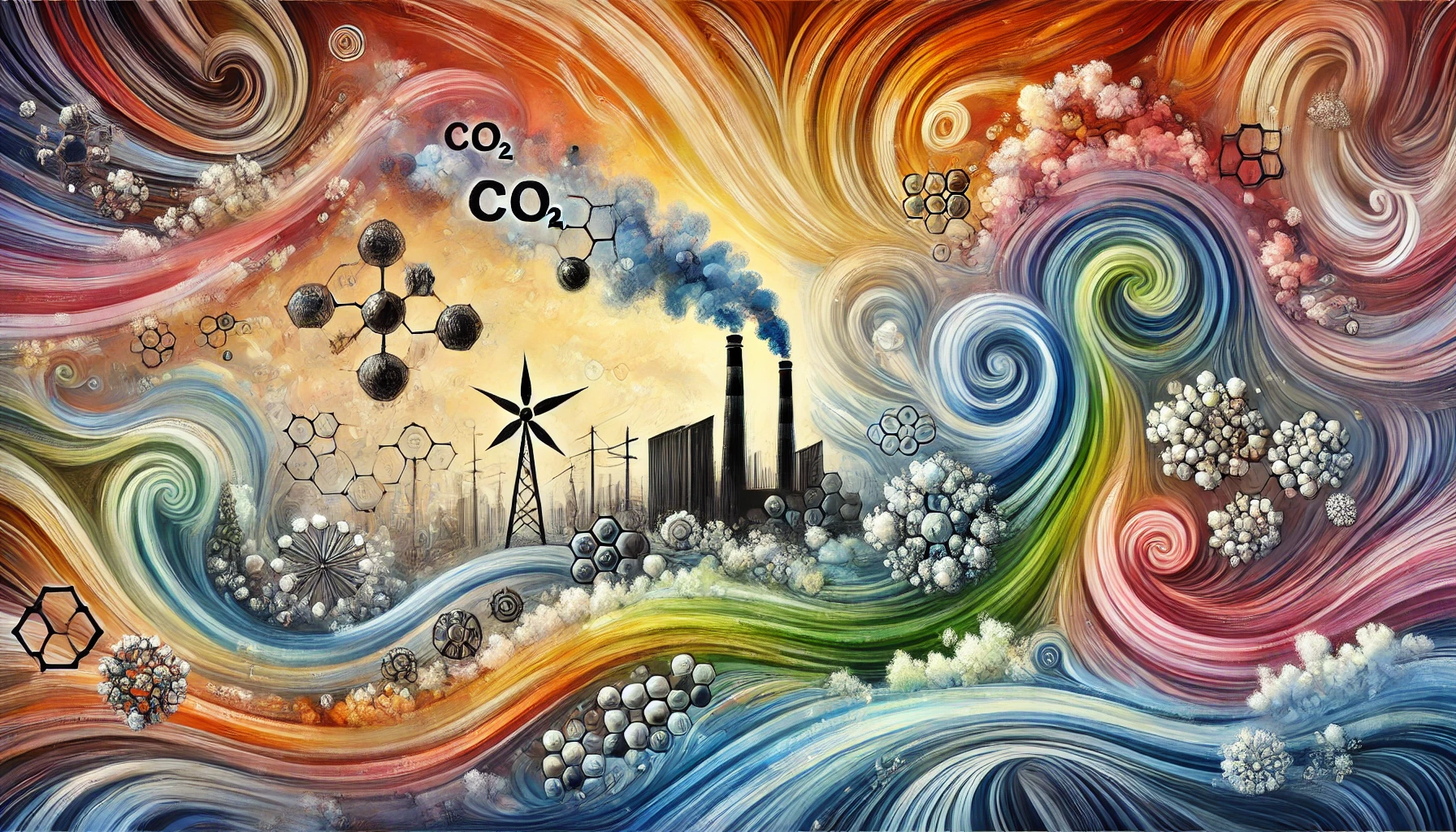
A recent study highlights the potential of nitrogen-doped biochar as a game-changing material for carbon capture in humid environments, a critical challenge for post-combustion CO2 capture technologies. Researchers developed biochar with nitrogen (N) and oxygen (O) functional groups using a scalable, single-step synthesis method. These functional groups enhance the biochar’s adsorption capacity for CO2 while selectively outperforming other gases like nitrogen (N2) in competitive scenarios.
Key findings include a CO2 adsorption capacity of 1.21 mmol/g at 25°C and 15% CO2 concentration. Importantly, the biochar demonstrated resilience in the presence of water vapor, with CO2 uptake reduced by only 28.7% in humid conditions. This performance was attributed to the strong molecular interactions facilitated by N and O functional groups, which increase surface polarity and improve adsorption energies for both CO2 and H2O.
The study also revealed water’s dominant role in adsorption dynamics due to its higher affinity for biochar surfaces, though slow kinetics can limit its interference. Using advanced computational modeling, the team clarified how specific functional groups interact with CO2 and H2O, offering insights into optimizing biochar for real-world applications.
These findings pave the way for cost-effective, sustainable carbon capture solutions, particularly in power plants where humid flue gases are common. By leveraging renewable biomassBiomass is a complex biological organic or non-organic solid product derived from living or recently living organism and available naturally. Various types of wastes such as animal manure, waste paper, sludge and many industrial wastes are also treated as biomass because like natural biomass these More sources, this research advances biochar as a promising tool in the fight against climate change, bridging the gap between efficiency and scalability in carbon capture technologies.



Leave a Reply