
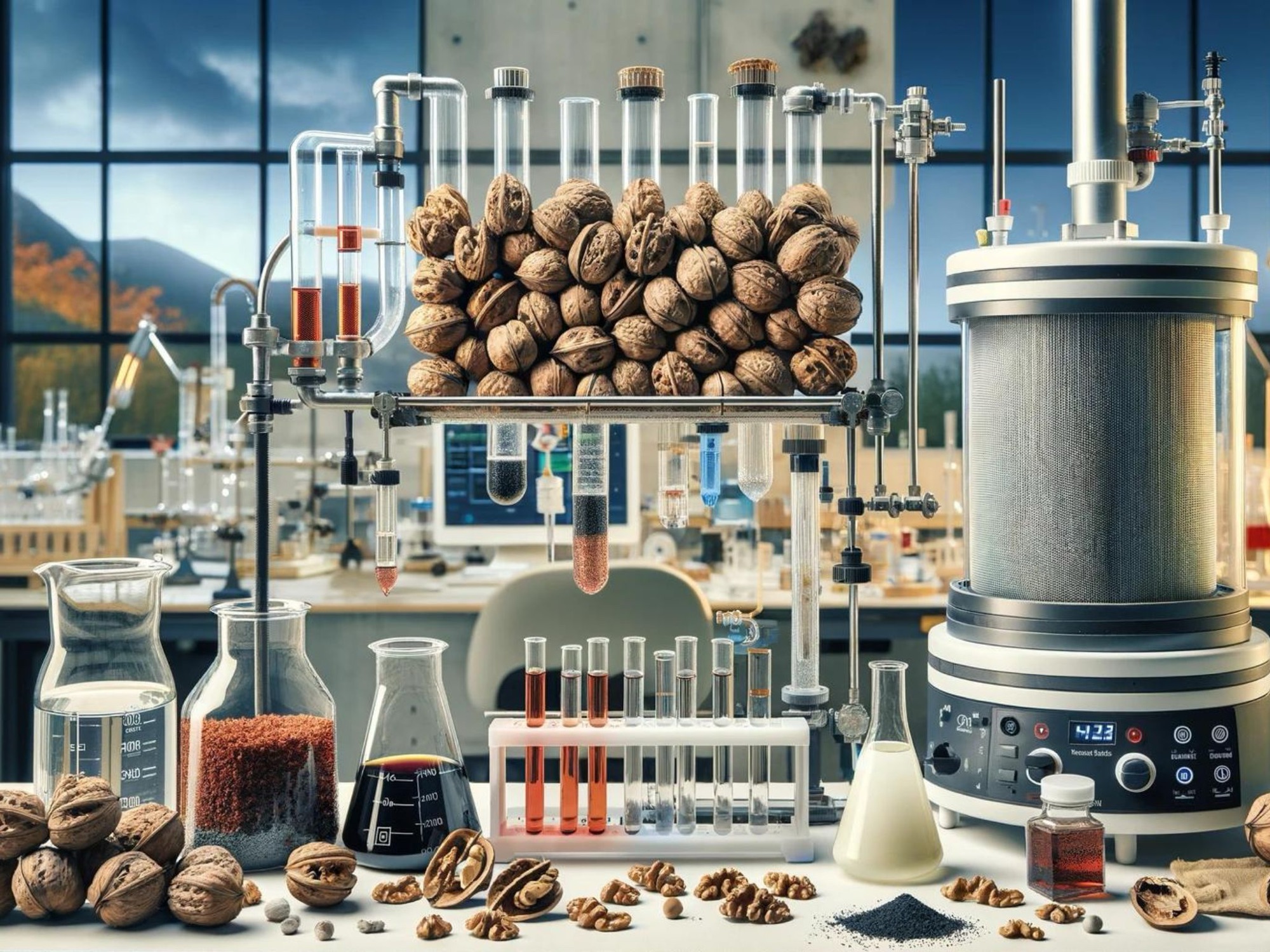

Researchers have developed a groundbreaking method using Fe and N co-doped walnut shell biochar (Fe,N-BC) to address water pollution. This innovative biochar demonstrates exceptional efficiency in degrading sulfamethoxazole (SMX), a common antibiotic contaminant, by activating peroxymonosulfate (PMS). The process involves a one-pot pyrolysisPyrolysis is a thermochemical process that converts waste biomass into bio-char, bio-oil, and pyro-gas. It offers significant advantages in waste valorization, turning low-value materials into economically valuable resources. Its versatility allows for tailored products based on operational conditions, presenting itself as a cost-effective and efficient More method, combining walnut shells with melamine and iron(III) chloride.
The study compared Fe,N-BC with pristine biochar (BC), nitrogen-doped biochar (N-BC), and α-Fe2O3-BC. Fe,N-BC achieved a remarkable SMX degradation rate of 0.5 min-1, significantly outperforming the other materials. This is attributed to the formation of Fe3C and iron oxides, which are highly reactive in PMS activation.
Furthermore, Fe,N-BC was integrated into a composite membrane using a liquid-induced phase inversion process. This ultrafiltration membrane not only efficiently separated humic acid sodium salt (HA) with a 98% success rate but also demonstrated impressive self-cleaning properties during rhodamine B (RhB) filtration.
The study highlights that singlet oxygen (1O2) is the primary species responsible for SMX degradation. Additionally, toxicity assessments indicated that the intermediate products were less toxic than SMX itself, ensuring a safer environmental impact.
This research marks a significant advancement in wastewater treatment technology, offering a cost-effective, sustainable, and efficient solution for pollutant degradation and membrane self-cleaning. The integration of Fe and N into biochar not only improves catalytic activity but also enhances the material’s practical application in real-world scenarios.



Leave a Reply