
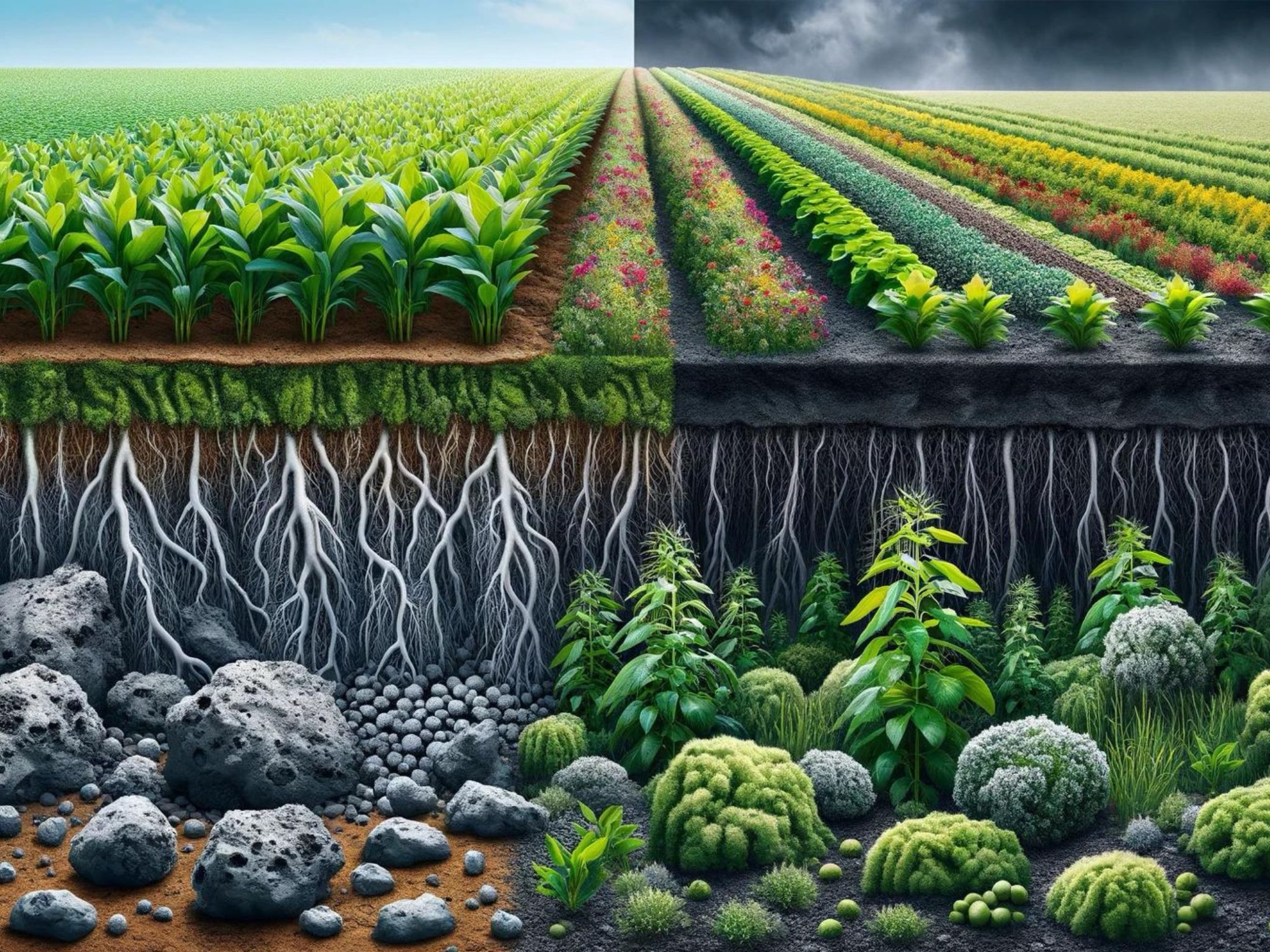

In response to the escalating issue of cadmium (Cd) contamination in alkaline soils, recent studies have pinpointed rape straw biochar (RB) as a potent remediation material. Produced through pyrolyzing rape straw at 400°C and 700°C, termed RB400 and RB700 respectively, this biochar has shown promising results in immobilizing Cd, thus mitigating its hazardous impact.
Cadmium, a toxic metal, poses significant threats to agricultural sustainability and food safety, particularly in China where soil and water contamination is prevalent due to industrial activities. The accumulation of Cd in plants can devastate terrestrial and aquatic life, and ultimately, human health through biomagnification. Current immobilization strategies primarily focus on acidic environments; however, alkaline conditions—common in northern China—present unique challenges due to Cd’s increased mobility and bioavailability.
The study explored the adsorption capabilities of RB in alkaline settings through extensive lab testing, including adsorption isotherms, soil incubation experiments, and molecular spectroscopy analyses. The findings revealed that RB700 outperformed RB400 with a maximum Cd sorption capacity of 119.33 mg g^-1 as calculated from the Langmuir isotherm model at pHpH is a measure of how acidic or alkaline a substance is. A pH of 7 is neutral, while lower pH values indicate acidity and higher values indicate alkalinity. Biochars are normally alkaline and can influence soil pH, often increasing it, which can be beneficial More 8. This enhanced performance is attributed to the higher precipitation of CdCO3 in RB700, which constituted about 73.9% of its total Cd capacity.
Further molecular investigations using Cd L3-edge X-ray absorption near-edge structure (XANES) and solid-state 13C nuclear magnetic resonance (13C-NMR) spectroscopy identified that organic Cd complexes and CdCO3 precipitation were the predominant mechanisms of Cd adsorption. These mechanisms are facilitated by the oxygen-containing functional groups present in the biochar, particularly aromatic and carboxyl groups, which engage in complexation and Cd2+-π interactions.
This study not only underscores the effectiveness of rape straw biochar in passivating Cd in alkaline environments but also enhances our understanding of the molecular interactions responsible for Cd retention in such conditions. The insights gained from this research could lead to improved remediation practices for Cd-contaminated alkaline soils, offering a sustainable solution to a pressing environmental problem. This approach not only stabilizes Cd but also contributes to soil health, potentially reducing the reliance on chemical amendments.



Leave a Reply