
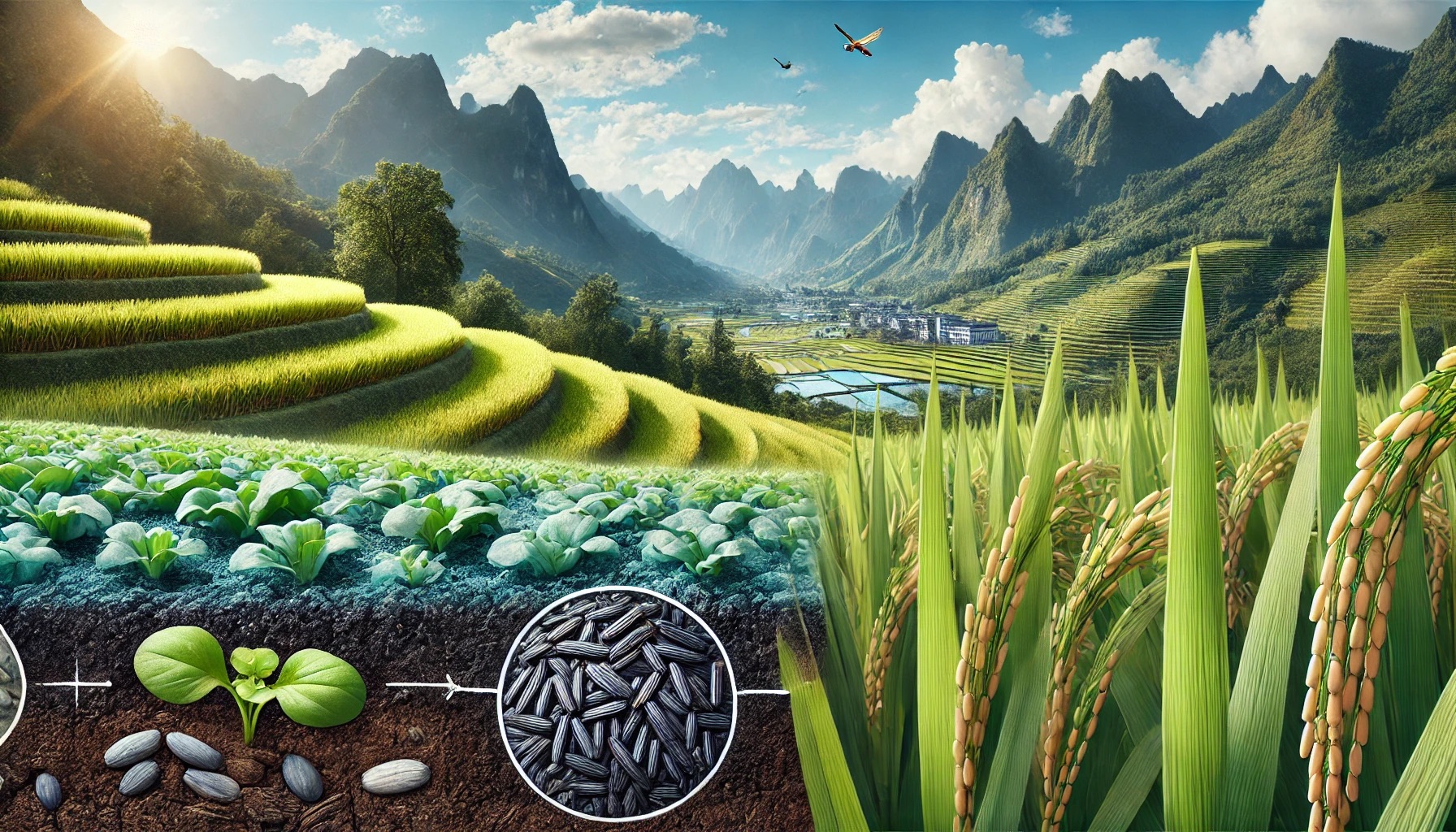

Improving rice quality through biocharBiochar is a carbon-rich material created from biomass decomposition in low-oxygen conditions. It has important applications in environmental remediation, soil improvement, agriculture, carbon sequestration, energy storage, and sustainable materials, promoting efficiency and reducing waste in various contexts while addressing climate change challenges. More application in China: A meta–analysis. Journal of Environmental Management. https://doi.org/10.1016/j.jenvman.2024.122701
A recent study published in the Journal of Environmental Management evaluates how biochar influences rice quality. Using a meta-analysis of 934 observations from 28 studies, researchers examined ten rice quality indicators, including processing, appearance, and eating quality.
Key findings reveal biochar improves rice processing by increasing the brown rice rate (0.5%), milled rice rate (1.7%), and head rice rate (6.2%). It also enhances appearance by reducing chalky rice rate (11.1%) and chalkiness degree (12.9%) while improving the length-width ratio (1.4%). Eating quality saw a modest boost (2.6%). However, no significant changes were observed in nutritional indicators such as amylose content, protein content, or gel consistency.
The study identified optimal conditions for biochar’s effectiveness: heavy loam soils, alkaline pHpH is a measure of how acidic or alkaline a substance is. A pH of 7 is neutral, while lower pH values indicate acidity and higher values indicate alkalinity. Biochars are normally alkaline and can influence soil pH, often increasing it, which can be beneficial More (≥7.5), low soil organic matter (<10 g/kg), and biochar made from husk or shell at high temperatures (≥400°C).
These results highlight biochar’s potential to enhance rice quality without compromising nutrition. Despite its promising benefits, variability in biochar’s impact—dependent on soil type, biochar properties, and application rates—calls for tailored strategies in its use.
This research underscores biochar’s role in sustainable agriculture, offering insights into improving rice quality to meet growing food demands. By clarifying the mechanisms of biochar’s influence, it lays the groundwork for future guidelines in rice cultivation practices.




Leave a Reply