
Basumatary, et al (2024) Impact of coconut husk biocharBiochar is a carbon-rich material created from biomass decomposition in low-oxygen conditions. It has important applications in environmental remediation, soil improvement, agriculture, carbon sequestration, energy storage, and sustainable materials, promoting efficiency and reducing waste in various contexts while addressing climate change challenges. More on methane production rate in batch type anaerobic digester fed with cattle dung and cooked kitchen waste. BiomassBiomass is a complex biological organic or non-organic solid product derived from living or recently living organism and available naturally. Various types of wastes such as animal manure, waste paper, sludge and many industrial wastes are also treated as biomass because like natural biomass these More & Bioenergy. https://doi.org/10.1016/j.biombioe.2024.107300
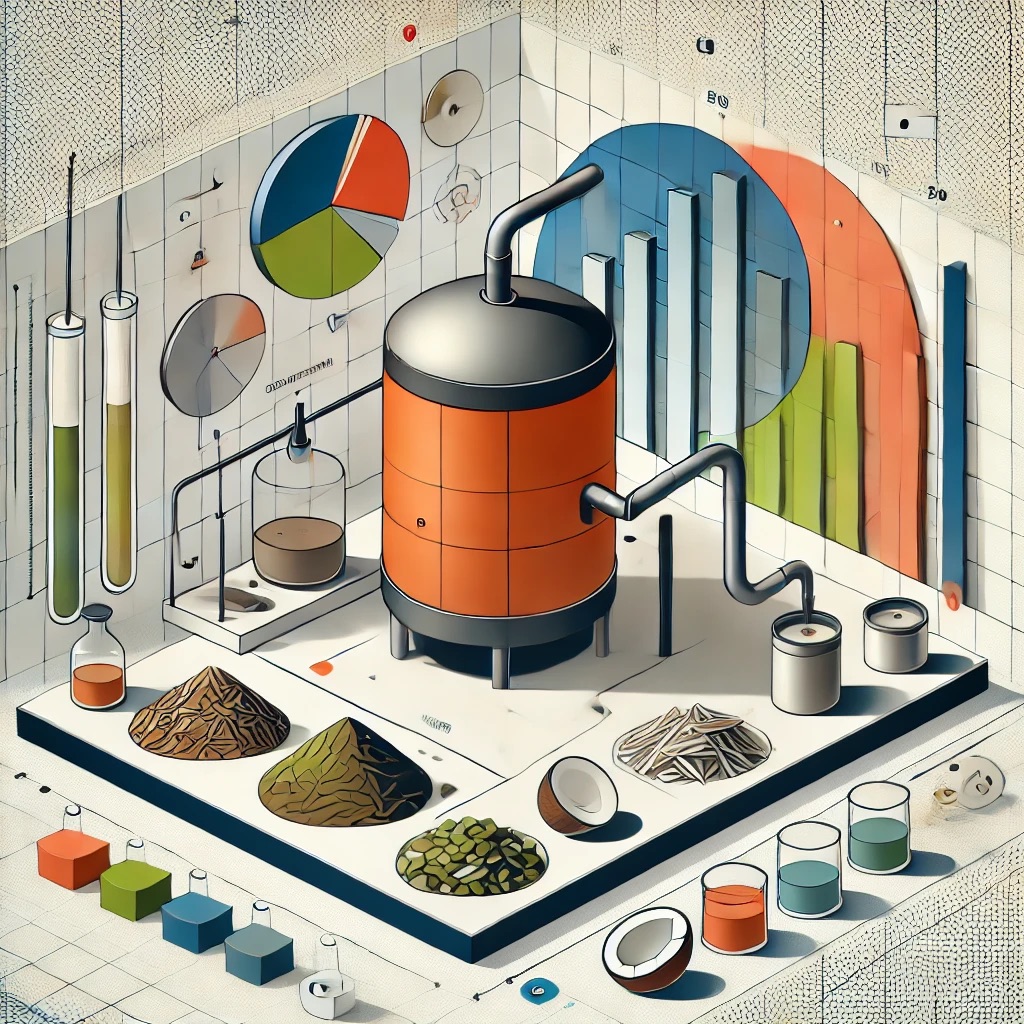
A recent study published in “Biomass and Bioenergy” explores the impact of adding coconut husk biochar to anaerobic digesters processing cattle dung and cooked kitchen waste. Researchers Shayaram Basumatary, Pranab Goswami, and Pankaj Kalita conducted experiments to determine how different ratios of these organic wastes, combined with biochar, affect methane production.
The study found that the ratio of cattle dung to kitchen waste significantly influences the anaerobic co-digestion process. When biochar was added to digesters operating at mesophilic temperatures (35 ± 2 °C), methane yield increased. The optimal substrate mixing ratio was 40% cattle dung to 60% kitchen waste. In these conditions, digesters with 15 g/L of biochar produced the highest specific methane yield, with ambient and mesophilic temperatures yielding 213.29 and 249.98 mL CH4/gVS, respectively.
To identify the best biochar amount, additional tests were conducted with varying biochar quantities (5, 10, 15, 20, and 25 g/L). The 15 g/L biochar mixture showed the highest cumulative methane yield, surpassing other quantities by up to 14.23%. This suggests that adding 15 g/L of biochar to a 40:60 mixture of cattle dung and kitchen waste is optimal for methane production.
This study highlights biochar’s potential to enhance anaerobic digestion, improving methane yield and waste recycling efficiency. Biochar’s high porosityPorosity of biochar is a key factor in its effectiveness as a soil amendment and its ability to retain water and nutrients. Biochar’s porosity is influenced by feedstock type and pyrolysis temperature, and it plays a crucial role in microbial activity and overall soil health. Biochar More and electron transfer capability contribute to better microbial growth and biogas quality. The findings support biochar’s use in optimizing the anaerobic digestion process, providing a sustainable solution for organic waste management and energy production.


Leave a Reply