
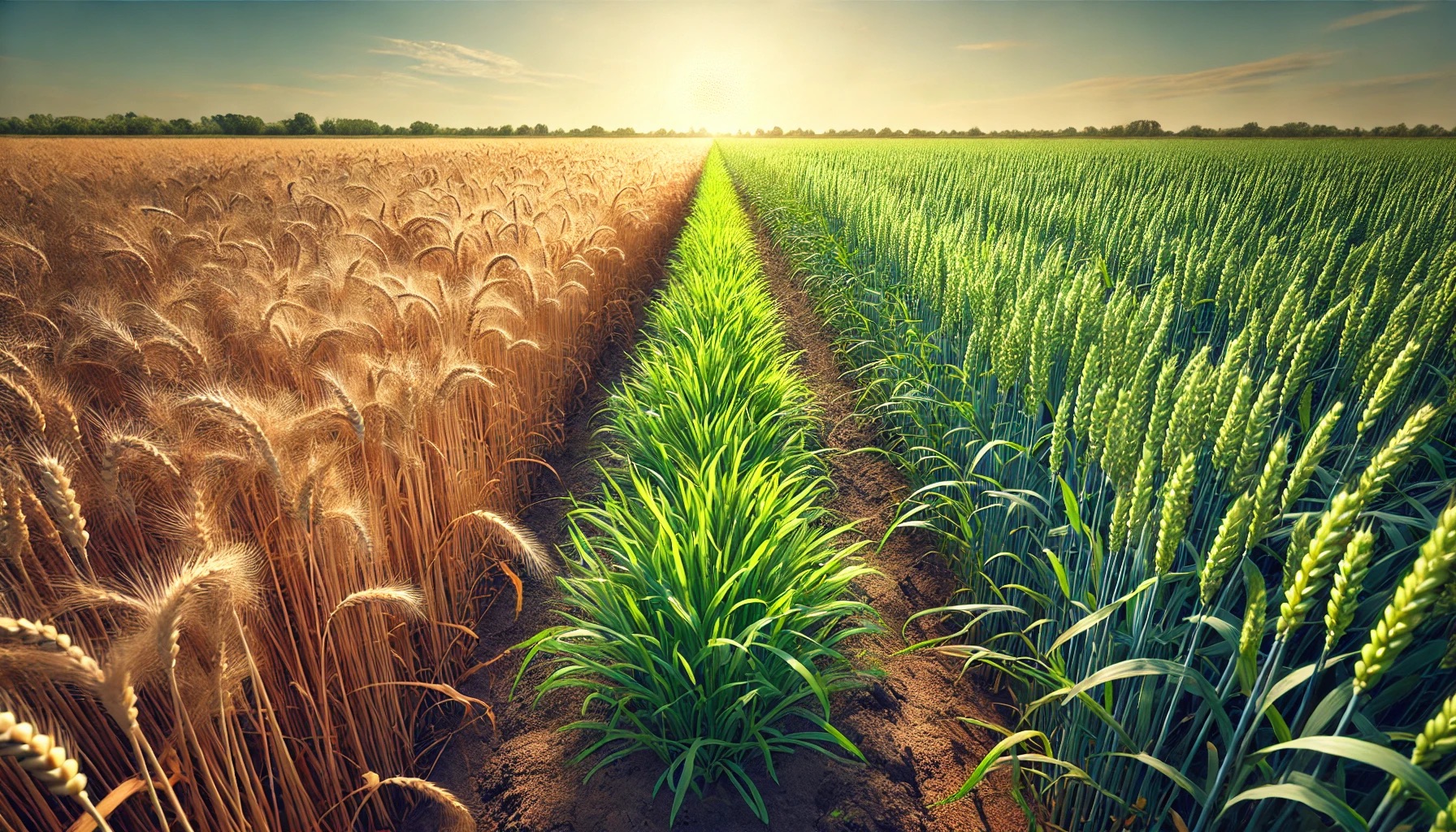
Shahzadi, A., Noreen, Z., Alamery, S. et al.Effects of biocharBiochar is a carbon-rich material created from biomass decomposition in low-oxygen conditions. It has important applications in environmental remediation, soil improvement, agriculture, carbon sequestration, energy storage, and sustainable materials, promoting efficiency and reducing waste in various contexts while addressing climate change challenges. More on growth and yield of Wheat (Triticum aestivum L.) under salt stress. Sci Rep14, 20024 (2024). https://doi.org/10.1038/s41598-024-70917-2
Salt stress is a significant global challenge that limits crop production, especially in wheat (Triticum aestivum L.), a staple food for over a third of the world’s population. A study evaluated the effects of biochar, a carbon-rich material, on wheat varieties FSD08 and PUNJAB-11 grown under saline conditions (120 mM NaCl). Biochar was applied at a 5% concentration to assess its potential in mitigating the negative impacts of salt stress on various growth, yield, physiological, and biochemical parameters.
Results indicated that salt stress adversely affected wheat growth, reducing root and shoot length, fresh and dry weights, leaf area, and the number of leaves. Additionally, salt stress increased membrane permeability, hydrogen peroxide (H2O2), malondialdehyde (MDA), and sodium (Na+) content, while decreasing potassium (K+) and calcium (Ca2+) levels. However, biochar treatment significantly improved these parameters, enhancing plant growth and yield even under salt stress. Biochar also mitigated oxidative stress by modulating antioxidant enzyme activities such as superoxide dismutase (SOD), catalase (CAT), and peroxidase (POD), leading to reduced oxidative damage in plants.
The study concluded that biochar effectively ameliorates the detrimental effects of salinity on wheat, making it a viable supplement for sustainable crop production in saline soils. This finding is crucial for improving wheat productivity in salt-affected regions, contributing to food security.


Leave a Reply