
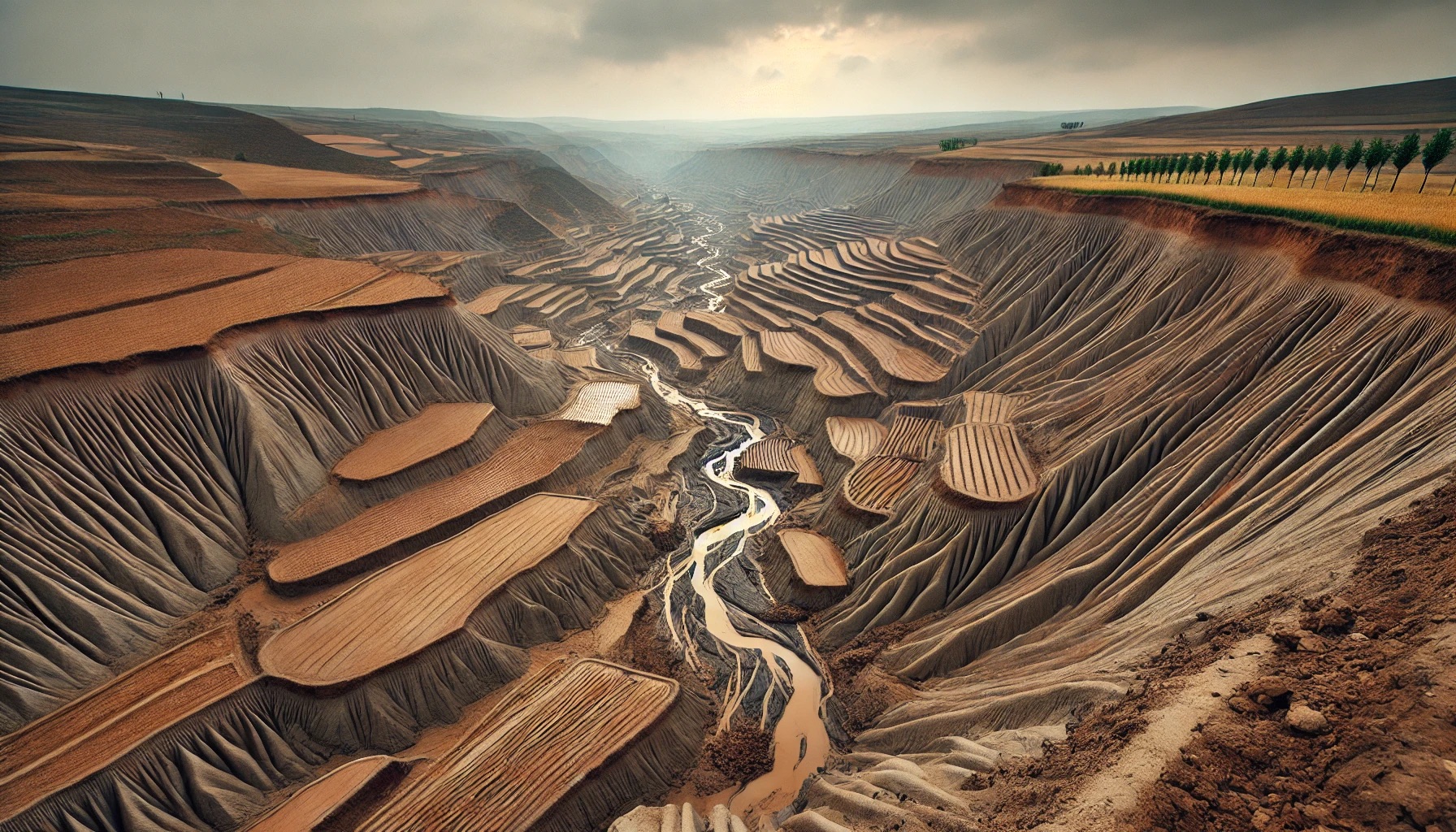
Li, et al (2024) BiocharBiochar is a carbon-rich material created from biomass decomposition in low-oxygen conditions. It has important applications in environmental remediation, soil improvement, agriculture, carbon sequestration, energy storage, and sustainable materials, promoting efficiency and reducing waste in various contexts while addressing climate change challenges. More addition enhances silt loam soil resistance to rill flow: A study based on three years of field monitoring data on China’s Loess Plateau. Soil and Tillage Research. https://doi.org/10.1016/j.still.2024.106320
Biochar addition has gained attention as a potential tool for improving soil health and reducing erosion, especially in areas prone to soil degradation. A study conducted over three years on China’s Loess Plateau examined the effects of biochar on silt loam soil resistance to rill erosion, focusing on its impact on soil properties and erodibility.
The researchers applied biochar derived from apple branches to experimental plots at different rates (ranging from 0 to 7%) and monitored changes in soil erodibility (Kr) and critical shear stress (τc), key indicators of soil’s resistance to erosion. Flume experiments were conducted to simulate water flow and soil detachment. The results showed that moderate biochar application rates (1-4%) significantly reduced soil erodibility by up to 59% and slightly increased critical shear stress, indicating enhanced soil resistance. However, higher application rates (5.5-7%) initially increased soil erodibility, suggesting over-application could weaken soil structure in the short term.
Over the study period, biochar’s positive effects became more pronounced. After three years, all biochar treatments led to a 51% reduction in soil erodibility, with improvements attributed to enhanced soil cohesion and aggregate stability. This long-term benefit highlights biochar’s potential for sustainable soil management, particularly for preventing erosion on sloped, erosion-prone soils like those on the Loess Plateau. Further research could refine optimal application rates for different soil types and climates.





Leave a Reply