
Sun, et al (2024) Impact of biocharBiochar is a carbon-rich material created from biomass decomposition in low-oxygen conditions. It has important applications in environmental remediation, soil improvement, agriculture, carbon sequestration, energy storage, and sustainable materials, promoting efficiency and reducing waste in various contexts while addressing climate change challenges. More on the degradation rates of three pesticides by vegetables and its effects on soil bacterial communities under greenhouse conditions. Scientific Reports. https://doi.org/10.1038/s41598-024-70932-3
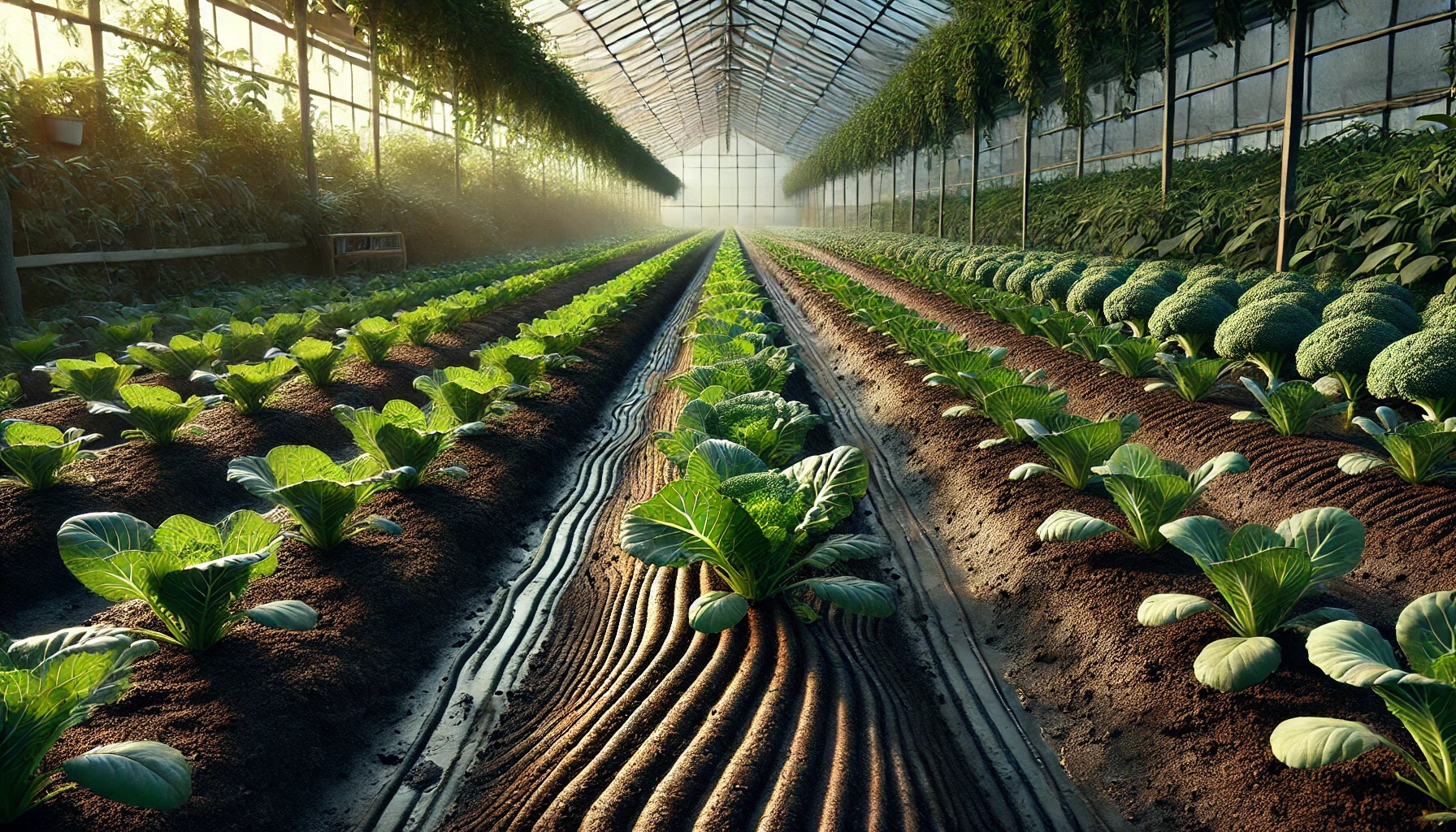
Recent research has explored the effects of rice straw biochar (RB) on the degradation of pesticides in two key vegetables, broccoli and pakchoi, grown in greenhouses. The study specifically examined three commonly used pesticides: chlorantraniliprole (CAP), haloxyfop-etotyl (HPM), and indoxacarb (IXB). Biochar was added to the soil at a rate of 25 t/ha to evaluate its influence on pesticide degradation and soil bacterial diversity.
The results showed that biochar application had varying effects on pesticide degradation. For broccoli, biochar accelerated the breakdown of CAP and HPM in both the plant and soil, while its impact on IXB was inconsistent. In pakchoi, biochar slowed the degradation of CAP and IXB in both the plant and soil but sped up HPM degradation in soil.
Furthermore, biochar significantly altered the rhizosphere bacterial communities, increasing both richness and diversity. This microbial activity likely contributed to enhanced degradation rates for certain pesticides, especially those with higher solubility, like CAP and HPM. The results suggest that biochar can reduce non-point source pollution by promoting faster degradation of specific pesticides.
Overall, biochar shows promise for improving pesticide degradation in vegetables, but its effectiveness depends on crop type, pesticide properties, and soil characteristics. Broccoli benefited the most from biochar application, making it a recommended practice for this crop.





Leave a Reply