
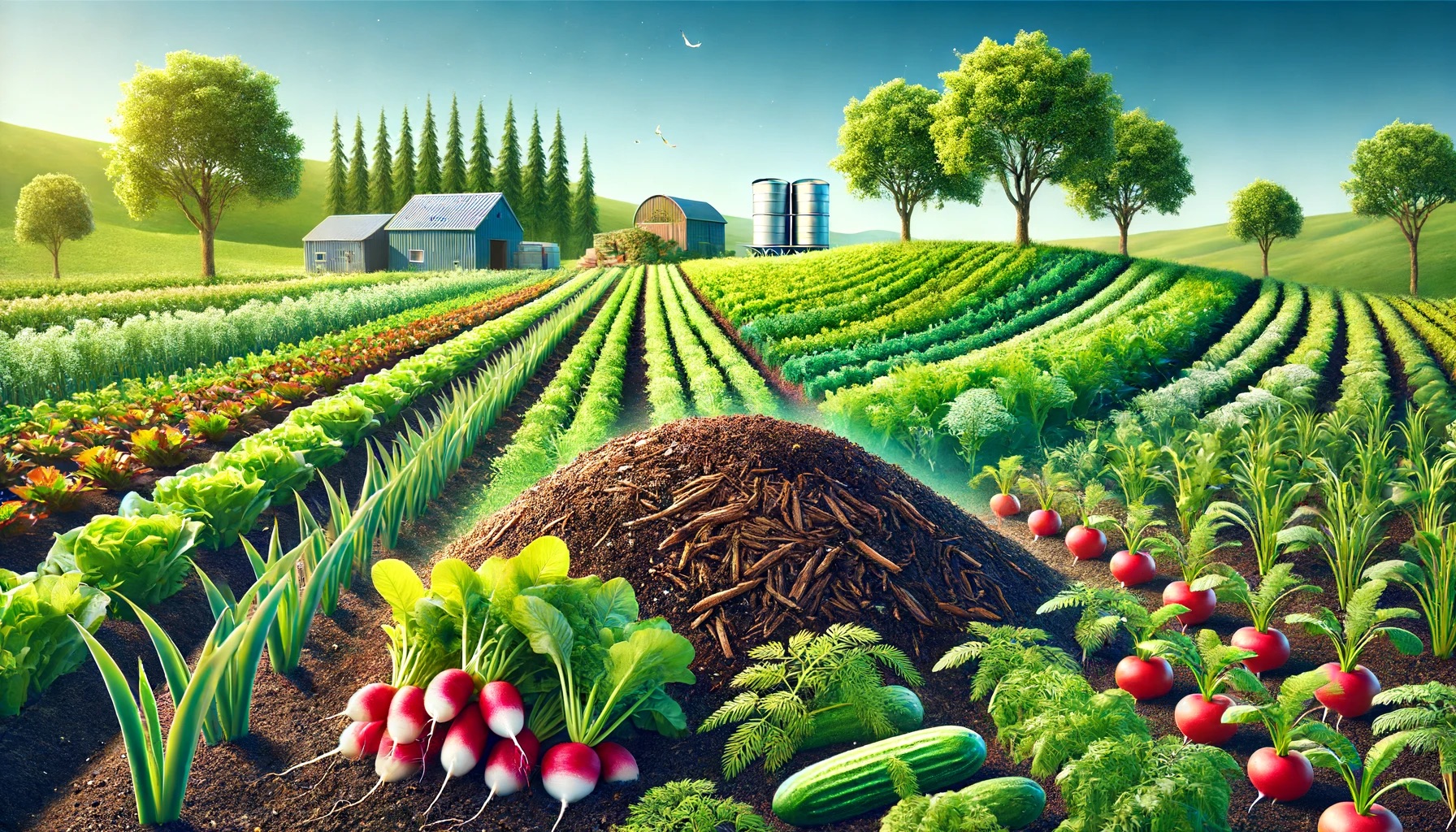

In recent years, biochar has emerged as a powerful tool in sustainable agriculture, offering multiple benefits for soil health and crop productivity. Biochar is a carbon-rich material derived from heating organic biomassBiomass is a complex biological organic or non-organic solid product derived from living or recently living organism and available naturally. Various types of wastes such as animal manure, waste paper, sludge and many industrial wastes are also treated as biomass because like natural biomass these More in low-oxygen conditions. This process not only helps in carbon sequestration but also enhances soil quality, making it an excellent addition to climate-smart agricultural practices.
Biochar’s primary benefits include improved soil fertility, better soil structure, increased water retention, and enhanced microbial activity. These attributes make it a valuable amendment, especially for low-fertility soils. Studies have shown that biochar can increase crop productivity by an average of 14.5%, particularly in soils with poor nutrient content. This boost in productivity highlights the potential of biochar to significantly contribute to agricultural sustainability.
An exciting development in biochar technology is the creation of biochar-based fertilizers. These fertilizers combine biochar with essential nutrients, providing a slow-release mechanism that enhances nutrient use efficiencyNutrient use efficiency refers to how effectively plants can take up and utilize nutrients from the soil. Biochar can improve nutrient use efficiency by enhancing nutrient availability and retention in the soil. More. By retaining nutrients better than conventional fertilizers, biochar-based fertilizers can reduce the need for frequent applications and minimize environmental runoff. This makes them a cost-effective and environmentally friendly option for farmers.
Various methods are used to produce biochar-based fertilizers, including the impregnation of biochar with nutrient solutions, co-pyrolysis with nutrient-rich feedstockFeedstock refers to the raw organic material used to produce biochar. This can include a wide range of materials, such as wood chips, agricultural residues, and animal manure. More, and granulation. These techniques aim to optimize nutrient retention and slow-release properties, ensuring that plants receive a steady supply of nutrients over time. Such innovations are crucial for reducing the carbon footprint of agricultural production and promoting sustainable farming practices.
In addition to biochar-based fertilizers, the integration of biochar into composting processes has shown promising results. When combined with compost, biochar enhances the composting process by improving aeration, balancing the carbon-to-nitrogen ratio, regulating pHpH is a measure of how acidic or alkaline a substance is. A pH of 7 is neutral, while lower pH values indicate acidity and higher values indicate alkalinity. Biochars are normally alkaline and can influence soil pH, often increasing it, which can be beneficial More levels, and controlling moisture content. This combination, known as COMBI (compost and biochar), not only speeds up the composting process but also reduces greenhouse gas emissions and odor-related issues. Furthermore, the addition of biochar to compost helps in immobilizing heavy metals, thus producing a safer and higher-quality compost.
Field studies have demonstrated that the application of COMBI on agricultural land results in lower nutrient leachingLeaching is the process where nutrients are dissolved and carried away from the soil by water. This can lead to nutrient depletion and environmental pollution. Biochar can help reduce leaching by improving nutrient retention in the soil. More and reduced greenhouse gas emissions compared to compost without biochar. This suggests that COMBI can be a valuable tool for improving soil fertility and promoting sustainable agricultural practices.
Moreover, biochar is being explored as a component in horticultural growing media. By replacing peat, which has significant environmental drawbacks, with biochar, growers can reduce the ecological impact of horticultural production. Biochar-enhanced growing media have been shown to improve nutrient content and soil health, making them an attractive option for sustainable horticulture.
The research on biochar and its applications in agriculture continues to grow. Future studies are recommended to focus on long-term field trials, the economic feasibility of biochar-based fertilizers, and the long-term stability of biochar in soils. Additionally, understanding the synergistic effects between different types of biochar and compost will be crucial for optimizing their use in various agricultural settings.
In summary, biochar represents a versatile and sustainable solution for enhancing soil health and crop productivity. Its ability to sequester carbon, improve nutrient use efficiency, and support sustainable farming practices makes it a valuable tool in the fight against climate change and soil degradation. As research and technology continue to advance, biochar’s role in agriculture is likely to expand, offering new opportunities for environmental stewardship and agricultural sustainability.



Leave a Reply