


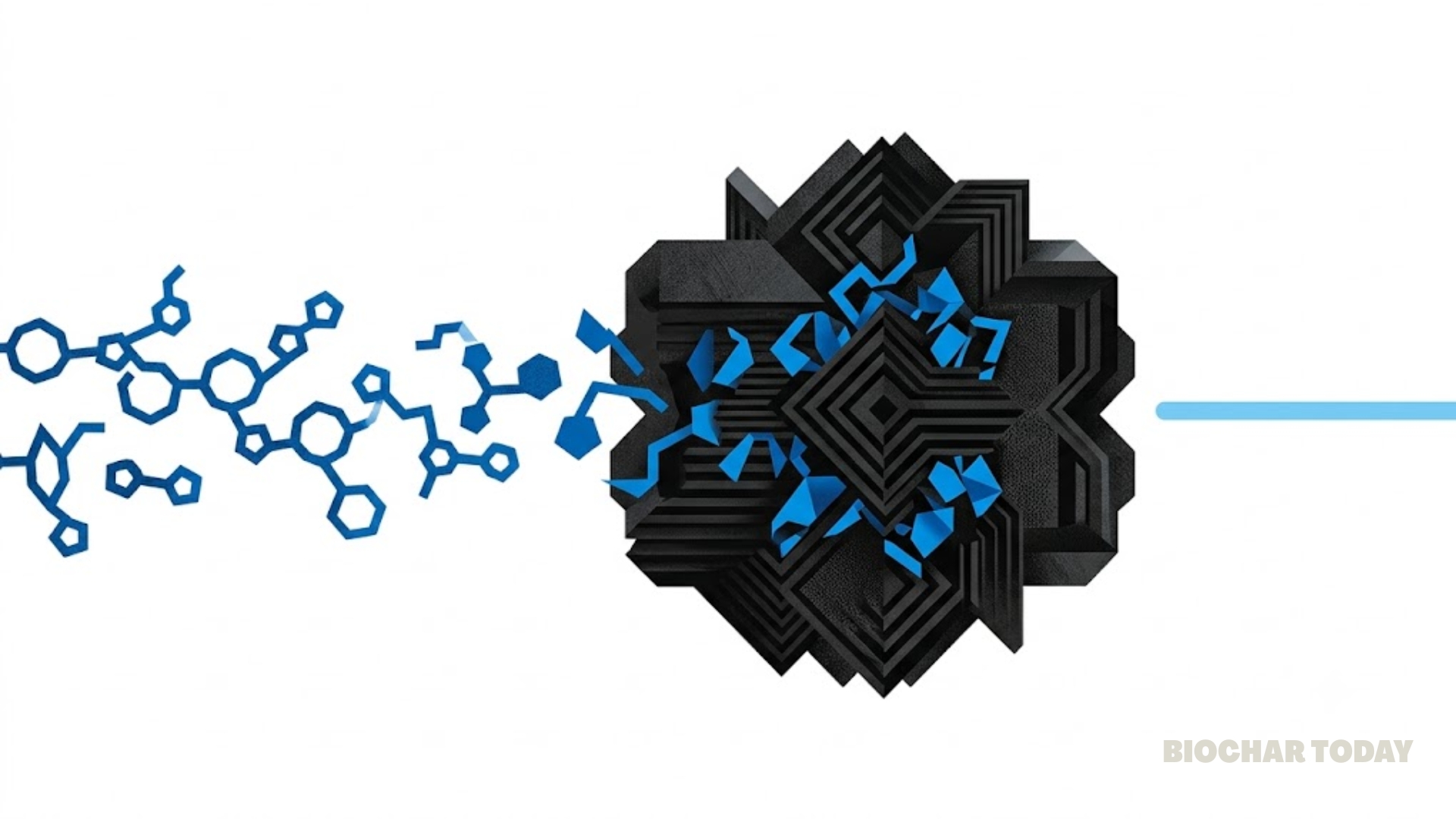
In the pursuit of environmental sustainability and circular economy solutions, biochar-based catalysts derived from biomassBiomass is a complex biological organic or non-organic solid product derived from living or recently living organism and available naturally. Various types of wastes such as animal manure, waste paper, sludge and many industrial wastes are also treated as biomass because like natural biomass these More waste emerge as promising contenders. A recent breakthrough involves enhancing the wastewater treatment capabilities of biocharBiochar is a carbon-rich material created from biomass decomposition in low-oxygen conditions. It has important applications in environmental remediation, soil improvement, agriculture, carbon sequestration, energy storage, and sustainable materials, promoting efficiency and reducing waste in various contexts while addressing climate change challenges. More by incorporating FeS and MgO, resulting in FeS/MgO-biochar. This innovative catalyst exhibits superior adsorption and photocatalytic degradation of Rhodamine B (RhB), a common water pollutant.
Compared to pure biochar, the modified FeS/MgO-biochar demonstrates significantly improved adsorption-photocatalytic activity. The synergy between FeS and MgO plays a pivotal role in enhancing removal efficiency, attributed to the abundant active sites at the junction interface. This promotes effective RhB adsorption and electron capture. Notably, the heterojunction interface facilitates efficient separation and transfer of charge carriers, expanding the utilization of solar light.
Exploring the removal activity of biochar-based composites, the study delves into the optimal FeS/MgO-biochar, which eliminates an impressive 99.13% of RhB within 120 minutes. However, the photo-corrosion effect causes a slight decline in removal efficiency to 95.87% after the fifth cycle.
This research not only contributes to advancing wastewater treatment technologies but also aligns with the broader goals of environmental protection and sustainable biorefineries. FeS/MgO-biochar showcases the potential of biomass-derived catalysts in fostering a cleaner, greener future.



Leave a Reply