
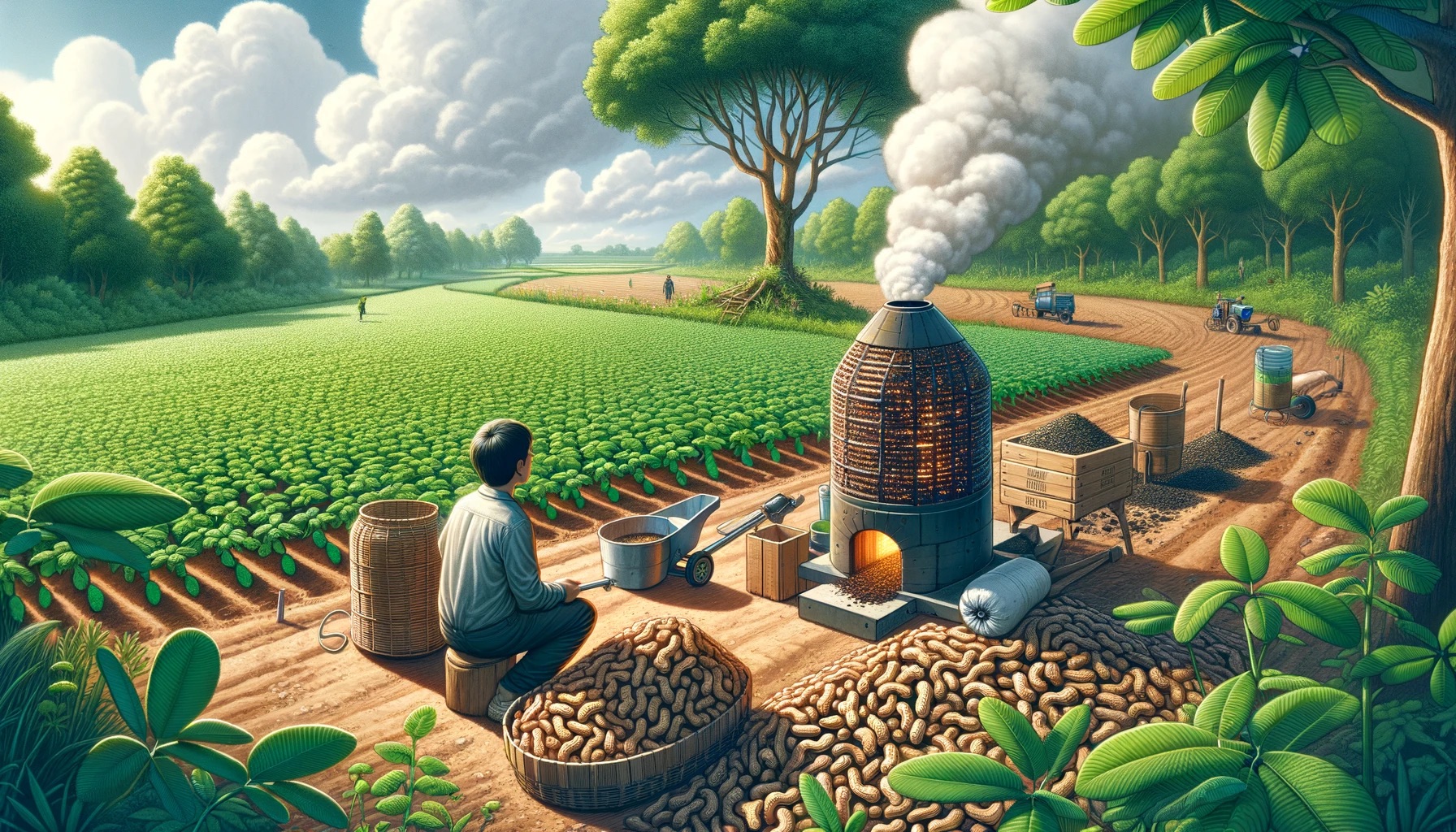

Peanut shells, a byproduct of the peanut industry, present an opportunity for sustainable waste management through their conversion into biochar. This study explores biochar production from peanut shells using slow and fast pyrolysis, a thermal decomposition process in an oxygen-limited environment. The research focuses on the impact of different pyrolysis temperatures and residence times on the physicochemical properties of the produced biochar.
The study conducted at the International Crops Research Institute for the Semi-Arid Tropics in Hyderabad, India, used an inexpensive, portable single-barrel kiln for biochar production. Slow pyrolysis was performed at temperatures of 450°C and 500°C for 60 minutes, while fast pyrolysis occurred at 550°C and 600°C for 30 minutes. The results showed that higher temperatures and faster pyrolysis increased the biochar’s porosityPorosity of biochar is a key factor in its effectiveness as a soil amendment and its ability to retain water and nutrients. Biochar’s porosity is influenced by feedstock type and pyrolysis temperature, and it plays a crucial role in microbial activity and overall soil health. Biochar More and thermal stability but reduced its yield.
Biochar yields at temperatures of 450°C, 500°C, 550°C, and 600°C were 32.19%, 29.13%, 21.8%, and 19.43%, respectively. The organic carbon content varied with temperature, with the highest at 450°C (11.57%). The analysis revealed that biochar produced at lower temperatures had better qualitative and quantitative characteristics, making slow pyrolysis at 450°C for 60 minutes the optimal condition.
The produced biochar exhibited enhanced thermal stability and porosity, with functional groups undergoing significant transformations at higher temperatures. Heavy metal concentrations in all biochar samples remained below international permissible limits, ensuring its safety as a soil amendmentA soil amendment is any material added to the soil to enhance its physical or chemical properties, improving its suitability for plant growth. Biochar is considered a soil amendment as it can improve soil structure, water retention, nutrient availability, and microbial activity. More.
This study underscores the potential of using peanut shells for biochar production, promoting sustainable agricultural practices and effective waste management. The findings support the use of decentralized, low-cost biochar production technologies, particularly benefiting smallholder farmers. Further research is recommended to explore the long-term effects of peanut shell biochar on soil health and carbon sequestration.



Leave a Reply