
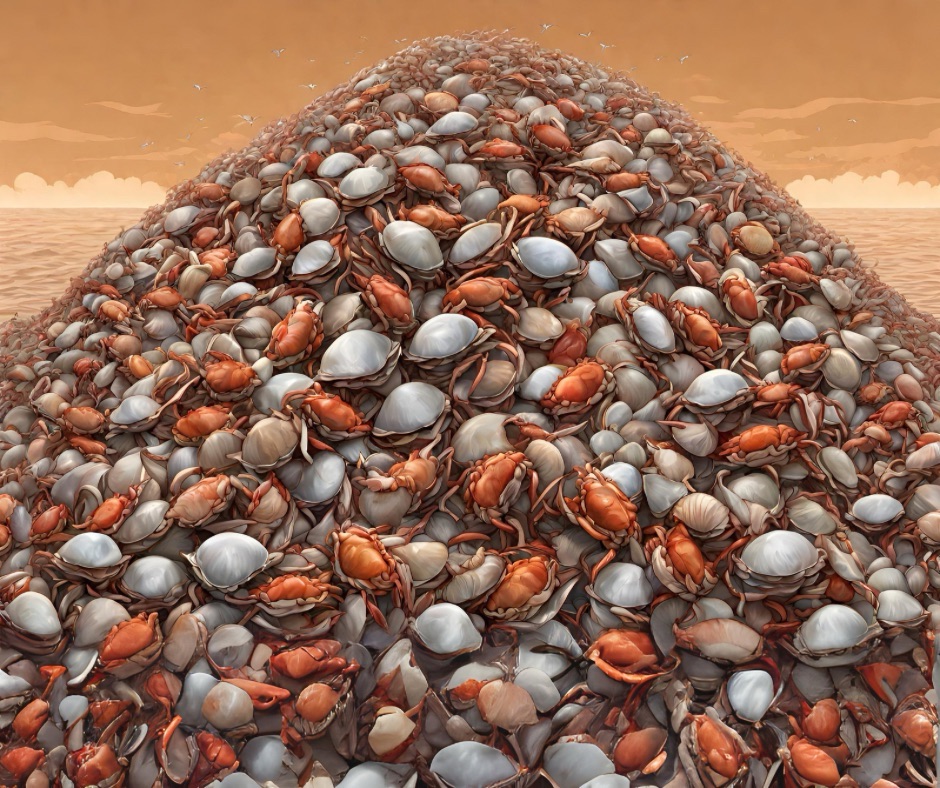

The love for delicious crab comes with a hidden cost: mountains of discarded shells. But what if this “waste” could be reborn as a hero for the environment? This study explores the exciting potential of transforming crab shells into biochar, a powerful tool for water purification.
Turning Trash into Treasure: Fueled by the growing demand for crab meat, the industry generates vast amounts of non-edible parts like shells. Traditionally, these end up in landfills or incinerators, harming the environment. This research proposes a sustainable solution: using microwave pyrolysis to convert crab shell waste (CSW) into biochar.
Benefits beyond the Bite: This innovative technique yields biochar with impressive properties. Imagine a material with high fixed carbon content, low volatile matterVolatile matter refers to the organic compounds that are released as gases during the pyrolysis process. These compounds can include methane, hydrogen, and carbon monoxide, which can be captured and used as fuel or further processed into other valuable products. More, and a hard texture – perfect for adsorption. But the superpowers don’t stop there. By activating the biochar with steam, researchers unlocked a champion for palm oil mill effluent (POME) treatment.
Cleaning Up Our Act: Activated biochar effectively removed harmful pollutants like BOD and COD from POME, proving its potential as a natural and eco-friendly treatment method. This paves the way for a future where crab shells, once considered waste, become valuable resources for environmental protection.



Leave a Reply