
Hénault-Ethier, Quinche, et al (2024) Opportunities and challenges in upcycling agri-food byproducts to generate insect manure (frass): A literature review. Waste Management. https://doi.org/10.1016/j.wasman.2023.12.033
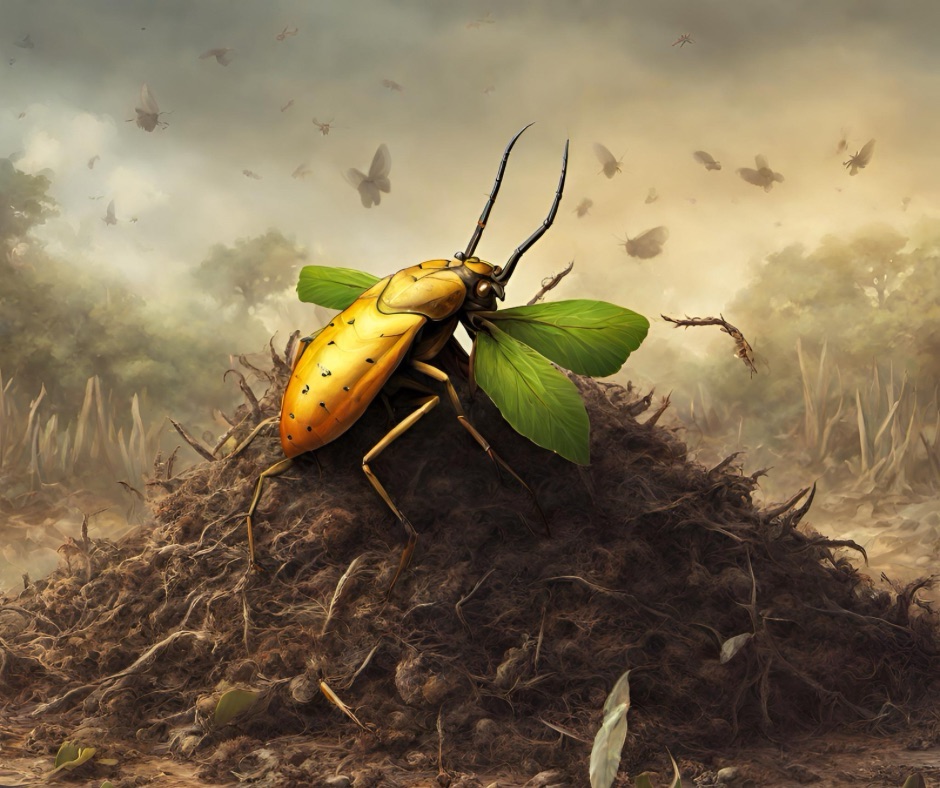
The agrifood industry faces challenges like food waste and greenhouse gas emissions. One answer? Raising insects for food! But what about the leftover insect poop, called frass? This blog explores how frass, rich in nutrients and beneficial microbes, can be a sustainable fertilizer for your garden.
From Food Waste to Plant Food
Growing insects on food scraps reduces waste and creates protein-rich food. However, each ton of insects produces 2-4 tons of frass, a potential goldmine for agriculture. Frass is like compost, but with unique benefits:
- Nutrient Power: Frass contains essential plant nutrients like nitrogen, phosphorus, and potassium.
- Microbial Magic: Beneficial microbes in frass help plants fight diseases and pests naturally.
- Stress Buster: Frass helps plants resist drought and other environmental stresses.
Using Frass Wisely
Applying the right amount of frass is crucial. Research is ongoing to determine optimal rates for different crops. Frass can be composted or used directly, depending on your needs.
Regulatory Landscape
Regulations for using frass as fertilizer vary by region. This blog summarizes the current frameworks in Canada, the US, and Europe.
The Future of Frass
More research is needed to unlock the full potential of frass. However, this insect byproduct holds promise as a sustainable and effective fertilizer, contributing to a more circular and environmentally friendly agrifood system.


Leave a Reply