


Differences in soil Cd immobilization and blockage of rice Cd uptake by biocharBiochar is a carbon-rich material created from biomass decomposition in low-oxygen conditions. It has important applications in environmental remediation, soil improvement, agriculture, carbon sequestration, energy storage, and sustainable materials, promoting efficiency and reducing waste in various contexts while addressing climate change challenges. More derived from crop residue and bone − A 2-year field experiment. Ecotoxicology and Environmental Safety. https://doi.org/10.1016/j.ecoenv.2024.117533
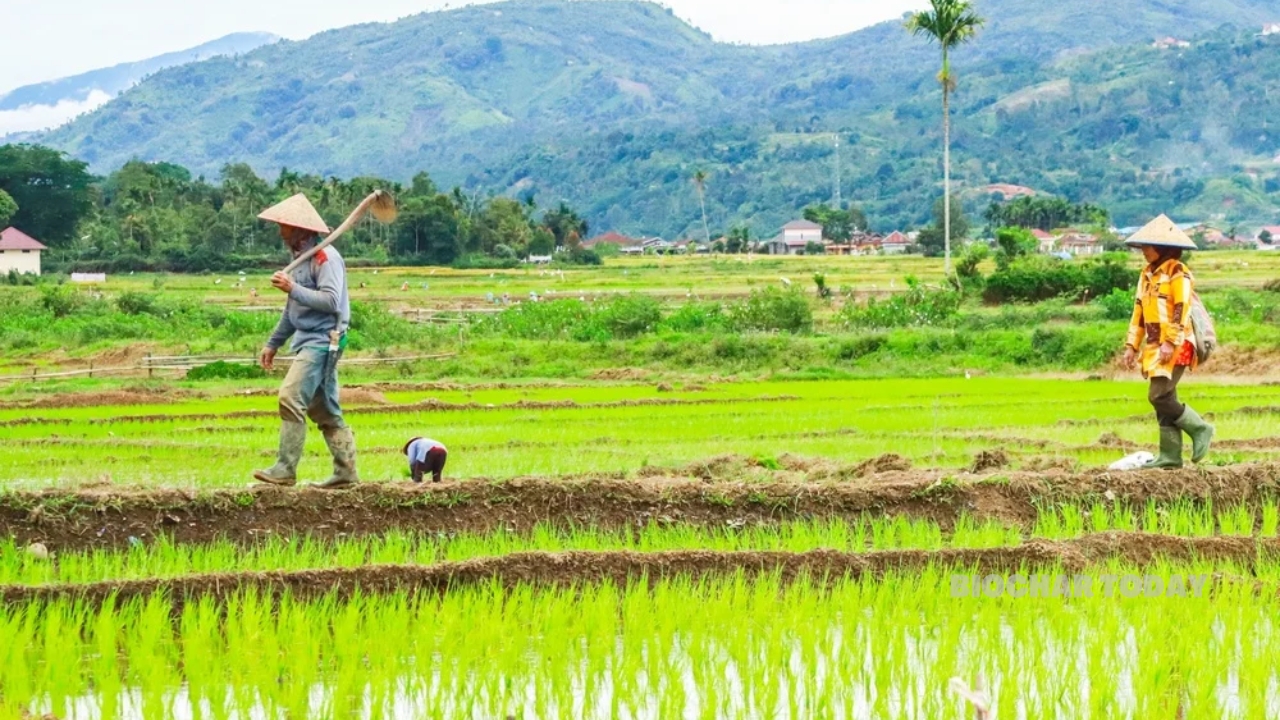
Cadmium (Cd) contamination in agricultural soils poses a significant challenge, especially in rice production. A recent two-year study explored how different types of biochar—derived from crop residues and animal bones—impact soil Cd stabilization and uptake by rice plants.
Three types of biochar were examined: rapeseed straw biochar (REB), rice husk biochar (RHB), and bone char (BOC). The field experiment demonstrated that all three significantly reduced Cd levels in rice grains, with reductions of up to 60% in the first year and 22% in the second year.
Bone char was most effective at immobilizing Cd in soil, likely due to its high calcium and phosphorus content, which enhances soil pHpH is a measure of how acidic or alkaline a substance is. A pH of 7 is neutral, while lower pH values indicate acidity and higher values indicate alkalinity. Biochars are normally alkaline and can influence soil pH, often increasing it, which can be beneficial More and Cd precipitation. Conversely, REB and RHB excelled in promoting iron plaque (IP) formation on rice roots, a natural barrier that reduces Cd uptake. REB showed the strongest effect, attributed to its high sulfur content and superior electron exchange capacity, which supports iron reduction and IP development.
RHB uniquely increased silicon levels in rice roots, aiding in Cd immobilization within root cell walls and preventing its movement to shoots and grains. These findings highlight the distinct properties of biochar feedstocks in addressing Cd contamination.
This study underscores biochar’s potential in reducing soil Cd bioavailability and its entry into the food chain, paving the way for safer rice production. Future research could deepen understanding of the microbial interactions and long-term impacts of biochar on soil health.

![Eucalyptus Wood Waste-Derived Biochar Achieves a Ninety-Eight Percent Removal Efficiency for Benzo[ghi]perylene in Vehicle-Wash Wastewater](https://biochartoday.com/wp-content/uploads/2026/10/SCIENCE-BLOGS-2026-2026-10-19T160523.703.jpg)

Leave a Reply