
Li, et al (2024) Sewage sludge pyrolysisPyrolysis is a thermochemical process that converts waste biomass into bio-char, bio-oil, and pyro-gas. It offers significant advantages in waste valorization, turning low-value materials into economically valuable resources. Its versatility allows for tailored products based on operational conditions, presenting itself as a cost-effective and efficient More ‘kills two birds with one stone’: BiocharBiochar is a carbon-rich material created from biomass decomposition in low-oxygen conditions. It has important applications in environmental remediation, soil improvement, agriculture, carbon sequestration, energy storage, and sustainable materials, promoting efficiency and reducing waste in various contexts while addressing climate change challenges. More synergies with persulfate for pollutants removal and energy recovery. Chemosphere. https://doi.org/10.1016/j.chemosphere.2024.142824
Biochar, a type of charcoalCharcoal is a black, brittle, and porous material produced by heating wood or other organic substances in a low-oxygen environment. It is primarily used as a fuel source for cooking and heating. More produced by heating organic material in a low-oxygen environment, has gained attention for its potential benefits in agriculture and climate change mitigation. This material can enhance soil quality, increase crop yields, and sequester carbon dioxide, making it a promising tool for sustainable farming practices.
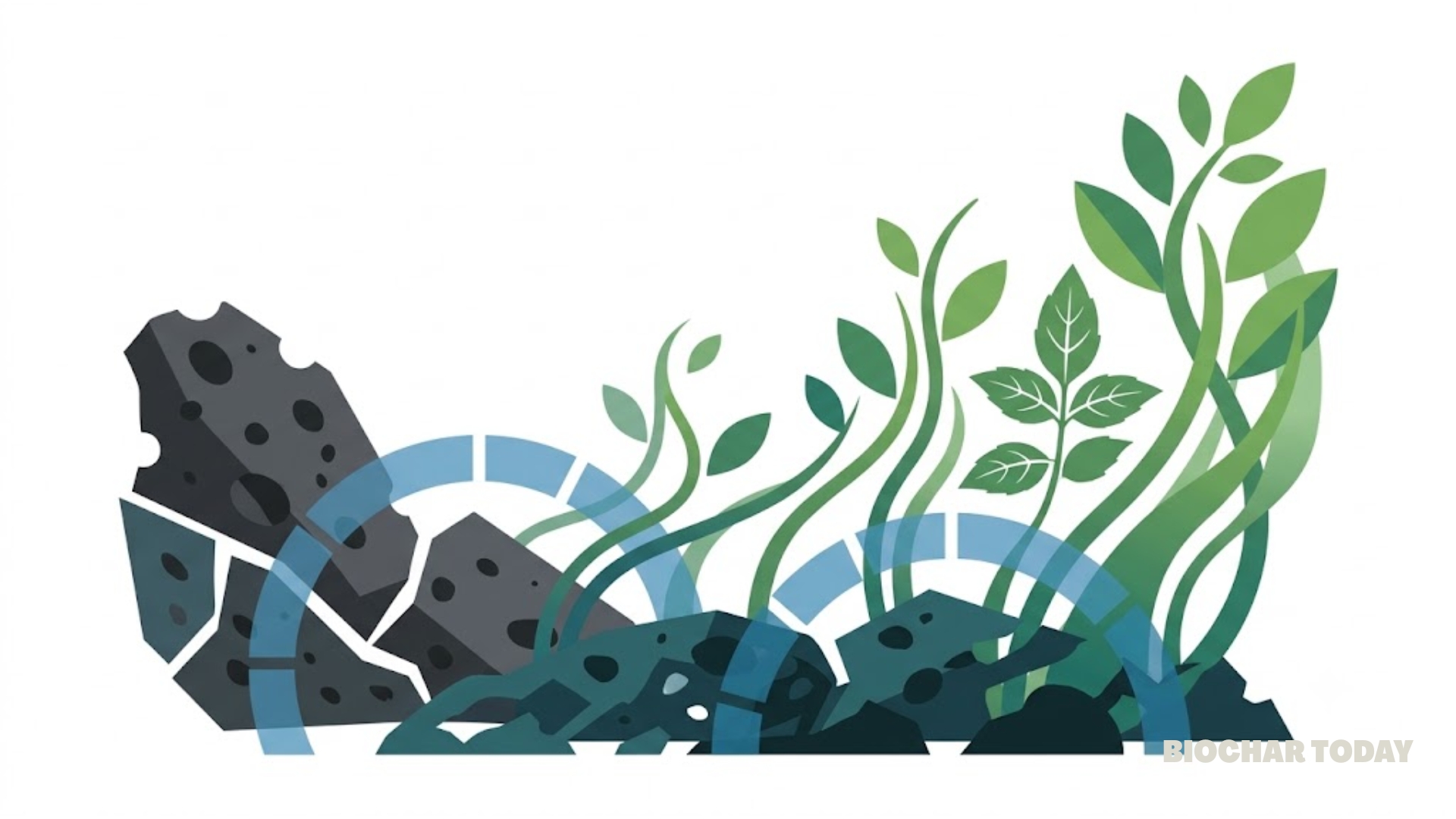
The process of making biochar, known as pyrolysis, involves the thermal decomposition of biomassBiomass is a complex biological organic or non-organic solid product derived from living or recently living organism and available naturally. Various types of wastes such as animal manure, waste paper, sludge and many industrial wastes are also treated as biomass because like natural biomass these More. This process produces not only biochar but also bio-oil and syngasSyngas, or synthesis gas, is a fuel gas mixture consisting primarily of hydrogen and carbon monoxide. It is produced during gasification and can be used as a fuel source or as a feedstock for producing other chemicals and fuels. More, which can be used as renewable energy sources. The unique structure of biochar, characterized by its porous nature, allows it to improve soil’s water retention and nutrient-holding capacity. Additionally, biochar can reduce the need for chemical fertilizers by enhancing soil fertility naturally.
One of the key environmental benefits of biochar is its ability to capture and store carbon. When organic material decomposes naturally, it releases carbon dioxide back into the atmosphere. However, when converted into biochar, the carbon is trapped within its structure and can remain in the soil for hundreds to thousands of years. This carbon sequestration capability positions biochar as a valuable tool in efforts to mitigate climate change.
Moreover, biochar can help reduce greenhouse gas emissions from agriculture. It can decrease methane and nitrous oxide emissions from soils, further contributing to environmental sustainability. While the potential of biochar is significant, further research is needed to fully understand its long-term impacts and optimize its use across different soil types and climates.
Biochar represents an innovative approach to enhancing agricultural productivity and addressing climate change. As interest in sustainable farming practices grows, biochar offers a promising solution to improve soil health and reduce the carbon footprint of agriculture.


Leave a Reply