
Zhang, et al (2024) Investigation of the macro performance and mechanism of biocharBiochar is a carbon-rich material created from biomass decomposition in low-oxygen conditions. It has important applications in environmental remediation, soil improvement, agriculture, carbon sequestration, energy storage, and sustainable materials, promoting efficiency and reducing waste in various contexts while addressing climate change challenges. More modified ultra-high performance concrete. Case Studies in Construction Materials. https://doi.org/10.1016/j.cscm.2024.e03595
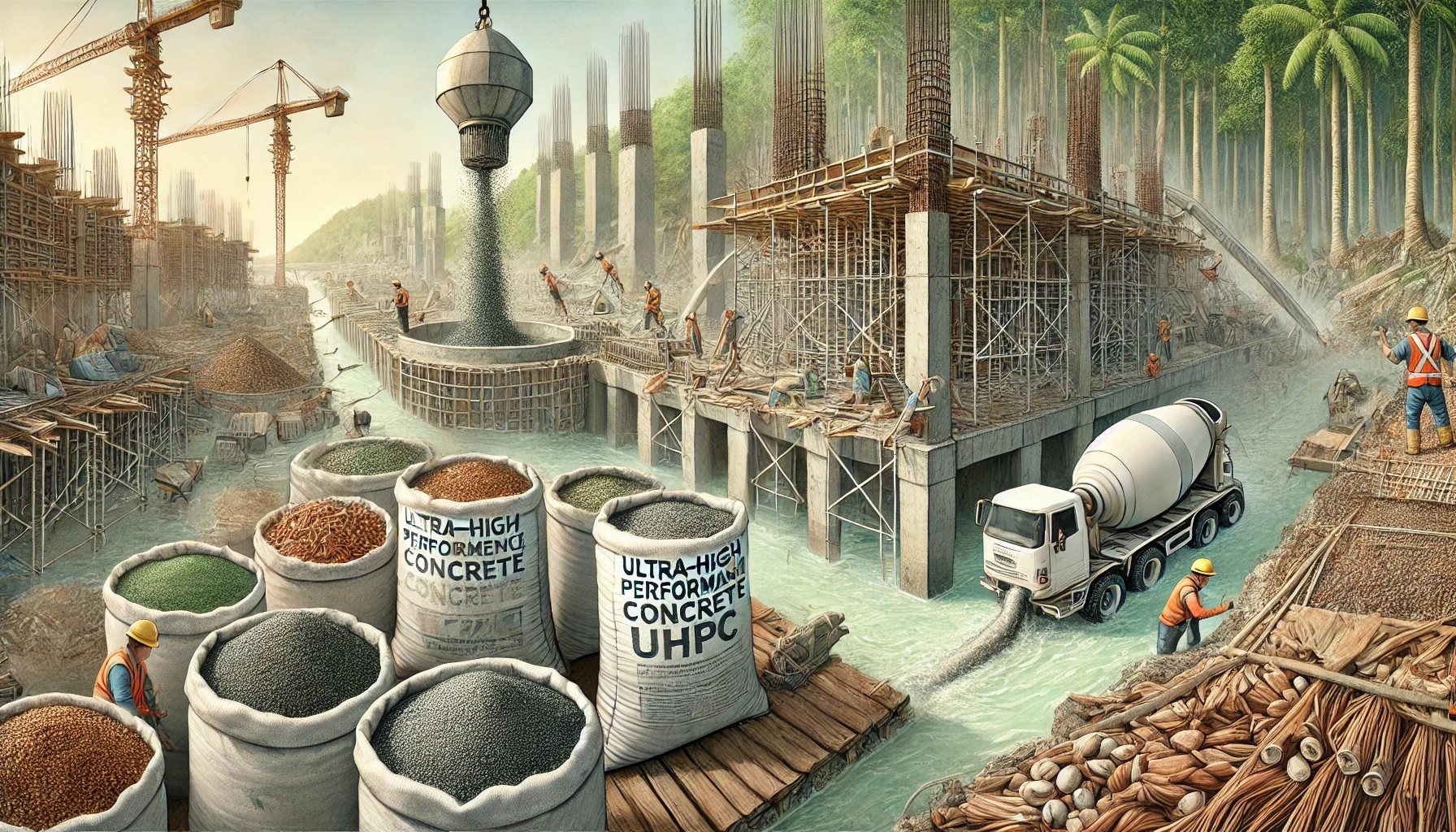
Researchers have investigated the incorporation of biochar into ultra-high performance concrete (UHPC) to enhance its properties while promoting sustainability. UHPC is known for its exceptional mechanical strength and durability, but its production, reliant on cement, contributes significantly to carbon emissions. By substituting a portion of the fine aggregate (sand) in UHPC with biochar derived from agricultural waste like palm shells, the study aimed to assess the impact on the concrete’s performance.
The study tested various combinations of biochar, replacing up to 40% of the sand. Results showed that replacing 1% of sand with biochar slightly improved compressive strength, but higher biochar content generally weakened it. The biochar-mortar mixtures exhibited lower workability and increased porosityPorosity of biochar is a key factor in its effectiveness as a soil amendment and its ability to retain water and nutrients. Biochar’s porosity is influenced by feedstock type and pyrolysis temperature, and it plays a crucial role in microbial activity and overall soil health. Biochar More, leading to higher water absorption and permeability at higher biochar dosages. Interestingly, the addition of 1% biochar resulted in a reduction in electrical flux, suggesting improved resistance to chloride ion penetration, though this benefit diminished at higher biochar levels.
Microscopic analysis revealed that biochar’s porous structure played a key role in these changes. The biochar provided nucleation sites for hydration products, contributing to a denser microstructure at lower dosages, but at higher levels, it created weak zones, reducing the overall strength and durability of the UHPC.
Overall, the research demonstrates that while low levels of biochar can enhance certain properties of UHPC, higher levels may compromise its performance. This highlights the need for careful optimization when incorporating biochar into concrete for sustainable construction.




Leave a Reply