
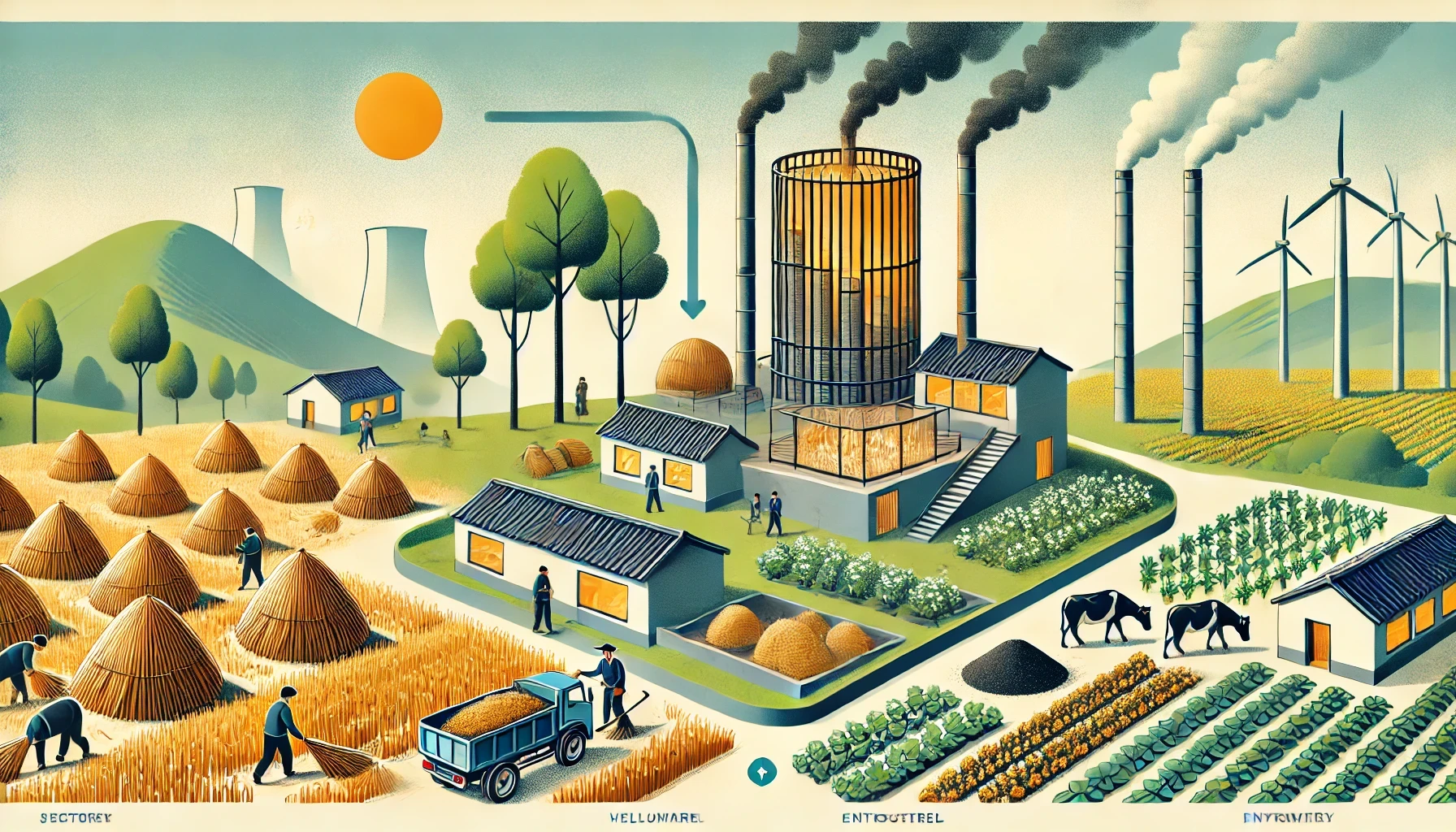

A recent study published in Environmental Pollution explores the potential environmental benefits of biochar production from agricultural straw in China. Biochar, a carbon-rich material produced by pyrolysisPyrolysis is a thermochemical process that converts waste biomass into bio-char, bio-oil, and pyro-gas. It offers significant advantages in waste valorization, turning low-value materials into economically valuable resources. Its versatility allows for tailored products based on operational conditions, presenting itself as a cost-effective and efficient More under low oxygen conditions, offers a sustainable alternative to the traditional practice of open straw burning, which contributes significantly to air pollution and greenhouse gas (GHG) emissions.
The study evaluates two biochar production methods: a centralized production scenario (CPS) using industrialized systems with advanced pollution controls and a decentralized production scenario (DPS) based on village-level systems. Both methods are compared to open burning (OBS) and the direct return of straw to fields.
Key findings highlight that biochar production significantly reduces GHG emissions. CPS offers the highest GHG reductions (780 Tg CO2-eq/year), while DPS achieves slightly less (680 Tg CO2-eq/year) but is more practical for rural areas due to lower costs and ease of implementation. DPS also reduces average PM2.5 concentrations in key regions by 19%.
Additionally, approximately 190 Tg of biochar could be produced annually, sequestering 150 Tg of carbon and improving soil quality. While CPS shows greater environmental benefits, DPS is more feasible under current conditions, supporting China’s goals of peak carbon emissions by 2030 and carbon neutrality by 2060.
This research underscores the value of scaling biochar production to mitigate air pollution, enhance soil health, and contribute to global climate targets, especially in agricultural regions like China.




Leave a Reply