
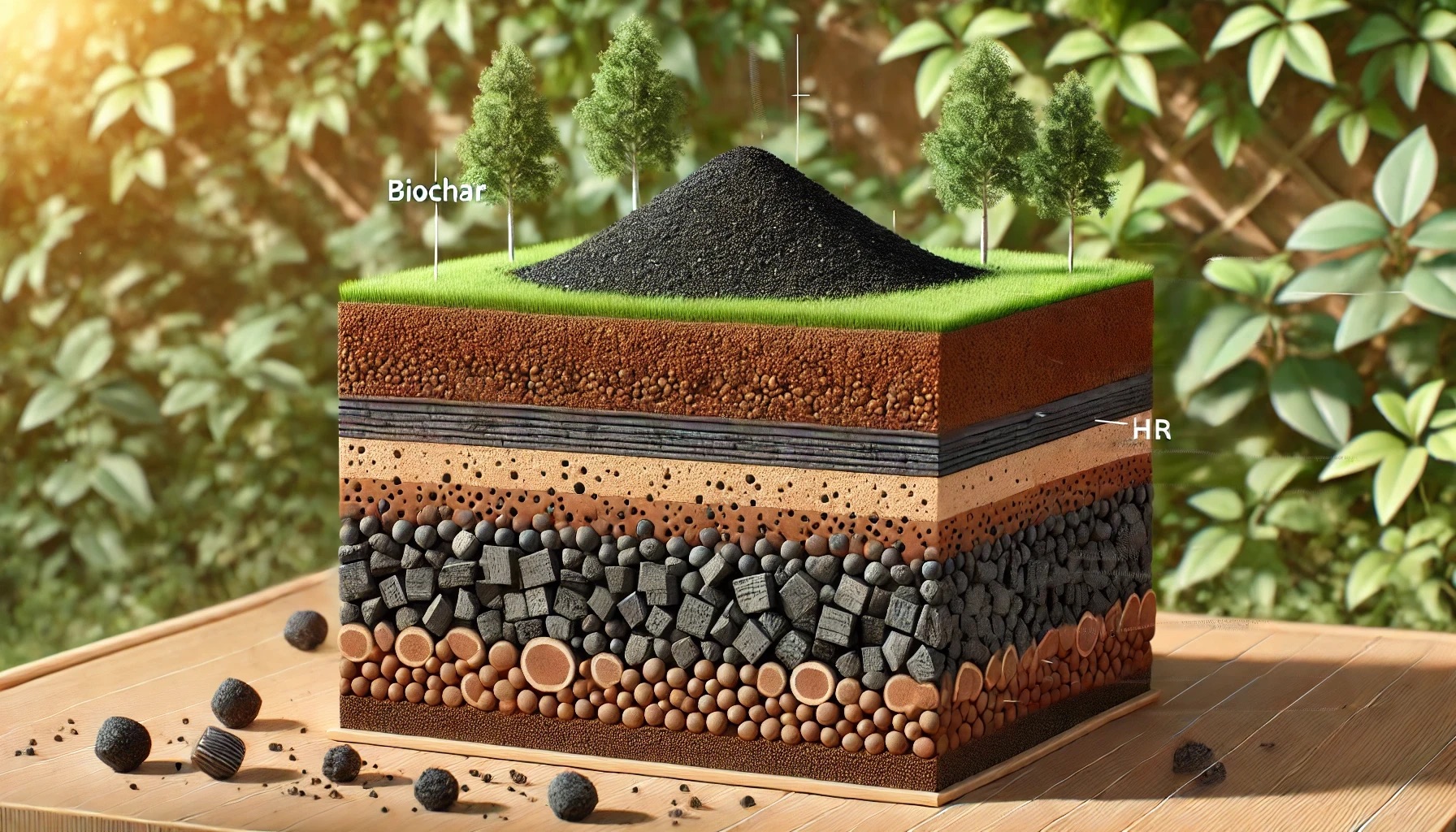
Li, et al (2024) Can inert pool models improve predictions of biocharBiochar is a carbon-rich material created from biomass decomposition in low-oxygen conditions. It has important applications in environmental remediation, soil improvement, agriculture, carbon sequestration, energy storage, and sustainable materials, promoting efficiency and reducing waste in various contexts while addressing climate change challenges. More long-term persistence in soils? Geoderma. https://doi.org/10.1016/j.geoderma.2024.117093
Predicting the long-term stability of biochar in soil is critical for understanding its role in carbon sequestration. Traditional models often assume biochar’s complete degradability, but new research suggests that a significant portion of biochar may be inert, leading to the development of “inert pool models.” These models aim to improve the accuracy of predictions by incorporating a stable fraction that does not degrade.
This study tested the performance of various models using biochar decomposition data from 134 experiments. It found that inert pool models generally provided better fits to short-term data compared to single or double first-order models. However, these models often overestimated biochar persistence when compared to observed long-term outcomes. Meanwhile, the commonly used double first-order model underestimated persistence, even in shorter incubation periods.
The power model, which assumes a spectrum of degradation rates, emerged as the most reliable for long-term predictions. It provided the best fit for over a third of the cases and showed resilience to fluctuating data. However, the model’s accuracy depends on high-quality data without inconsistencies.
Overall, the findings underscore the need for longer incubation studies and high-quality datasets to refine these models. While inert pool models hold promise for specific high-temperature biochars, their general applicability remains uncertain. For now, the power model is the most reliable choice, but further research is needed to address challenges in extrapolating laboratory results to field conditions.





Leave a Reply