
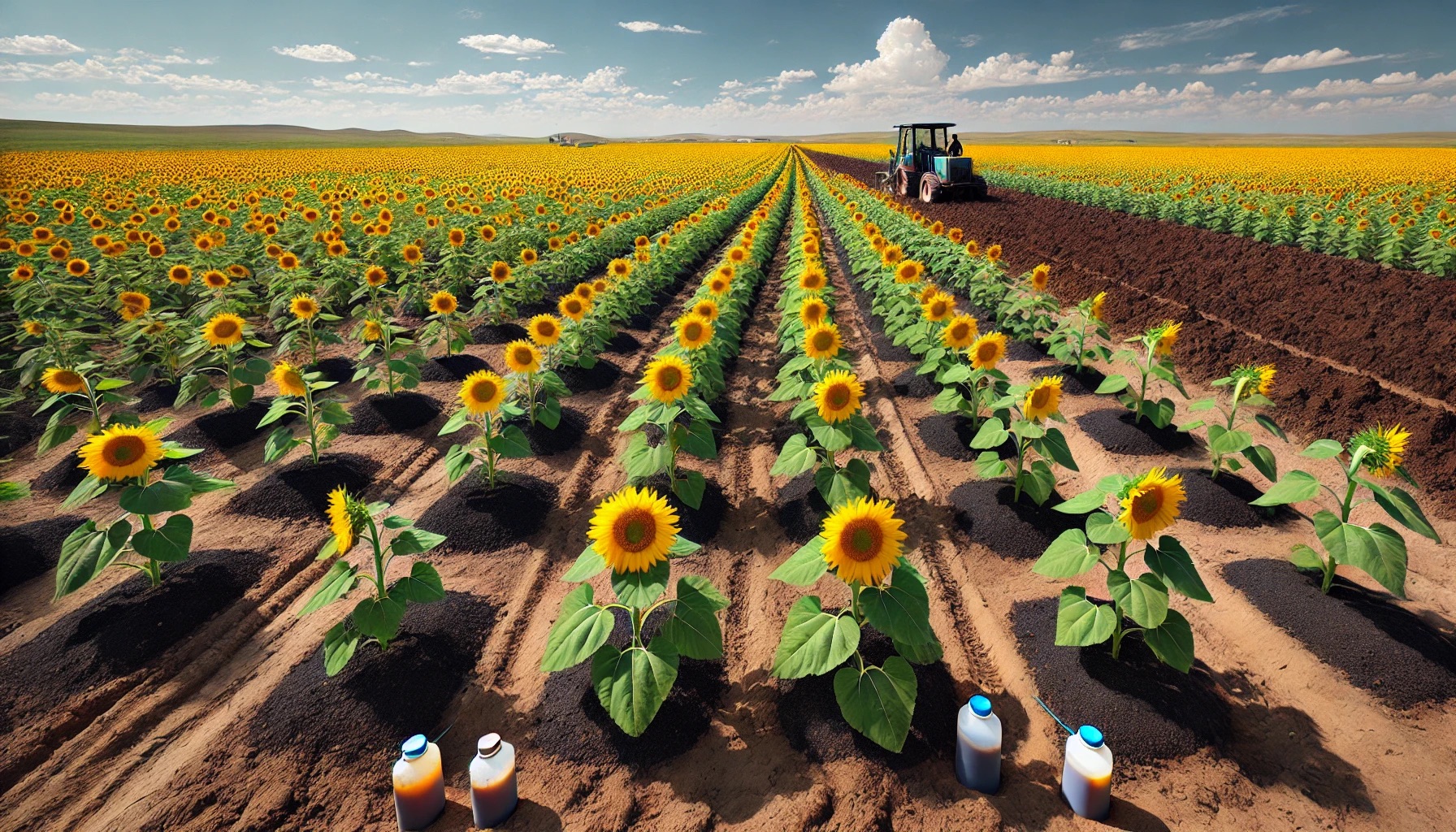

Soil salinity is a significant challenge for agriculture, particularly in arid and semi-arid regions like Inner Mongolia, China. To combat this, a study explored the use of biocharBiochar is a carbon-rich material created from biomass decomposition in low-oxygen conditions. It has important applications in environmental remediation, soil improvement, agriculture, carbon sequestration, energy storage, and sustainable materials, promoting efficiency and reducing waste in various contexts while addressing climate change challenges. More and fulvic acid amendments to improve soil conditions and increase sunflower productivity. Over two growing seasons, researchers applied 15 tons per hectare of biochar and 0.15 tons per hectare of fulvic acid to sunflower crops in the Hetao Irrigation Region.
The results were promising. The combined treatment of biochar and fulvic acid reduced soil salinity by 28.9% and increased organic matter content to 22.64 grams per kilogram. This combination also led to better nitrogen nutrition in plants, with the treated sunflowers showing significant growth improvements. The plants in the biochar and fulvic acid plots achieved a seed yield of 8.5 tons per hectare, which is double that of the untreated control plots.
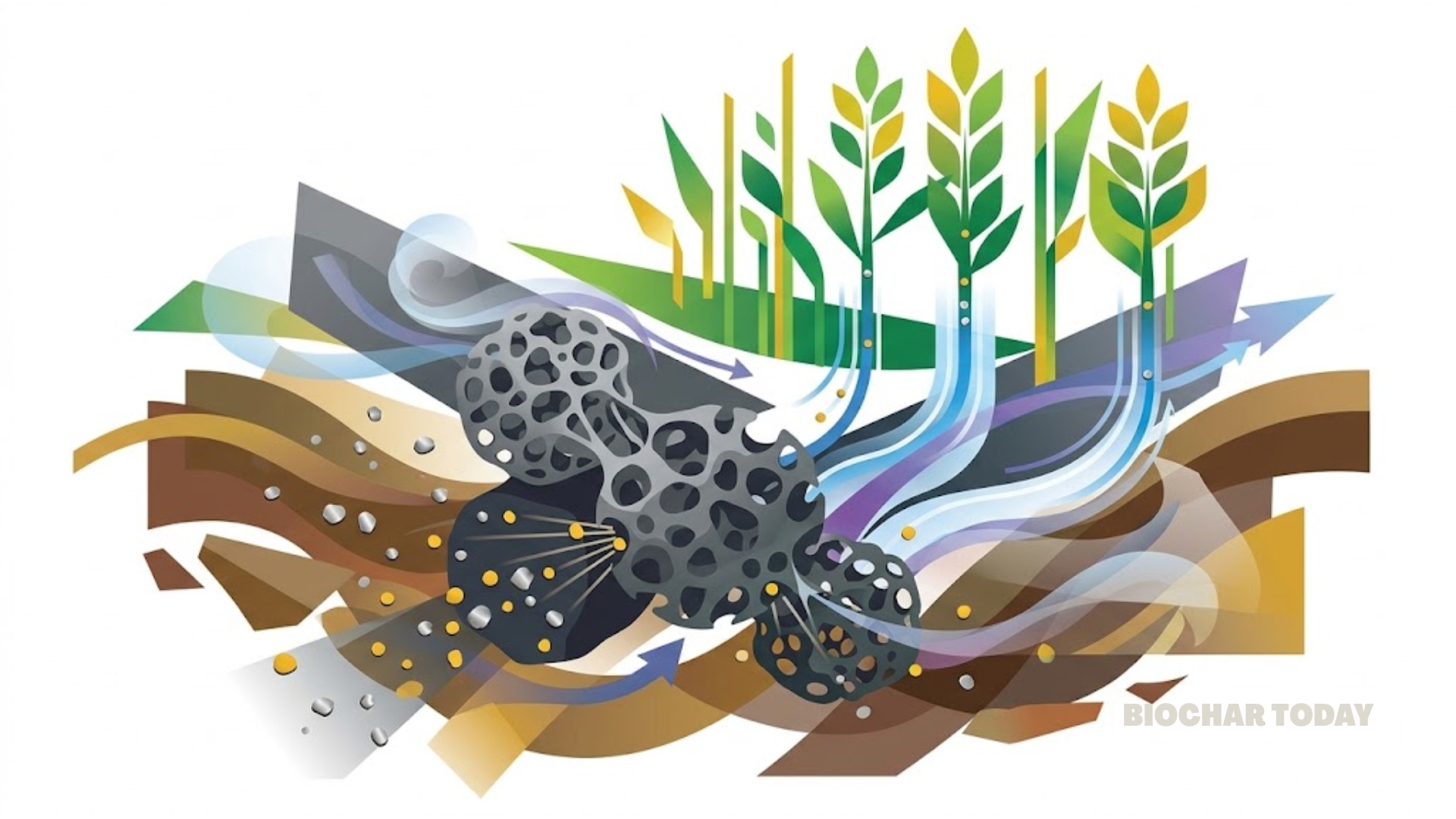
Biochar, produced from agricultural biomassBiomass is a complex biological organic or non-organic solid product derived from living or recently living organism and available naturally. Various types of wastes such as animal manure, waste paper, sludge and many industrial wastes are also treated as biomass because like natural biomass these More, has a porous structure that helps retain water and nutrients, making it beneficial for soil amendmentA soil amendment is any material added to the soil to enhance its physical or chemical properties, improving its suitability for plant growth. Biochar is considered a soil amendment as it can improve soil structure, water retention, nutrient availability, and microbial activity. More. Fulvic acid, a natural organic compound, enhances microbial activity and nutrient availability. Together, these amendments improved the soil’s physical and chemical properties, fostering a better growth environment for sunflowers.
This study demonstrates that biochar and fulvic acid can be effectively used to mitigate soil salinity and boost crop yields in challenging agricultural environments. These findings offer a sustainable solution for improving food production in regions with saline soils, contributing to global food security.


Leave a Reply