
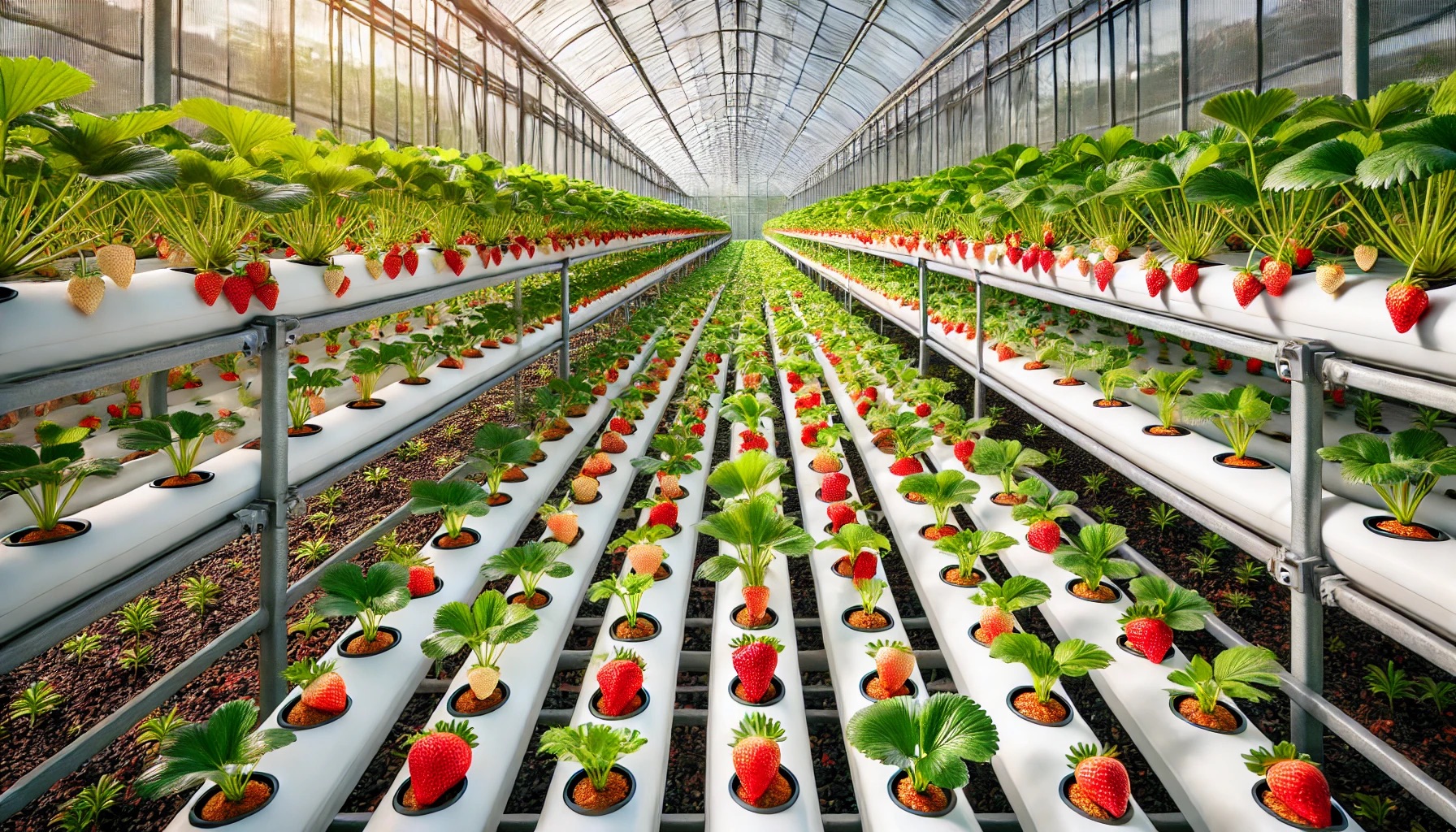
Aali, et al (2024) Development of sustainable strawberry production in closed cultivation systems: Effects of bagasse biocharBiochar is a carbon-rich material created from biomass decomposition in low-oxygen conditions. It has important applications in environmental remediation, soil improvement, agriculture, carbon sequestration, energy storage, and sustainable materials, promoting efficiency and reducing waste in various contexts while addressing climate change challenges. More on morphological and physiological attributes, yield and autotoxic changes. Journal of Environmental Management. https://doi.org/10.1016/j.jenvman.2024.123100
A recent study published in the Journal of Environmental Management explores how biochar impacts strawberry production in closed hydroponic systems. Researchers evaluated three commercial strawberry cultivars—Paros, Camarosa, and San Andreas—using a substrate amended with 5% biochar. Key areas of focus included plant growth, yield, fruit quality, and the reduction of harmful autotoxins, such as benzoic acid, in runoff water.
The findings highlight that biochar benefits plant performance and reduces autotoxicity in closed systems. Paros demonstrated the highest yield and chlorophyll content, while San Andreas showed superior fruit firmness, acidity, sweetness, and vitamin C levels. Camarosa stood out for its high iron content. Across cultivars, biochar effectively reduced benzoic acid concentration in the runoff, showcasing its potential to mitigate allelopathic effects.
Closed hydroponic systems are gaining traction for their efficient water and nutrient use. However, these systems face challenges, including the accumulation of autotoxins from root secretions, which can impair plant growth. Biochar, a carbon-rich material derived from biomassBiomass is a complex biological organic or non-organic solid product derived from living or recently living organism and available naturally. Various types of wastes such as animal manure, waste paper, sludge and many industrial wastes are also treated as biomass because like natural biomass these More, emerges as a sustainable solution. It absorbs allelochemicals, improves nutrient availability, and enhances substrate properties, supporting healthier plant development.
This study underscores the importance of pairing specific strawberry cultivars with biochar for optimal results. By reducing autotoxicity and improving yield, biochar presents a sustainable strategy for advancing closed hydroponic strawberry cultivation, aligning with goals for eco-friendly and efficient agricultural practices.

Leave a Reply