
Nascimento, et al (2024) BiocharBiochar is a carbon-rich material created from biomass decomposition in low-oxygen conditions. It has important applications in environmental remediation, soil improvement, agriculture, carbon sequestration, energy storage, and sustainable materials, promoting efficiency and reducing waste in various contexts while addressing climate change challenges. More from cashew residue enhances silicon adsorption and reduces cohesion and mechanical resistance at meso- and micro-structural scales of soil with cohesive character. Soil and Tillage Research. https://doi.org/10.1016/j.still.2024.106101
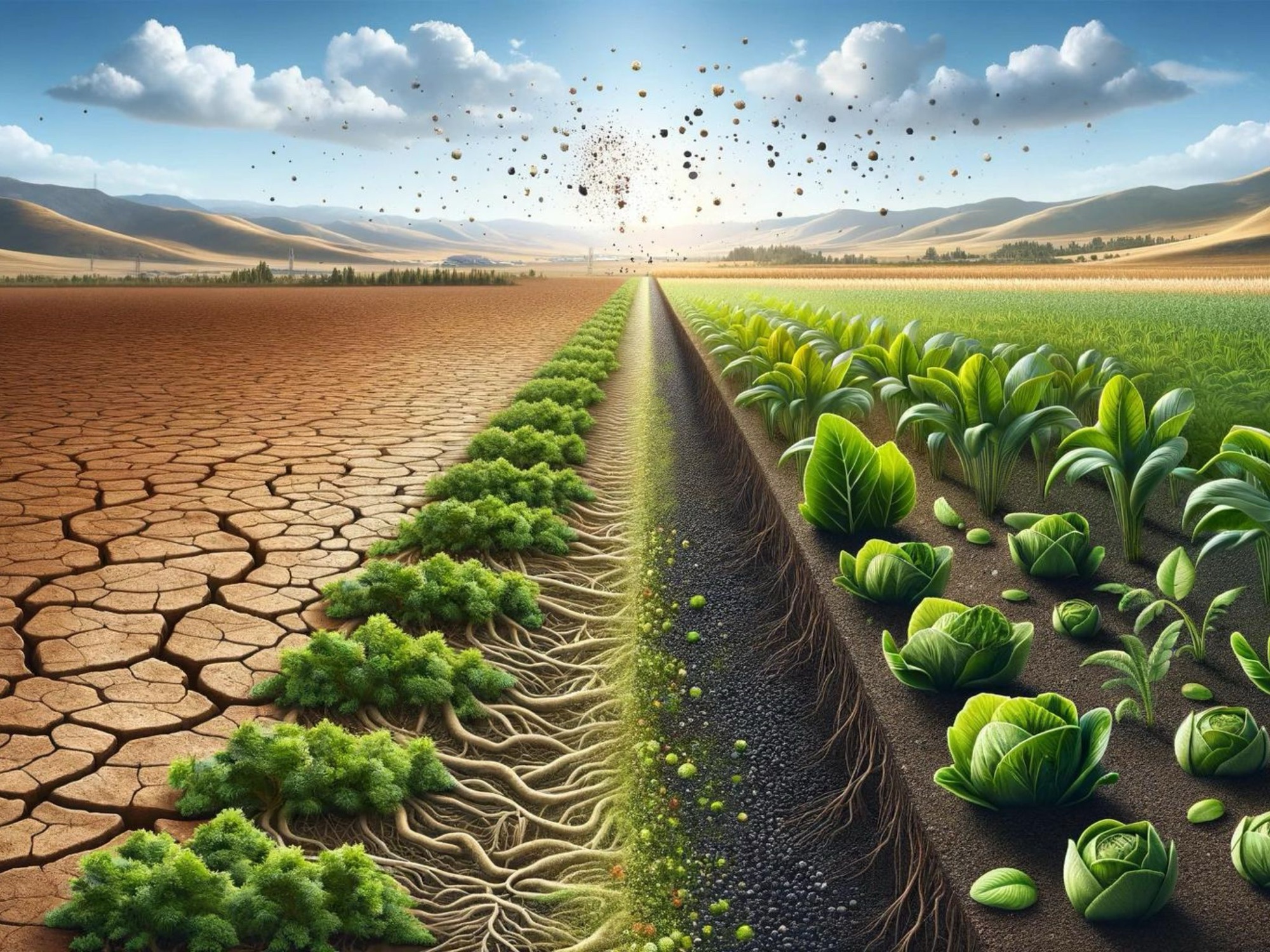
In a recent study conducted in northeast Brazil, researchers explored the potential of biochar made from cashew processing residues to improve the physical quality of soils with cohesive characteristics. Cohesive soils, known for their density and hardness when dry, pose significant challenges for root development and plant growth due to their compact structure. The study hypothesized that biochar could mitigate these challenges by enhancing soil porosityPorosity of biochar is a key factor in its effectiveness as a soil amendment and its ability to retain water and nutrients. Biochar’s porosity is influenced by feedstock type and pyrolysis temperature, and it plays a crucial role in microbial activity and overall soil health. Biochar More and adsorbing silicon, thus reducing soil cohesion and mechanical resistance.
Biochar is produced through the pyrolysisPyrolysis is a thermochemical process that converts waste biomass into bio-char, bio-oil, and pyro-gas. It offers significant advantages in waste valorization, turning low-value materials into economically valuable resources. Its versatility allows for tailored products based on operational conditions, presenting itself as a cost-effective and efficient More of biomassBiomass is a complex biological organic or non-organic solid product derived from living or recently living organism and available naturally. Various types of wastes such as animal manure, waste paper, sludge and many industrial wastes are also treated as biomass because like natural biomass these More and is characterized by a high specific surface area and the capacity to adsorb nutrients. This study utilized biochar to address the reversible cementation caused by amorphous silica in cohesive soils, which contributes to their dense and compact nature. Researchers applied biochar at varying rates (0, 5, 10, 20, and 40 Mg ha−1) to soil samples from the Bt1 horizon of a Typic Haplustult and subjected these samples to cycles of wetting and drying to simulate natural conditions.
The results were telling. While lower doses of biochar (5 and 10 Mg ha−1) had negligible effects, higher doses (20 and 40 Mg ha−1) significantly improved the soil’s physical properties. Silicon adsorption capacity increased by up to 15.3%, total porosity by up to 2.0%, and macroporosity by as much as 15.3%. Additionally, there were reductions in soil bulk density (up to −0.8%), penetration resistance (up to −16.2%), tensile strength (up to −36.5%), and various measures of mechanical stress, indicating a substantial decrease in soil cohesion.
These improvements suggest that biochar, particularly at higher application rates, can substantially enhance the physical quality of cohesive soils. This enhancement can alleviate physical limitations on root development and plant growth, thereby supporting better agricultural productivity. The study underscores the dual benefits of using biochar: improving soil structure and contributing to sustainable agricultural practices through the efficient use of agricultural residues.
This research not only provides insights into the functional benefits of biochar but also highlights its role in sustainable soil management and the potential for wider application in similar soil environments globally. By converting agricultural waste into a valuable resource, this approach promotes environmental sustainability and offers a practical solution to the challenges posed by cohesive soils.





Leave a Reply