
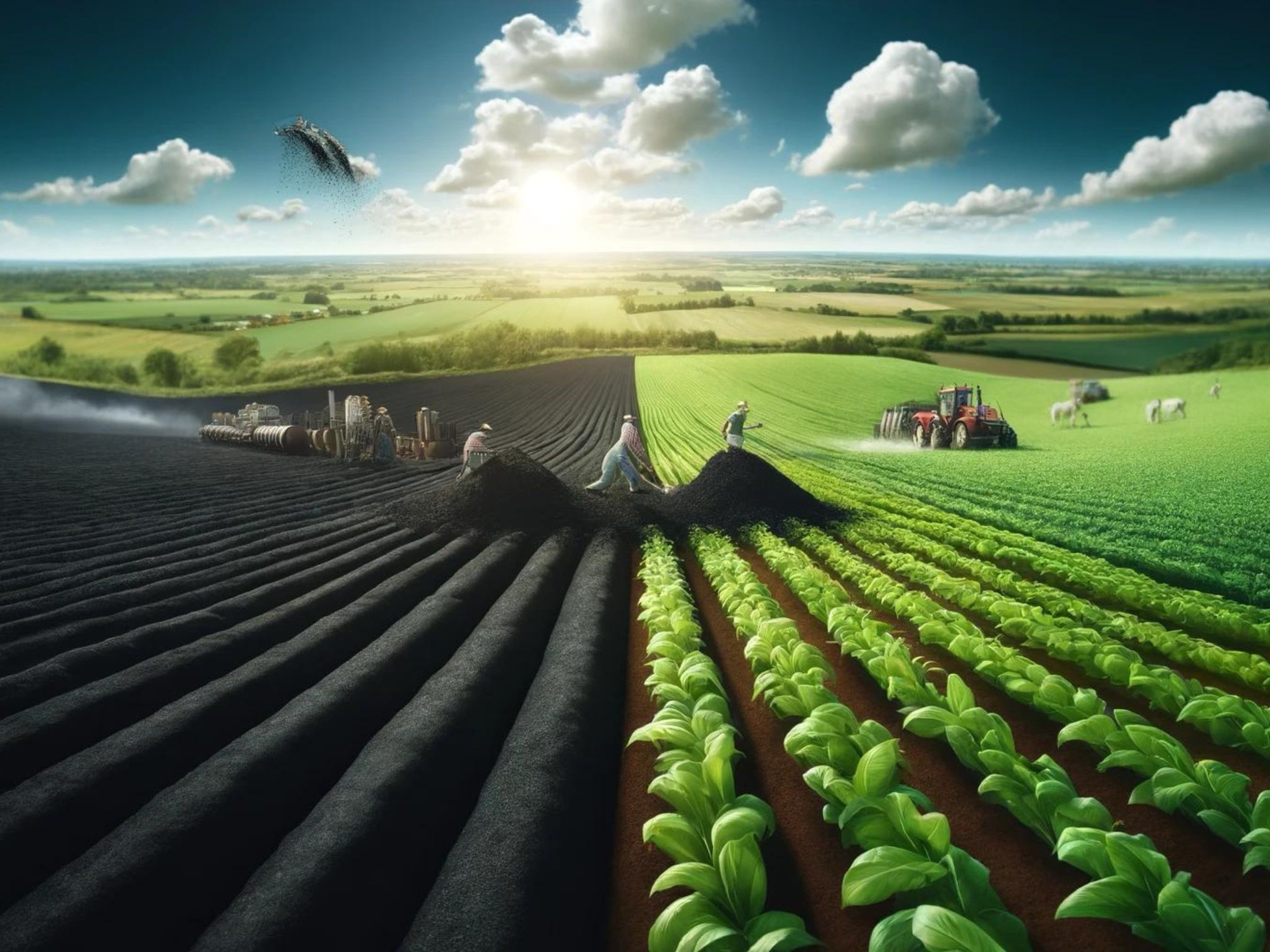

In the quest for sustainable soil improvement and carbon sequestration strategies, a recent study highlights the potential of waste leather dander (WLD) biochar (W-BC) as a promising solution. This research focuses on the carbon sequestration capacity of W-BC produced at various pyrolysisPyrolysis is a thermochemical process that converts waste biomass into bio-char, bio-oil, and pyro-gas. It offers significant advantages in waste valorization, turning low-value materials into economically valuable resources. Its versatility allows for tailored products based on operational conditions, presenting itself as a cost-effective and efficient More temperatures and its subsequent effects on soil organic carbon (SOC) mineralization.
WLD was transformed into biochar at different temperatures (300, 400, and 500 °C), with findings revealing that biochar produced at 400 °C (BC-400) showcased the highest carbon sequestration content of 18.23%. The application of BC-400 to soil significantly decreased the mineralization rate of SOC over 60 days, while also improving soil moisture, pHpH is a measure of how acidic or alkaline a substance is. A pH of 7 is neutral, while lower pH values indicate acidity and higher values indicate alkalinity. Biochars are normally alkaline and can influence soil pH, often increasing it, which can be beneficial More, and total organic carbon (TOC) content to 42.35%, 7.25, and 30.94%, respectively. Furthermore, the introduction of biochar to the soil enhanced the transformation of bacteria into a stable C-dominant phylum (Firmicutes), thus boosting the soil’s carbon sequestration capacity.
These outcomes not only present a viable method for the treatment and resource management of WLD but also offer insights into soil remediation techniques. The study also contributes to broader discussions on reducing greenhouse gas emissions and improving soil carbon sequestration capabilities, amid growing concerns over soil desertification and the decline in SOC storage. By employing waste leather dander, an otherwise environmental pollutant, this research advocates for a lower-cost, effective approach to soil improvement and carbon sequestration, underscoring the importance of innovative agricultural measures and the utilization of biochar as a soil enhancer.



Leave a Reply