
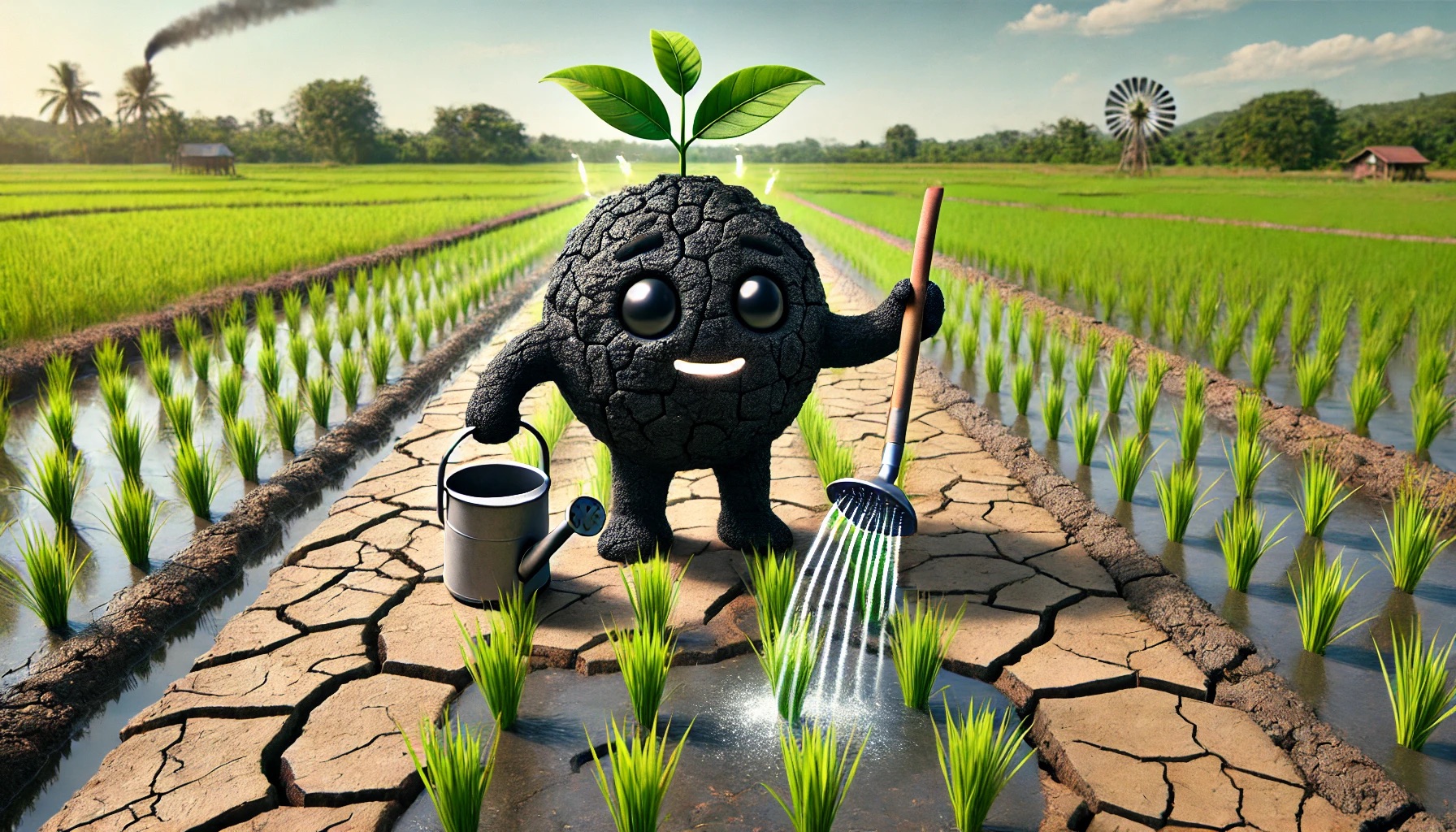
Zhang, et al (2024) BiocharBiochar is a carbon-rich material created from biomass decomposition in low-oxygen conditions. It has important applications in environmental remediation, soil improvement, agriculture, carbon sequestration, energy storage, and sustainable materials, promoting efficiency and reducing waste in various contexts while addressing climate change challenges. More coating promoted rice growth under drought stress through modulating photosynthetic apparatus, chloroplast ultrastructure, stomatal traits and ROS homeostasis. Plant Physiology and Biochemistry. https://doi.org/10.1016/j.plaphy.2024.109145
A recent study published in Plant Physiology and Biochemistry explores how biochar seed coating can enhance rice growth under drought conditions. Biochar, a carbon-rich material produced from organic biomassBiomass is a complex biological organic or non-organic solid product derived from living or recently living organism and available naturally. Various types of wastes such as animal manure, waste paper, sludge and many industrial wastes are also treated as biomass because like natural biomass these More, has emerged as a sustainable solution to improve crop performance, particularly in water-scarce environments.
The research demonstrates that biochar seed coating boosts rice growth by improving several key physiological and biochemical functions. It significantly increased germination rates, shoot and root lengths, and plant biomass, even under drought stress. Biochar also stabilized the structure of chloroplasts—organelles crucial for photosynthesis—and protected cell walls, thereby preserving photosynthetic activity. This effect was partly due to biochar’s influence on stomatal traits, which regulate gas exchange and water loss in plants. By improving stomatal density and aperture, biochar enhanced the plant’s ability to maintain photosynthesis under water stress.
Furthermore, biochar coating reduced the harmful buildup of reactive oxygen species (ROS), which can damage cells during drought. It also increased the accumulation of osmotic protectants, helping the plants retain moisture and stabilize internal water levels. These improvements highlight biochar’s potential to mitigate drought-related damage and boost crop productivity.
This study underscores biochar seed coating as a promising agricultural strategy for enhancing drought resilience, particularly for rice grown in rain-fed or drought-prone regions.



Leave a Reply