
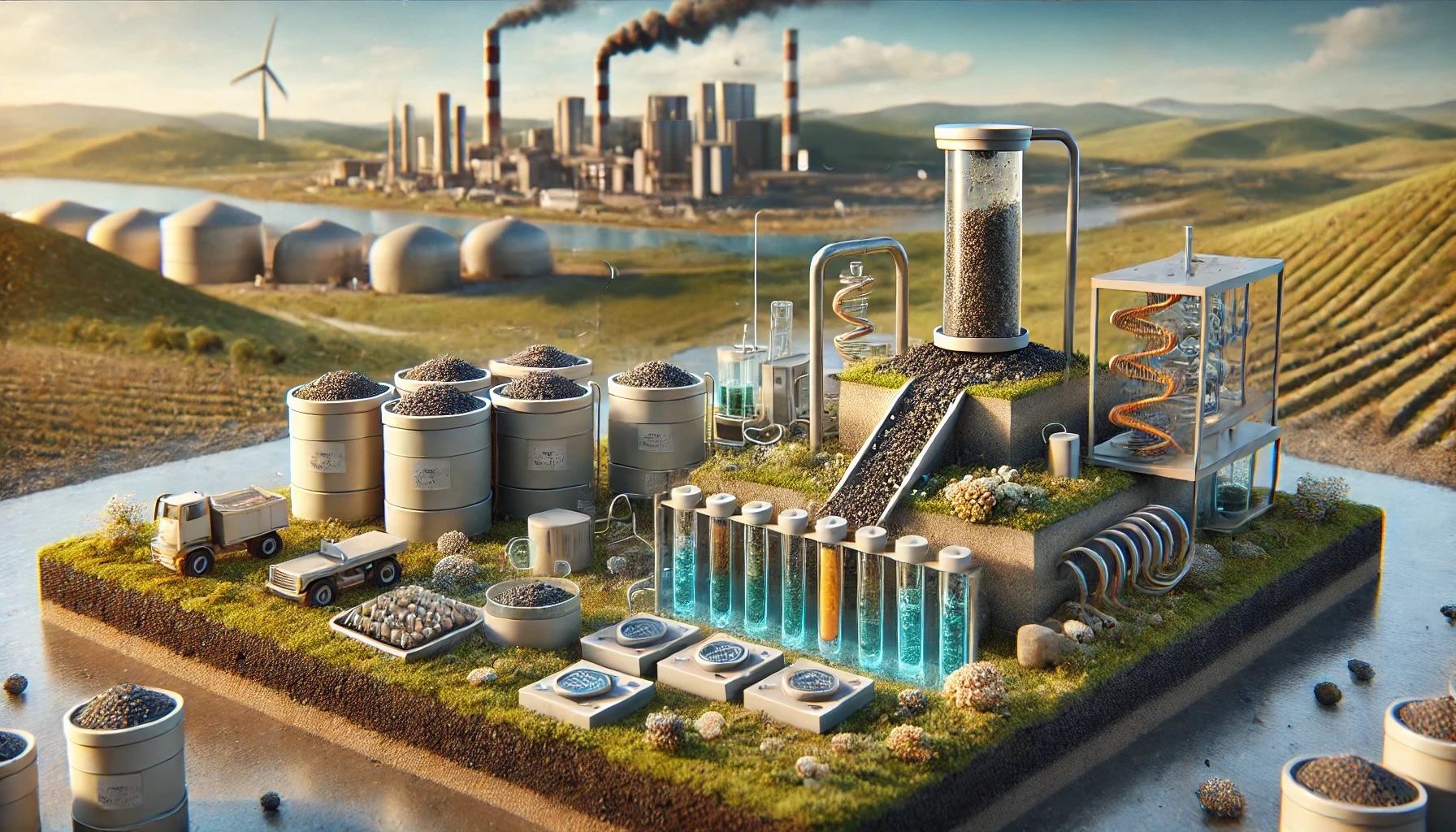

A recent study in Science of The Total Environment explored the effectiveness of integrating magnetic biochar (MBC) into a microbial electrolysis cell-anaerobic digestion (MEC-AD) system for degrading complex organic matter in landfill leachate. The researchers, led by Jiachen Zhu, found that adding MBC significantly improved the degradation process.
The team conducted orthogonal experiments to determine optimal parameters for the MEC-AD system. The best results were obtained with a hydraulic retention time (HRT) of 72 hours, an electrode spacing of 2.5 cm, and an applied voltage of 0.8V. Under these conditions, the chemical oxygen demand (COD) removal efficiency reached 54.7%. Analytical techniques like UV-vis, 3D-EEM, and GC-MS confirmed the degradation of macromolecules such as 13-Docosenamide (Z), with a remarkable 99.91% removal efficiency under specific conditions.
Microbial analysis revealed significant differences in core genera between the anode and cathode biofilms. Fermentative and electroactive bacteria, including Soehngenia and Desulfomicrobium, played crucial roles in degrading complex organic matter. The study highlighted the cooperative interactions between fermentative bacteria and electroactive bacteria, which synergistically enhanced the biotransformation process.
The research underscores the potential of using MBC in MEC-AD systems to treat landfill leachate, offering a promising approach for managing refractory organic pollutants. This combination not only acts as an adsorbent and catalyst but also facilitates electron transfer, enhancing the overall degradation efficiency.


Leave a Reply