
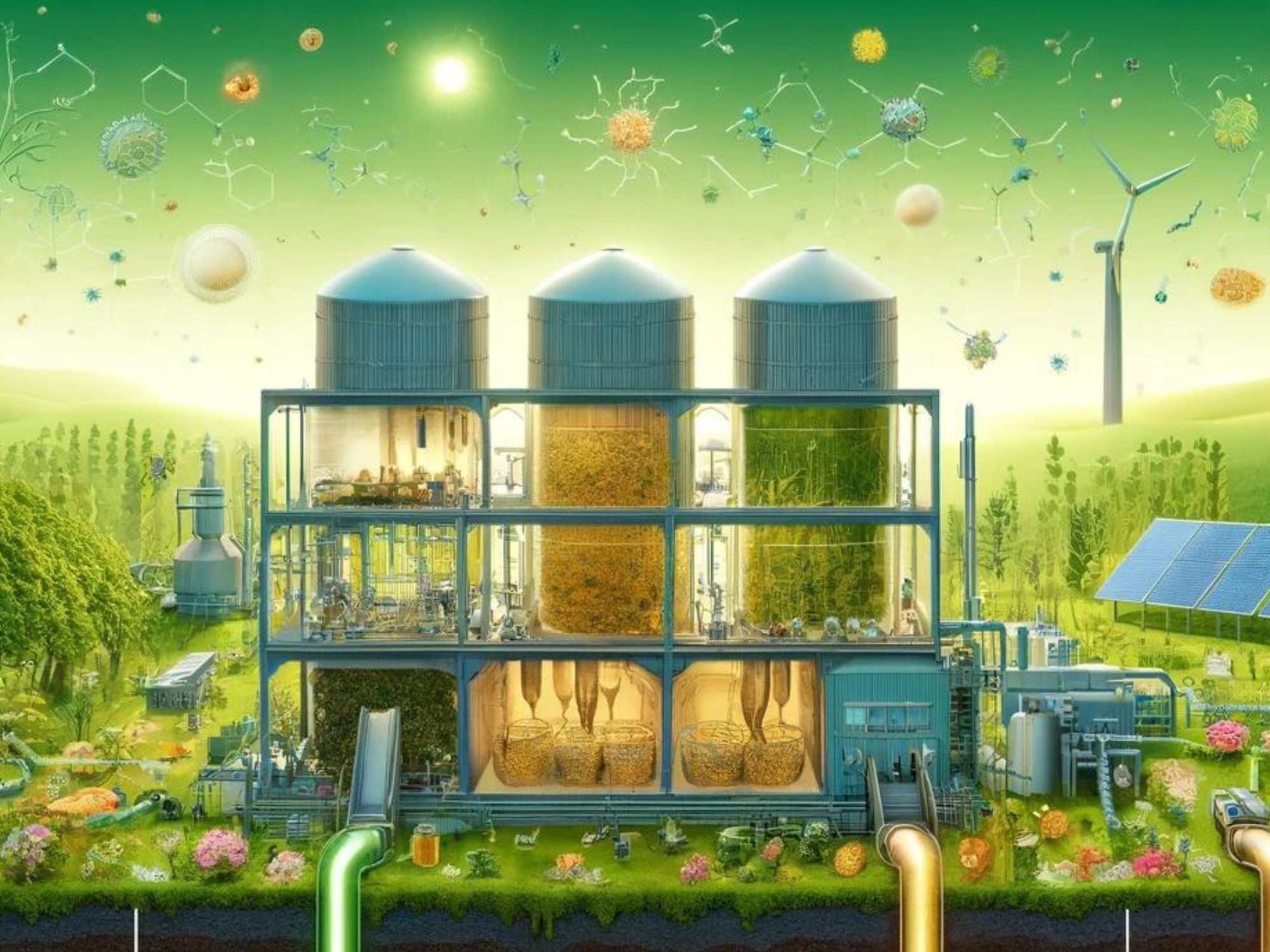

In recent research, the impact of biochar on medium-chain fatty acids (MCFAs) production from sewage sludge was examined, revealing promising potential for waste management and biofuel production. MCFAs, which range from 6 to 12 carbon atoms, are highly sought after for their application as antimicrobial agents, food additives, and their potential in biofuel production. Traditional MCFA production methods have been inefficient, necessitating the exploration of sustainable alternatives such as chain elongation (CE) technology.
This study focused on two-stage fermentation processes, employing biochar derived from different biomassBiomass is a complex biological organic or non-organic solid product derived from living or recently living organism and available naturally. Various types of wastes such as animal manure, waste paper, sludge and many industrial wastes are also treated as biomass because like natural biomass these More sources, including coconut shells and cornstalks, to enhance MCFA production. The results demonstrated that biochar addition significantly improved MCFA yield, with coconut shell-derived biochar showing a 30.37% increase in MCFA accumulation. This particular biochar facilitated electron transfer and carbon conversion efficiently, favoring the production process.
The research also delved into the effects of biochar on microbial communities, indicating an increase in microbial diversity and the abundance of functional microbes essential for the acidification (AC) and CE processes. It was observed that different biochars had varying impacts on microbial colonization, with cornstalk-derived biochar being more favorable for AC microbes, while coconut shell and rice stalk-derived biochars enhanced CE microbial communities.
Furthermore, the study highlighted that while biochar positively influenced MCFA production, it did not alter the dominance of the fatty acid biosynthesis (FAB) pathway in the CE process. This finding suggests that biochar’s role in stimulating MCFA production lies in enhancing the existing metabolic pathways rather than altering the microbial community’s metabolic direction.
This research underscores the potential of utilizing biochar in sewage sludge fermentation processes for efficient MCFA production, offering a dual benefit of effective waste management and the generation of valuable low-carbon biofuels.



![Eucalyptus Wood Waste-Derived Biochar Achieves a Ninety-Eight Percent Removal Efficiency for Benzo[ghi]perylene in Vehicle-Wash Wastewater](https://biochartoday.com/wp-content/uploads/2026/10/SCIENCE-BLOGS-2026-2026-10-19T160523.703.jpg)

Leave a Reply