
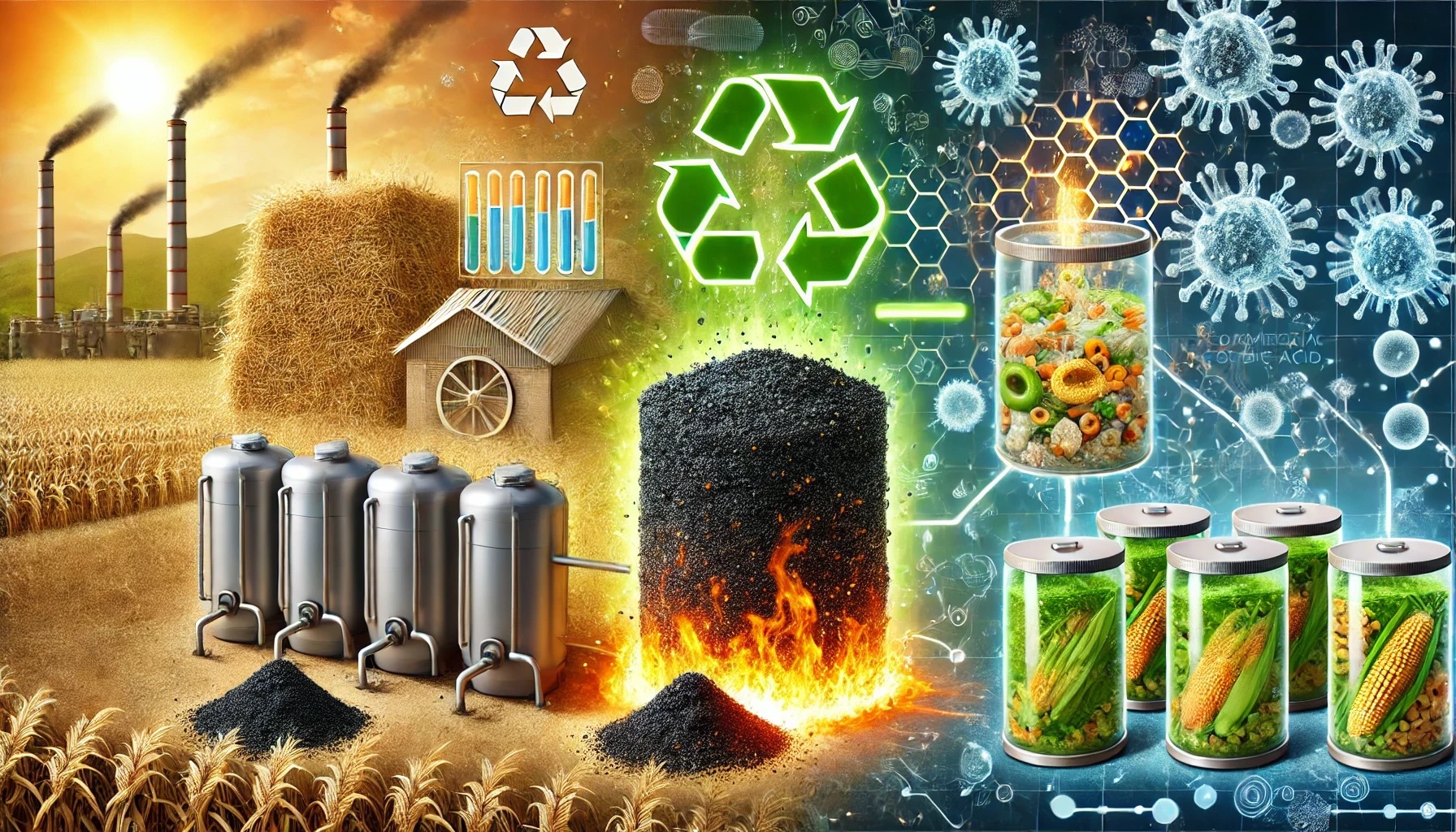

A recent study published in Industrial Crops and Products explores how biochar derived from agricultural wastes can boost the production of caproic acid—a valuable medium-chain fatty acid—from food waste. Researchers produced biochar from rice straw (RS) and corncob (CC) at 400°C and 600°C. They found that biochar, especially from corncob at 400°C, significantly improved the fermentation process, increasing the yield of caproic acid.
Biochar promotes microbial richness and activity, enhancing substrate hydrolysis and enriching microbes essential for caproic acid production, such as Caproiciproducens and Clostridium. This study demonstrates the potential of using food and agricultural waste to create a sustainable cycle of waste valorization and energy recovery. It highlights biochar’s role in optimizing anaerobic fermentation for more efficient caproate production.




Leave a Reply