
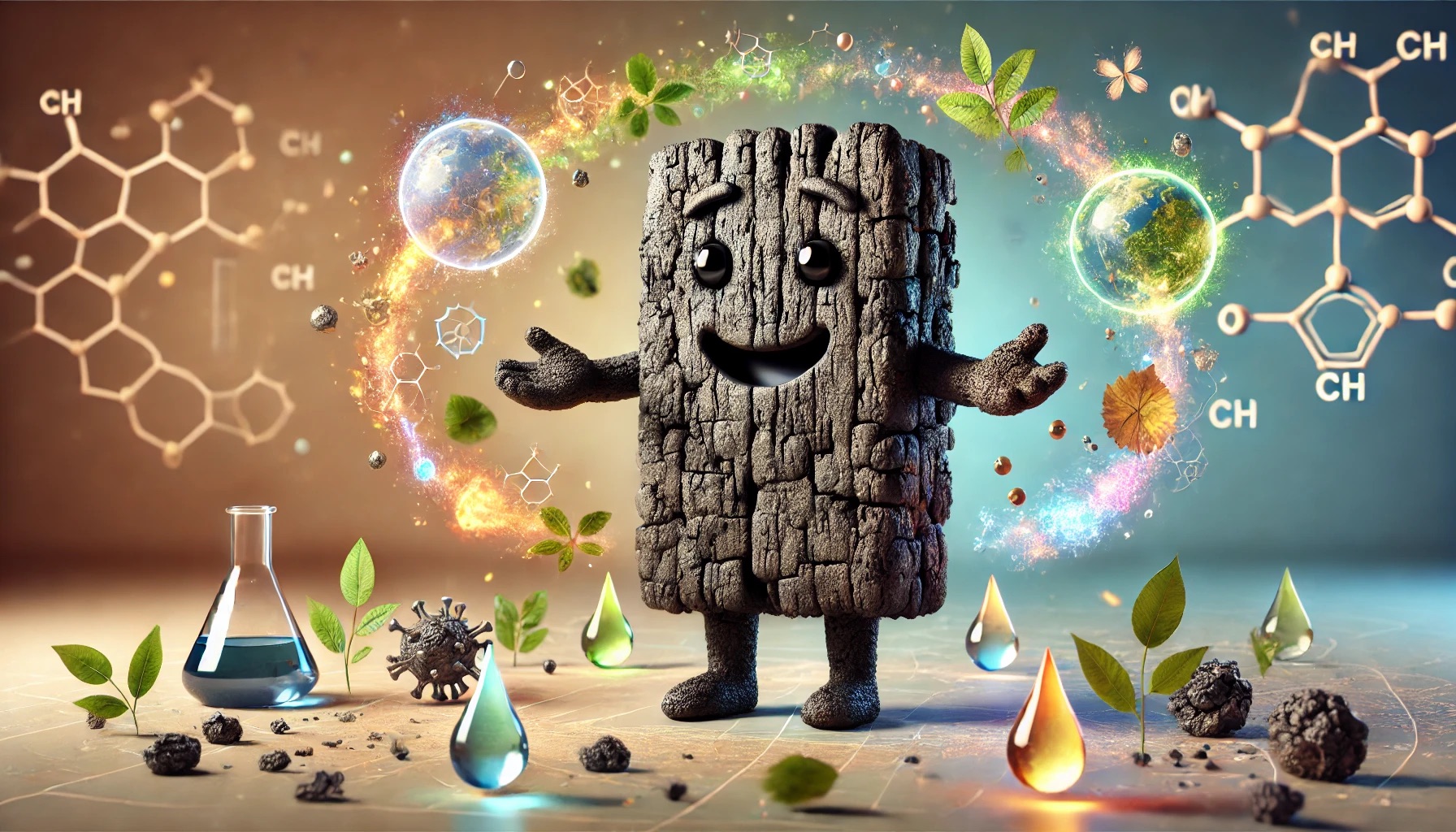

Recent research introduces a novel method for improving the photocatalytic abilities of biochar using perylene diimide (PDI), focusing on the degradation of Rhodamine B (RhB), a common dye pollutant. Biochar is recognized for its structural potential in photocatalysis, but its application is hindered by disordered carbon structures, limiting electron transfer. This study addresses this limitation by hybridizing biochar with PDI through π-π stacking interactions, which facilitate better electron migration and separation, crucial for photocatalytic reactions.
By optimizing parameters like pyrolysisPyrolysis is a thermochemical process that converts waste biomass into bio-char, bio-oil, and pyro-gas. It offers significant advantages in waste valorization, turning low-value materials into economically valuable resources. Its versatility allows for tailored products based on operational conditions, presenting itself as a cost-effective and efficient More temperature, PDI content, and solvent characteristics, the researchers achieved significant improvements in biochar’s photocatalytic performance. For instance, when biochar was pyrolyzed at 400°C and combined with 0.05 mg of PDI in water, it exhibited a 94% degradation rate of RhB, with reaction rates 10 times faster than unmodified biochar. This enhanced efficiency is attributed to the synergistic interaction between biochar and PDI, enabling better electron-hole separation and production of reactive oxygen species, which are vital for degrading pollutants.
The simplicity and flexibility of this method provide a sustainable approach for creating high-performance photocatalysts from biochar, with promising applications in wastewater treatment and environmental remediation.



Leave a Reply