
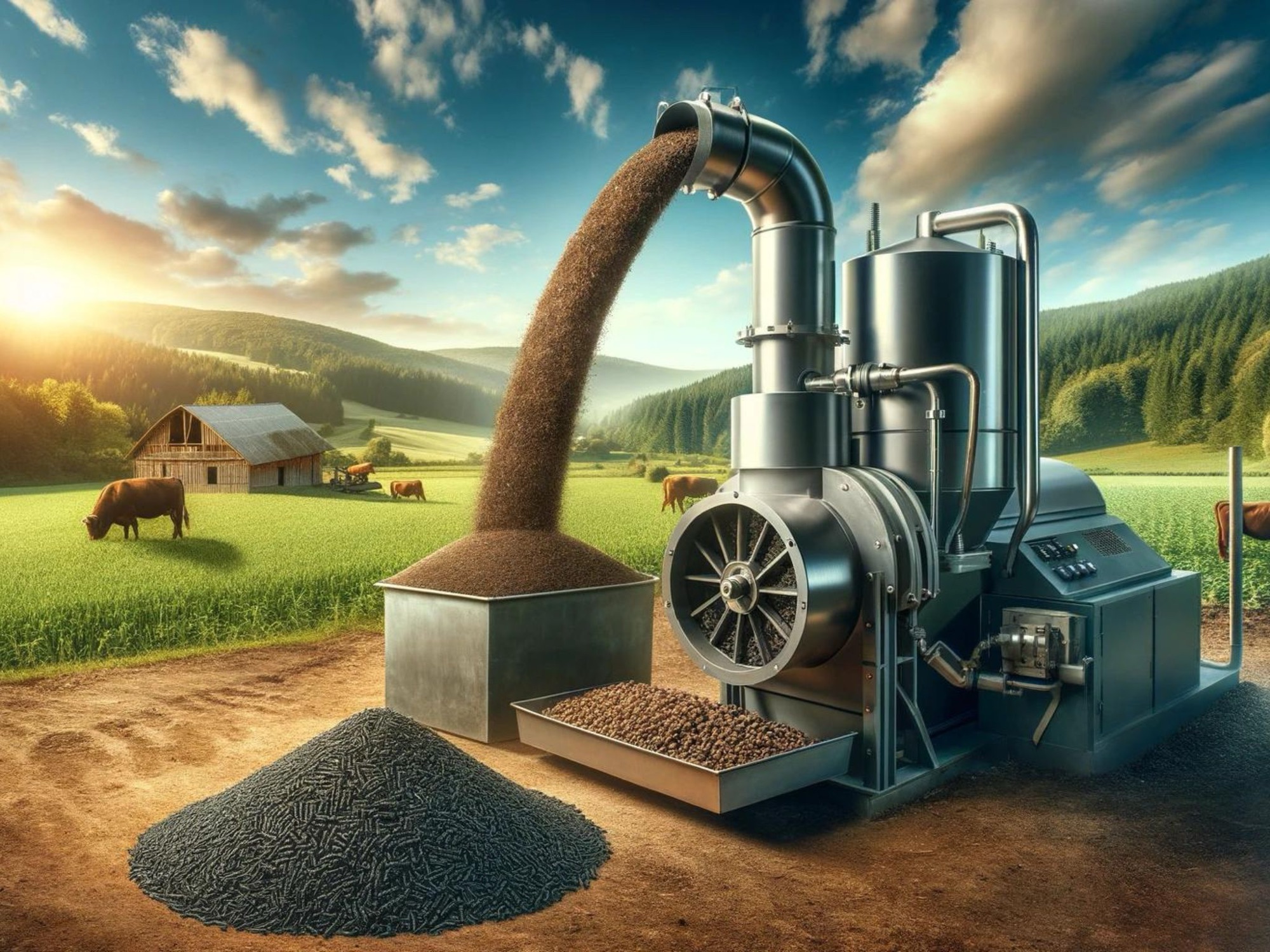
Furuhashi, et al (2024) Livestock Manure Compost Mixed with BiocharBiochar is a carbon-rich material created from biomass decomposition in low-oxygen conditions. It has important applications in environmental remediation, soil improvement, agriculture, carbon sequestration, energy storage, and sustainable materials, promoting efficiency and reducing waste in various contexts while addressing climate change challenges. More: Efficient Pelleting and Pellet Production Characteristics. Waste and BiomassBiomass is a complex biological organic or non-organic solid product derived from living or recently living organism and available naturally. Various types of wastes such as animal manure, waste paper, sludge and many industrial wastes are also treated as biomass because like natural biomass these More Valorization. https://doi.org/10.1007/s12649-024-02520-5
Recent research has delved into the integration of biochar with livestock manure compost to create enhanced fertilizer pellets using a roller die pellet mill, a method known for its high throughput in multifertilizer and wood pellet production. This study primarily investigates the feasibility of using compost as a natural binder for biochar, which is notoriously difficult to pelletize on its own, to improve the economic and environmental efficiency of pellet production.
The study confirms that mixing 25% biochar with cattle manure compost does not increase the energy input per unit of production, despite a lower yield of pellets compared to using only compost. This finding is significant as it suggests the process might not exacerbate greenhouse gas (GHG) emissions, which is a critical consideration in sustainable agricultural practices.
Pellets made from the biochar and compost mixture exhibited similar or superior durability and wettability compared to those made solely from manure. This implies that the new pellets could replace traditional cattle manure pellets without loss of quality, facilitating the use of existing agricultural machinery for application and thus reducing labor and preventing dust pollution.
Furthermore, the application of such biochar-compost pellets is posited as a dual-purpose solution that not only provides necessary nutrients to the soil but also contributes to carbon sequestration. This could be particularly beneficial in regions like Japan and Southeast Asia, where rice husk biochar could also help in silicon replenishment in paddy fields.
The novelty of this study lies in its approach to pelletize biochar using livestock manure compost without additional binders, which has not been extensively explored before. The findings are expected to aid in the development of better practices for the production of biochar pellets and might contribute to future life cycle assessments of GHG emissions, offering a more comprehensive understanding of biochar’s environmental impacts when used as a fertilizer. This research paves the way for more sustainable agricultural methodologies that enhance soil health and carbon management.






Leave a Reply