
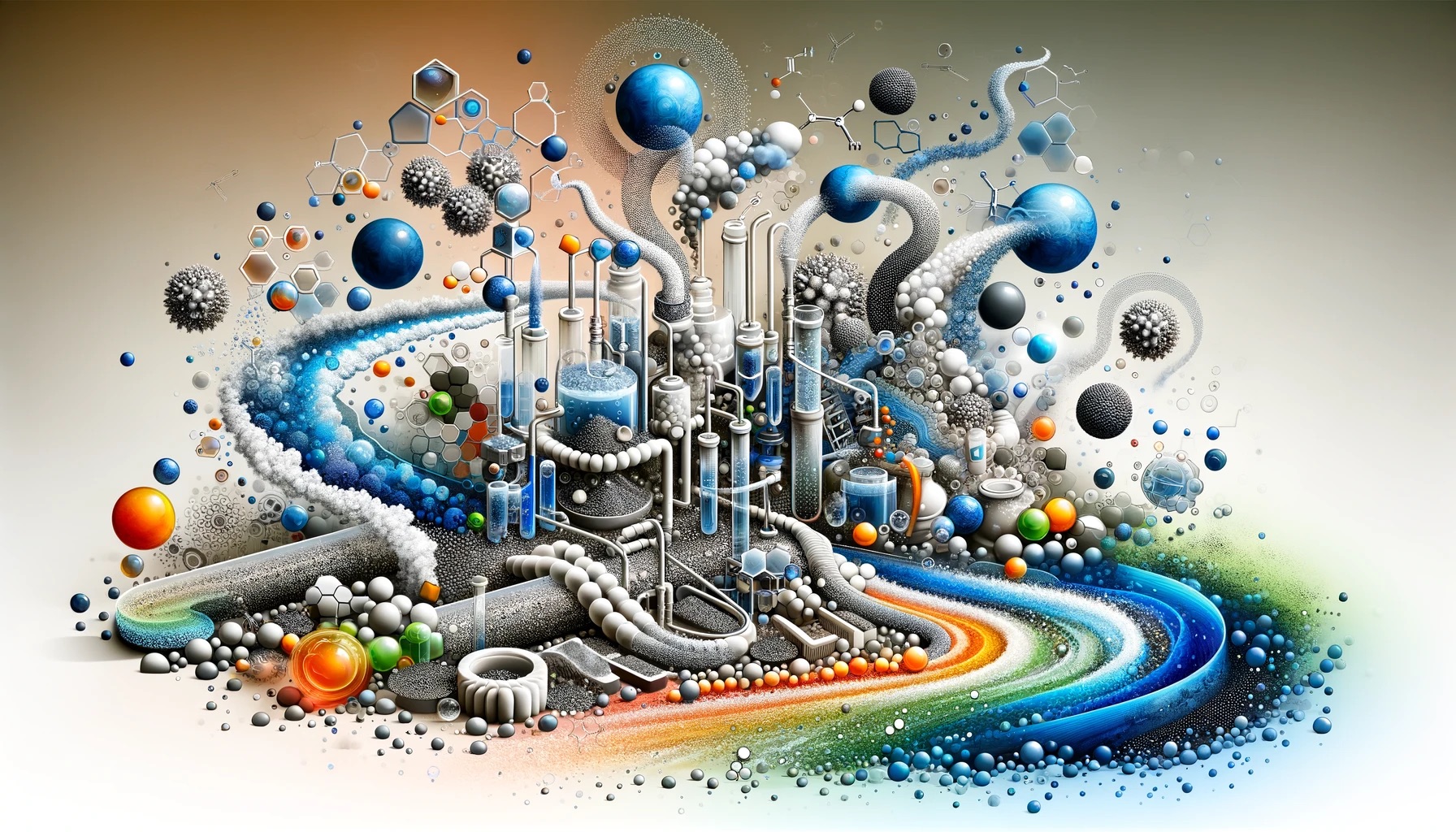

The widespread use of antibiotics in medical treatments and agriculture has led to a significant environmental issue: the presence of antibiotic residues in various water sources. These residues pose a threat to both human health and the environment, prompting the need for effective methods to remove them from wastewater. A recent study published in the Journal of Environmental Sciences offers a promising solution through the use of boron-doped porous biochar as a metal-free adsorbent.
Researchers Lu Xu, Yuetong Qi, Shaolei He, Chengzhi Wang, Xin Jin, Qize Wang, Kai Wang, and Pengkang Jin have developed an innovative method for creating boron-doped porous biochar using microwave-assisted pyrolysisPyrolysis is a thermochemical process that converts waste biomass into bio-char, bio-oil, and pyro-gas. It offers significant advantages in waste valorization, turning low-value materials into economically valuable resources. Its versatility allows for tailored products based on operational conditions, presenting itself as a cost-effective and efficient More. This technique is notable for its rapid and efficient preparation process, which enhances the biochar’s properties, making it highly effective in adsorbing antibiotics from aqueous solutions.
The prepared biochar boasts a substantial specific surface area of 933.39 m²/g and a rich porous structure, which significantly contribute to its high adsorption capacity. Specifically, the boron-doped biochar can adsorb up to 413.223 mg/g of tetracycline, a common antibiotic. This capacity surpasses that of unmodified biochar and many other commercial adsorbents currently available.
One of the key factors behind this impressive adsorption performance is the formation of the –BCO2 group during the pyrolysis process. This group enhances π–π electron donor–acceptor interactions between the boron-doped biochar and the tetracycline molecules. These interactions are crucial for the improved adsorption capacity, making the boron-doped biochar a highly efficient adsorbent.
Beyond tetracycline, the boron-doped biochar also shows promise in removing other contaminants, such as bisphenol A (a phenolic compound) and dyes like methylene blue and rhodamine B. This versatility makes it a valuable tool for tackling various pollutants in wastewater treatment.
Another significant advantage of this boron-doped biochar is its stability and reusability. The study found that the adsorption capacity of the biochar could be nearly fully restored through simple heat treatment, allowing for repeated use without a significant loss in efficiency. This regenerability is a crucial aspect for practical applications, as it reduces the cost and environmental impact of the treatment process.
The implications of this research are far-reaching. The ability to efficiently remove antibiotics and other contaminants from water sources using a sustainable and cost-effective material like boron-doped porous biochar could revolutionize wastewater treatment practices. This method provides a green alternative to traditional adsorbents, which often involve more complex and less environmentally friendly processes.
Moreover, the scalability of the microwave-assisted pyrolysis method suggests that this technology could be adopted for large-scale applications, potentially addressing antibiotic contamination on a broader scale. As antibiotic residues continue to be a pressing environmental issue, the development and implementation of such efficient treatment technologies are vital for protecting both ecological and human health.
In conclusion, the study presents boron-doped porous biochar as a highly effective and sustainable solution for removing antibiotics from aqueous environments. Its high adsorption capacity, stability, and reusability make it a promising candidate for widespread use in wastewater treatment, offering a practical approach to mitigating the impact of antibiotic pollution.



Leave a Reply