
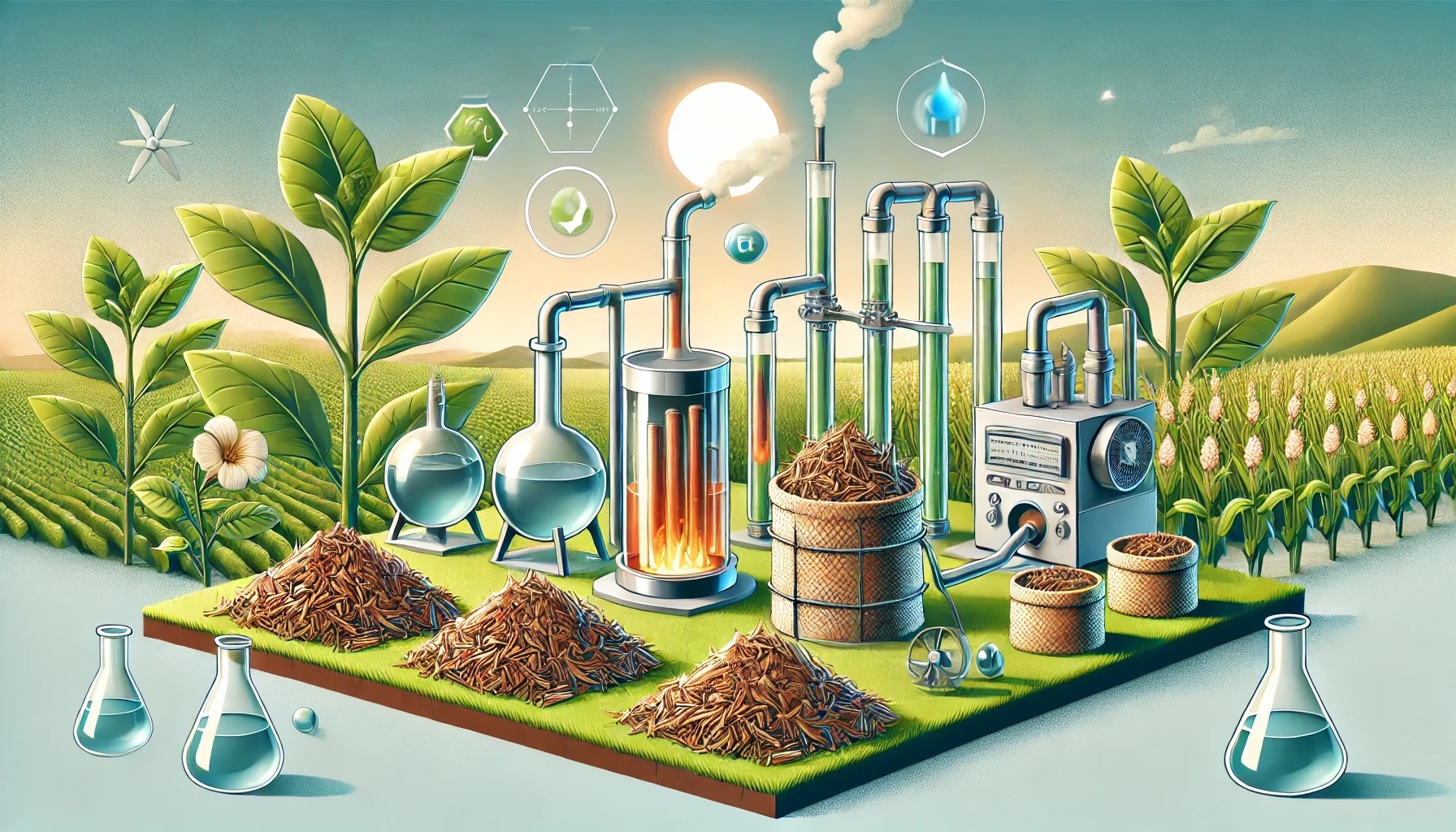

In a recent study published in the Journal of Environmental Chemical Engineering, researchers explored the use of biochar-based catalysts to enhance the production of high-quality bio-oil and hydrogen-rich gas from tobacco stem waste. The study compared two pyrolysisPyrolysis is a thermochemical process that converts waste biomass into bio-char, bio-oil, and pyro-gas. It offers significant advantages in waste valorization, turning low-value materials into economically valuable resources. Its versatility allows for tailored products based on operational conditions, presenting itself as a cost-effective and efficient More methods—in-situ and ex-situ—each offering unique benefits depending on the desired output.
In-situ pyrolysis, where the catalyst and feedstockFeedstock refers to the raw organic material used to produce biochar. This can include a wide range of materials, such as wood chips, agricultural residues, and animal manure. More are mixed during the process, was found to selectively produce phenolic compounds, achieving yields as high as 57.99%. This method also generated hydrogen-rich gas, with Fe-loaded biocharBiochar is a carbon-rich material created from biomass decomposition in low-oxygen conditions. It has important applications in environmental remediation, soil improvement, agriculture, carbon sequestration, energy storage, and sustainable materials, promoting efficiency and reducing waste in various contexts while addressing climate change challenges. More (Fe@BC) producing 49.91% hydrogen.
Ex-situ pyrolysis, on the other hand, separated the catalyst from the feedstock and resulted in high yields of nitrogen-containing compounds (up to 47.23%) and significant hydrogen production, with Ni-loaded biochar (Ni@BC) yielding 47.59% hydrogen. This method shows promise for cleaner gas production and nitrogen recovery.
The research highlights the effectiveness of using inexpensive biochar materials, like rice husk, as a catalyst support. By utilizing low-cost transition metals such as nickel and iron, the study demonstrates how selective catalysis can improve the efficiency of pyrolysis. These findings contribute to the development of scalable, environmentally-friendly methods for converting agricultural waste into valuable biofuels and chemicals, offering a sustainable approach to waste management and energy production.



Leave a Reply