


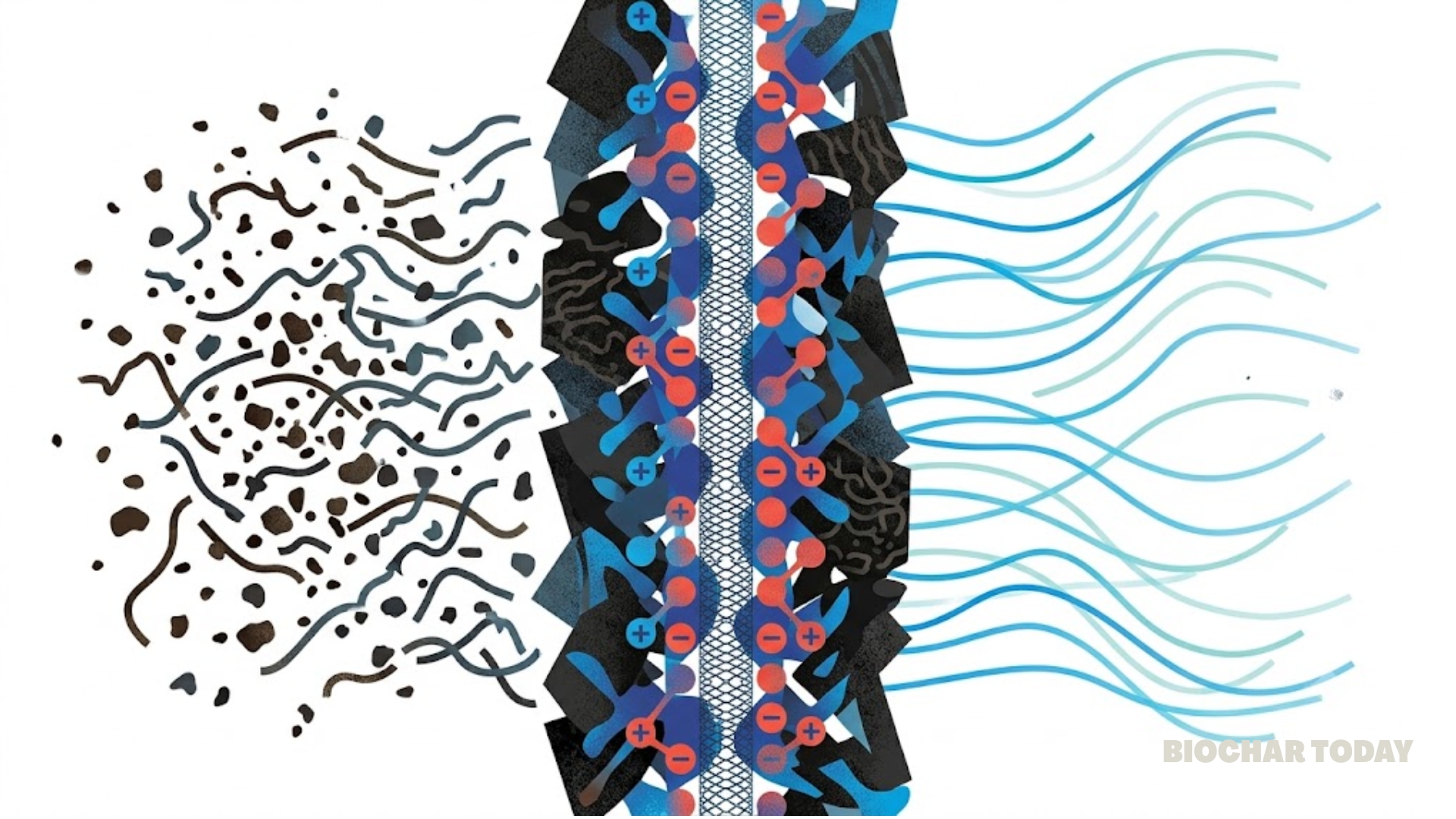
In this study, the potential of microalgae-derived biochar in enhancing electron transfer during anaerobic digestion (AD) is explored, focusing on biochar from Scenedesmus sp. (SBC) and Chlorella sp. (CBC). The investigation reveals that the addition of biochar amplifies direct interspecies electron transfer (DIET) by increasing the prevalence of relevant microorganisms such as Firmicutes and Methanosaeta. SBC exhibits a distinctive foamy honeycomb structure with abundant functional groups, promoting microorganism colonization and serving as an electron conductor for conductive material-mediated DIET (cDIET). On the other hand, CBC, with its closed spherical granule structure, leads to bioelectrically triggered DIET (bDIET) through enhanced secretion of Flavins and C-type cytochromes.
The study unveils that the electron transfer rate via bDIET surpasses that of cDIET, resulting in a noteworthy 53.9% increase in H2 yield and a 9.1% increase in CH4 yield in the CBC group compared to the SBC group. These findings shed light on the intricate mechanisms of electron transfer facilitated by microalgae biochar, offering insights that could enhance the efficiency of AD processes. The work emphasizes the significance of microalgae species in influencing the electron transfer dynamics, contributing valuable knowledge to bridge existing gaps in this field.




Leave a Reply