
Nihala Jabin P.P., & Rani B. (2024). Effect of biocharBiochar is a carbon-rich material created from biomass decomposition in low-oxygen conditions. It has important applications in environmental remediation, soil improvement, agriculture, carbon sequestration, energy storage, and sustainable materials, promoting efficiency and reducing waste in various contexts while addressing climate change challenges. More on soil physical properties and growth parameters of ginger cv. Karthika. Indian Journal of Horticulture, 81(03), 307–312. https://doi.org/10.58993/ijh/2024.81.3.14
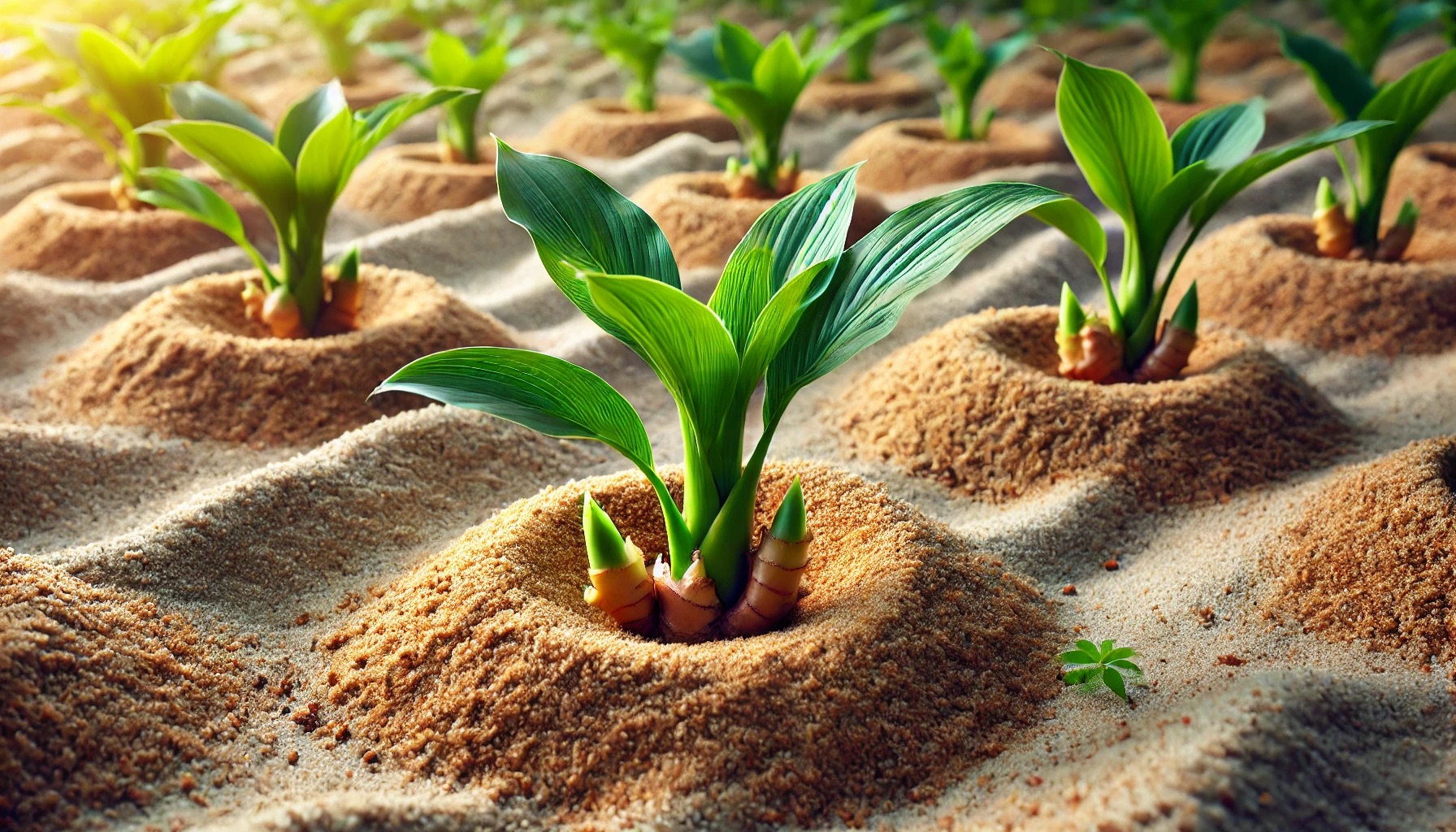
A recent study examined how different types and quantities of biochar affect ginger cultivation in sandy soils. The field experiment, conducted in Kerala, India, tested biochar made from paddy husk (PHB) and coconut frond (CFB) at three different application rates (10, 20, and 30 tons per hectare). These biochar treatments were combined with standard nutrient management practices, compared to farmyard manure (FYM), and an untreated control.
Biochar, particularly from paddy husk, demonstrated several benefits. It improved soil structure by reducing bulk density and increasing water retention. PHB had a greater specific surface area and water-holding capacity than CFB, leading to better plant growth. At the highest application rate (30 t/ha), PHB produced the highest ginger yield (12,858 kg/ha), closely followed by CFB (12,675 kg/ha). Both biochars performed significantly better than the FYM treatment, which yielded 7,091 kg/ha.
The study concluded that biochar not only enhances soil properties, such as porosityPorosity of biochar is a key factor in its effectiveness as a soil amendment and its ability to retain water and nutrients. Biochar’s porosity is influenced by feedstock type and pyrolysis temperature, and it plays a crucial role in microbial activity and overall soil health. Biochar More and water retention, but also boosts ginger yield. PHB, in particular, showed superior results, making biochar an effective organic amendment for improving sandy soil productivity in ginger cultivation. This approach may offer a sustainable, economically viable solution for farmers.


![Eucalyptus Wood Waste-Derived Biochar Achieves a Ninety-Eight Percent Removal Efficiency for Benzo[ghi]perylene in Vehicle-Wash Wastewater](https://biochartoday.com/wp-content/uploads/2026/10/SCIENCE-BLOGS-2026-2026-10-19T160523.703.jpg)

Leave a Reply