
Paritosh & Hackula (2024) Decarbonising distillery wastewater treatment: Experimental investigation of biochar-assisted anaerobic conversion and financial assessment. Energy Conversion & Management. https://doi.org/10.1016/j.enconman.2024.118893
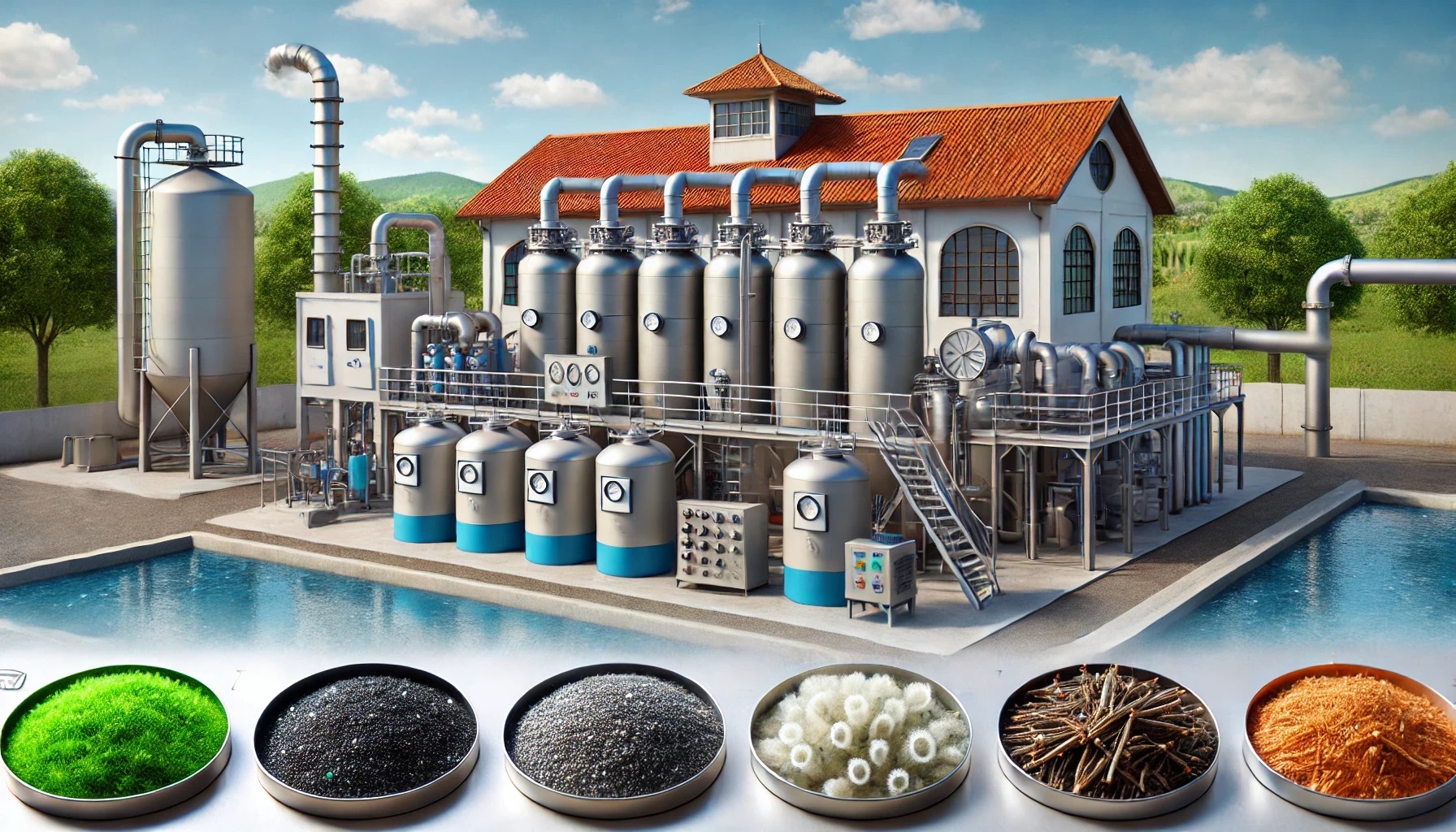
A recent study explored the use of biocharBiochar is a carbon-rich material created from biomass decomposition in low-oxygen conditions. It has important applications in environmental remediation, soil improvement, agriculture, carbon sequestration, energy storage, and sustainable materials, promoting efficiency and reducing waste in various contexts while addressing climate change challenges. More in treating distillery wastewater through anaerobic digestion, offering a sustainable alternative to conventional methods. Distillery wastewater, with its high organic load, presents challenges for traditional treatment methods. The study tested biochar in three particle sizes (5 mm) within lab-scale bioreactors. The largest biochar particles (>5 mm) demonstrated the best performance, achieving a specific methane yield of 268 ml/g COD and productivity of 423 mL/L/d.
The study compared biochar’s effectiveness to the commonly used buffering agent, CaCO3, and found that biochar not only improved methane yield but also contributed to pHpH is a measure of how acidic or alkaline a substance is. A pH of 7 is neutral, while lower pH values indicate acidity and higher values indicate alkalinity. Biochars are normally alkaline and can influence soil pH, often increasing it, which can be beneficial More stability due to its alkaline properties. A techno-economic analysis indicated promising financial returns, with a net present value of €769,564 and an 18% internal rate of return (IRR) for large-scale distillery wastewater treatment. However, a Monte Carlo simulation highlighted a 48% risk of financial loss, which could be mitigated by slight increases (1–3%) in electricity, heat, and fertilizer prices.
Biochar’s potential to reduce carbon emissions and replace fossil-based additives in wastewater treatment is significant. However, challenges remain in scaling this approach, particularly regarding economic viability and risk management. The study underscores the need for continued research to refine biochar’s application in anaerobic digestion and its broader adoption across the distillery and wastewater treatment industries.



Leave a Reply