
Mohammed, S., Fatumah, N., Abasi, K. et al. Co-designing sustainable biocharBiochar is a carbon-rich material created from biomass decomposition in low-oxygen conditions. It has important applications in environmental remediation, soil improvement, agriculture, carbon sequestration, energy storage, and sustainable materials, promoting efficiency and reducing waste in various contexts while addressing climate change challenges. More business models with sub-Saharan African communities for inclusive socio-economic transformation. Sci Rep14, 15802 (2024). https://doi.org/10.1038/s41598-024-66120-y
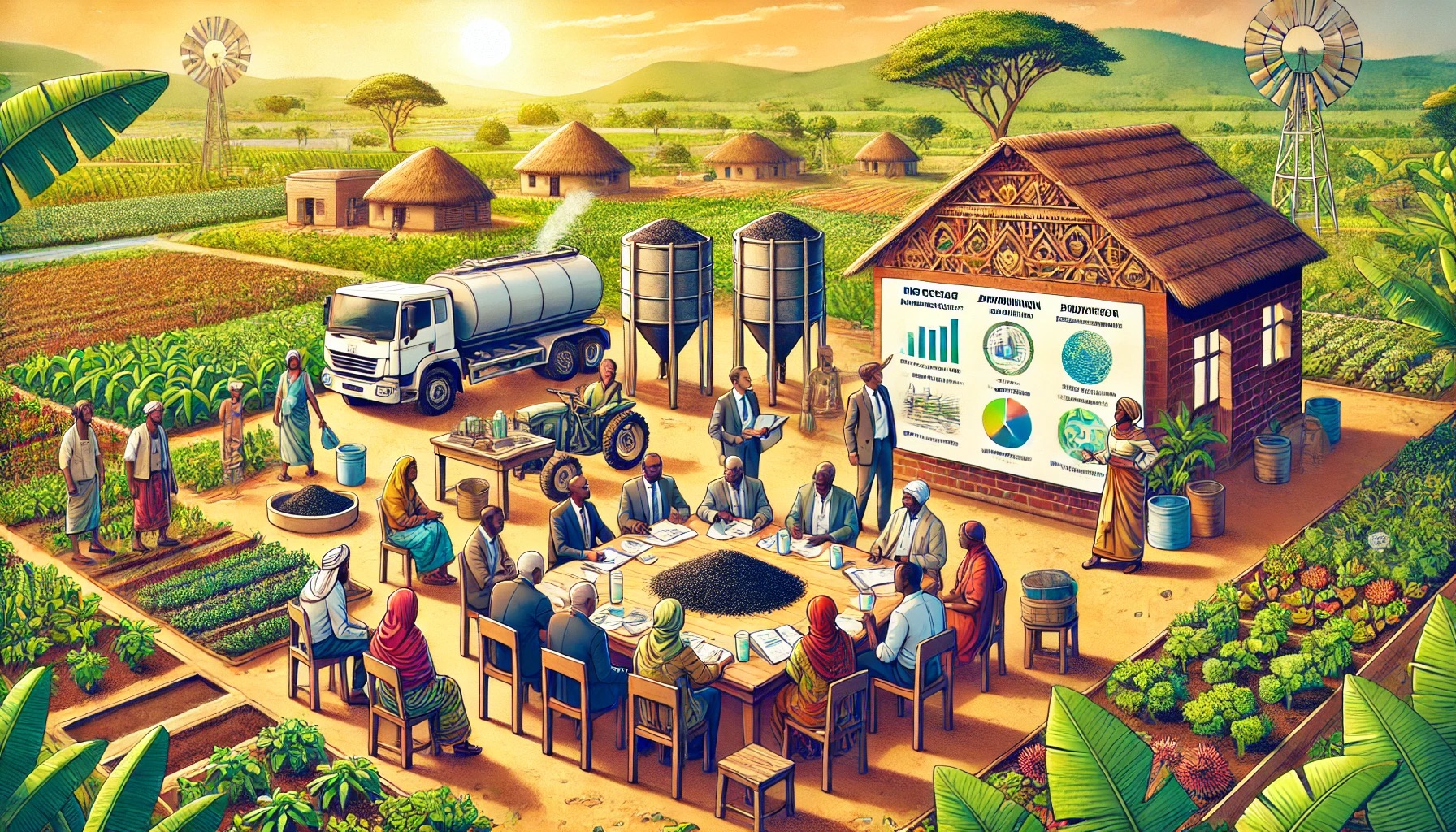
Smallholder farmers in Sub-Saharan Africa face numerous challenges related to their livelihoods. Adopting circular bioeconomy principles, particularly using agricultural and food processing residues, could provide pathways for sustainable and inclusive development. One example is biochar, a bio-based material that can be produced using circular principles. This research explores sustainable biochar business models in four regions: Northern Region, Ghana; Yamoussoukro, Côte d’Ivoire; Casamance, Senegal; and Western Region, Uganda. Using the Triple-Layered Business Model Canvas framework, co-creation workshops were held with local stakeholders to evaluate biochar applications such as water filtration, biogas purification, soil amendmentA soil amendment is any material added to the soil to enhance its physical or chemical properties, improving its suitability for plant growth. Biochar is considered a soil amendment as it can improve soil structure, water retention, nutrient availability, and microbial activity. More, and cooking fuel briquettes.
Africa’s population is growing rapidly, expected to reach 2.4 billion by 2050, putting pressure on resources like land, water, energy, and food. The continent’s reliance on natural resources and low-value agricultural exports, combined with the impacts of climate change, poses significant challenges. Many African countries still depend on fossil fuels, and the frequency of droughts is increasing, threatening agricultural productivity and food security.
A circular bioeconomy offers a promising solution, transforming bio-based sectors to support sustainable growth. This approach can help achieve the United Nations’ Sustainable Development Goals (SDGs), particularly those related to poverty alleviation, food security, and sustainable rural development. Efficient resource use and waste reduction are crucial for creating sustainable livelihoods in rural African communities.
Soil quality decline is another challenge due to population growth and increased resource demand. Biochar, produced from biomassBiomass is a complex biological organic or non-organic solid product derived from living or recently living organism and available naturally. Various types of wastes such as animal manure, waste paper, sludge and many industrial wastes are also treated as biomass because like natural biomass these More at high temperatures in anoxic conditions, can enhance soil fertility, reduce greenhouse gas emissions, and improve water quality. It has potential applications as animal feed, soil amendment, solid fuel, biogas additive, and pollutant adsorbent.
Despite its potential, biochar’s commercialization faces hurdles due to its variability in production and application efficacy, necessitating context-specific business models. The traditional Business Model Canvas (BMC) is expanded into the Triple Layer Business Model Canvas (TLBMC) to include environmental and social sustainability aspects. This extended framework is critical for developing bio-based business models, considering direct and indirect stakeholders and environmental impacts.
In the study, a bottom-up approach was used to develop the Value Proposition Canvas (VPC) and build the TLBMC. This involved co-creation workshops with local stakeholders, resulting in sustainable value propositions for biochar applications and an understanding of their socio-economic and ecological impacts.
The economic layer of the TLBMC describes how biochar businesses can generate revenue, including key activities, resources, customer relationships, and cost structures. The environmental layer focuses on the life cycle assessment of biochar production, exploring benefits like soil fertility enhancement, greenhouse gas reduction, and water purification. The social layer examines the relationships between value chain actors, the community, and the societal impacts of biochar businesses.
The co-creation approach with local stakeholders in the four regions revealed the potential for biochar to support rural development by creating economic opportunities, enhancing environmental sustainability, and improving social outcomes. This approach ensures the relevance and validity of the business models to local conditions, fostering ownership and viability.
The study highlights biochar’s potential to address sustainability challenges and contribute to the SDGs. It also emphasizes the need for ongoing technological innovation and policy support to optimize biochar applications and scale out innovations. The co-created VPC and TLBMC provide a roadmap for other SSA communities to develop bio-based value chains, promoting sustainable community development aligned with local needs and resources.



Leave a Reply