
Fornes, et al (2024) Soil fertility and plant nutrition in an organic olive orchard after 5 years of amendment with compost, biocharBiochar is a carbon-rich material created from biomass decomposition in low-oxygen conditions. It has important applications in environmental remediation, soil improvement, agriculture, carbon sequestration, energy storage, and sustainable materials, promoting efficiency and reducing waste in various contexts while addressing climate change challenges. More or their blend. Scientific Reports. https://doi.org/10.1038/s41598-024-67565-x
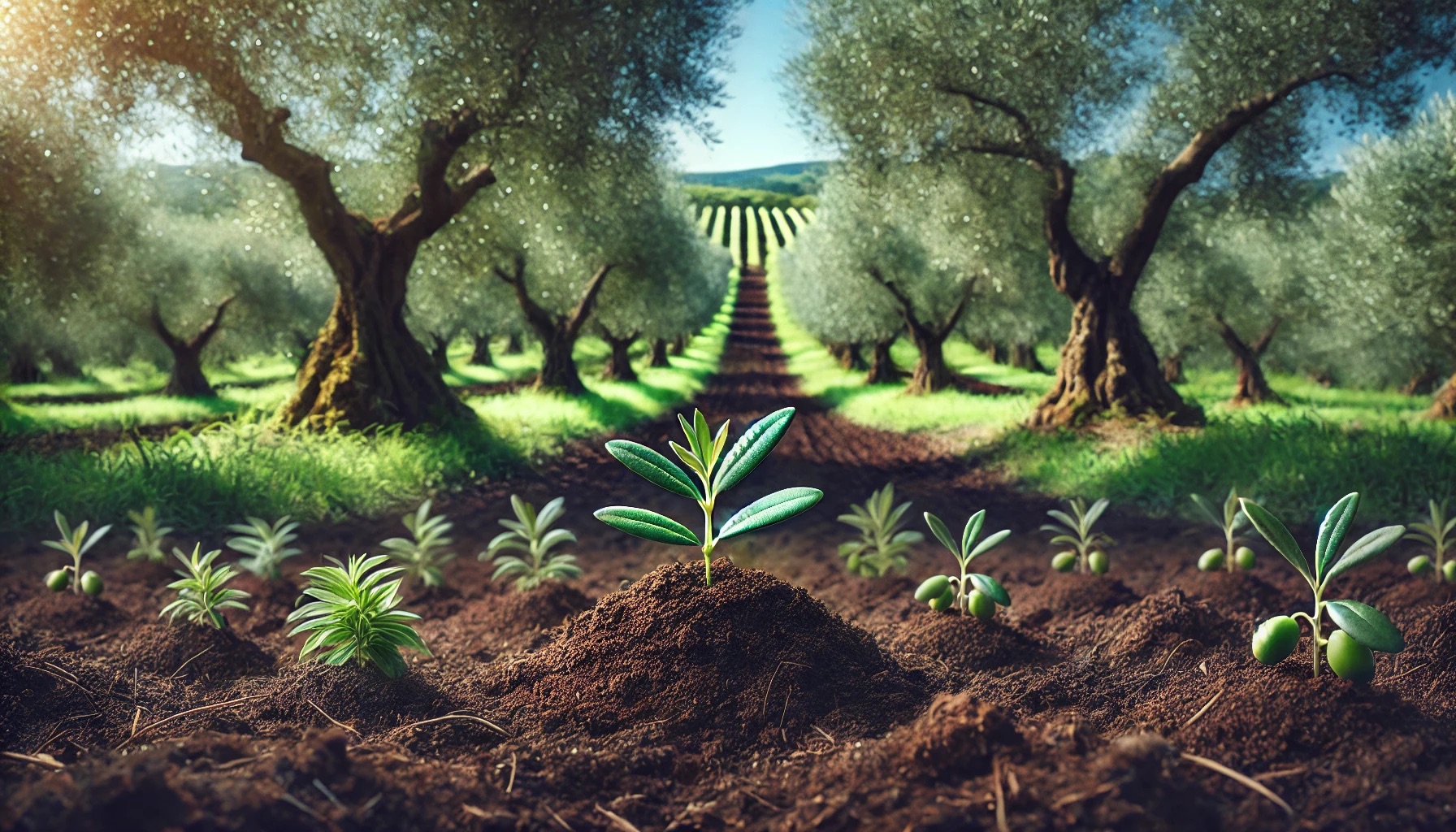
A recent five-year study explored the impact of soil amendments—compost, biochar, and their blend—on a 25-year-old organic olive orchard in Jumilla, Spain. Conducted by researchers from the Universitat Politècnica de València and CEBAS-CSIC, the study focused on how these amendments affect soil physical, chemical, and biological properties and the overall fertility of the orchard.
Biochar, a carbon-rich material produced by pyrolysisPyrolysis is a thermochemical process that converts waste biomass into bio-char, bio-oil, and pyro-gas. It offers significant advantages in waste valorization, turning low-value materials into economically valuable resources. Its versatility allows for tailored products based on operational conditions, presenting itself as a cost-effective and efficient More of organic waste, significantly improved soil physical properties such as bulk density, porosityPorosity of biochar is a key factor in its effectiveness as a soil amendment and its ability to retain water and nutrients. Biochar’s porosity is influenced by feedstock type and pyrolysis temperature, and it plays a crucial role in microbial activity and overall soil health. Biochar More, and water retention, especially in the topsoil (0-5 cm). Compost, on the other hand, enhanced microbial activity, nutrient availability, and soil aggregation. When blended, compost and biochar offered synergistic benefits, optimizing soil conditions better than either amendment alone.
The study’s findings showed that while young olive plantlets responded positively to all three treatments, the mature olive trees in the orchard did not exhibit significant changes in growth or yield over the five-year period. This slow response in mature trees suggests that soil amendments might have more immediate benefits for younger plants or when applied over a longer term.
The research underscores the potential of combining compost and biochar to create high-quality soil amendments that leverage the strengths of both materials. Compost provides readily available nutrients and boosts microbial activity, while biochar’s long-term presence in soil supports improved physical structure and water retention. This blend can be an effective and sustainable strategy for enhancing soil health in organic olive orchards and possibly other agricultural settings.





Leave a Reply