
Rahayu, M., & Pangestuti, R. (2024). EFFECTIVENESS OF BIOCHARBiochar is a carbon-rich material created from biomass decomposition in low-oxygen conditions. It has important applications in environmental remediation, soil improvement, agriculture, carbon sequestration, energy storage, and sustainable materials, promoting efficiency and reducing waste in various contexts while addressing climate change challenges. More AS SOIL AMELIORANT TO INCREASE SMALL SHALLOT BULBS YIELD FROM TRUE SHALLOT SEED (TSS) IN DRYLAND AGROECOSYSTEM. AGROLAND The Agricultural Sciences Journal (e-Journal). https://doi.org/10.22487/agroland.v11i1.2063
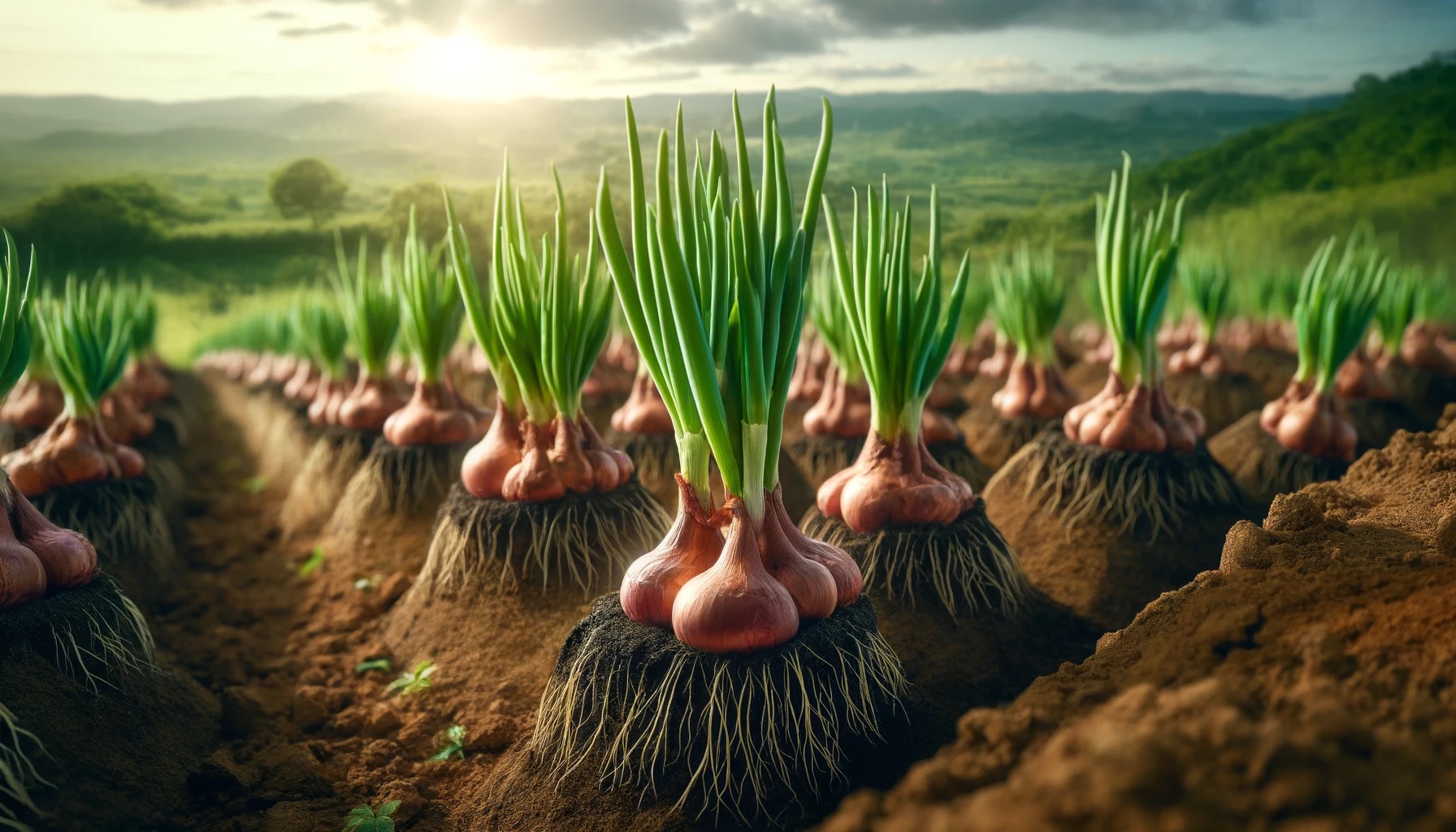
Declining soil fertility, marked by low organic matter, is a growing concern in agriculture. This issue often stems from intensified farming practices, such as the overuse of chemical fertilizers and neglecting the recycling of agricultural waste. A recent study aimed to explore the impact of biochar on the yield of small shallot bulbs grown from true shallot seed (TSS) in a dryland agroecosystem.
The experiment was structured using a randomized block design, focusing on two key factors: types of organic amendments (biochar, manure, and biomassBiomass is a complex biological organic or non-organic solid product derived from living or recently living organism and available naturally. Various types of wastes such as animal manure, waste paper, sludge and many industrial wastes are also treated as biomass because like natural biomass these More) and TSS varieties (Tuk-tuk, Sanren, and Trisula). The findings were illuminating. Biochar, especially when applied to the Trisula variety, significantly boosted yield, producing an average of 4.5 tubers per seed. In contrast, the Sanren variety yielded 1.8 bulbs per seed, and the Tuk-Tuk variety produced 1.2 bulbs per seed.
Moreover, biochar positively affected soil properties. Its application increased levels of organic carbon, enhanced the availability of phosphorus, and improved the cation exchange capacity in the dry soils. These improvements in soil health contributed to the better performance of the shallot bulbs.
In summary, the use of biochar as an organic amendment shows great promise for enhancing shallot bulb yield, particularly for the Trisula variety, in dryland agroecosystems. This study underscores the potential of biochar to mitigate soil fertility decline and improve agricultural productivity sustainably.




Leave a Reply